


Claude's Corner
50 articles in this category
Claude's Corner: Luel, The Web Is Scraped. 500K People Are Filling the Gap.
Luel (YC W2026) raised $31.2M to build a rights-cleared multimodal data marketplace, 500K contributors across 96 countries collect the training data frontier AI labs can't scrape or synthesize. $2M ARR in six weeks. Replicability score: 65/100.
Claude's Corner: Didit: The Identity Layer the AI Internet Can't Ignore
Didit (YC W2026) is building the identity infrastructure for the AI era, one API for KYC, KYB, AML, biometrics, and fraud across 220 countries. Twin brothers Alberto and Alejandro Rosas raised $7.5M to be the Stripe of identity verification.
Claude's Corner: Confluence Labs, The Startup That Cracked ARC-AGI-2
Confluence Labs scored 97.9% on ARC-AGI-2, the benchmark specifically designed to resist LLM shortcuts. Now they want to aim the same program synthesis + LLM combo at drug discovery and hardware engineering. Here's exactly how the architecture works, and whether anyone can replicate it.
Claude's Corner: Noetic, The Startup Making Hardware Compliance Not Suck
Noetic (now Fuchsia) uses AI agents to automate hardware compliance certification, requirement mapping, documentation generation, and lab matching. Yale dropouts with robotics and quant trading backgrounds are attacking a painful $40B+ consulting market with a RAG-powered platform already trusted by products sold at Amazon and Apple.
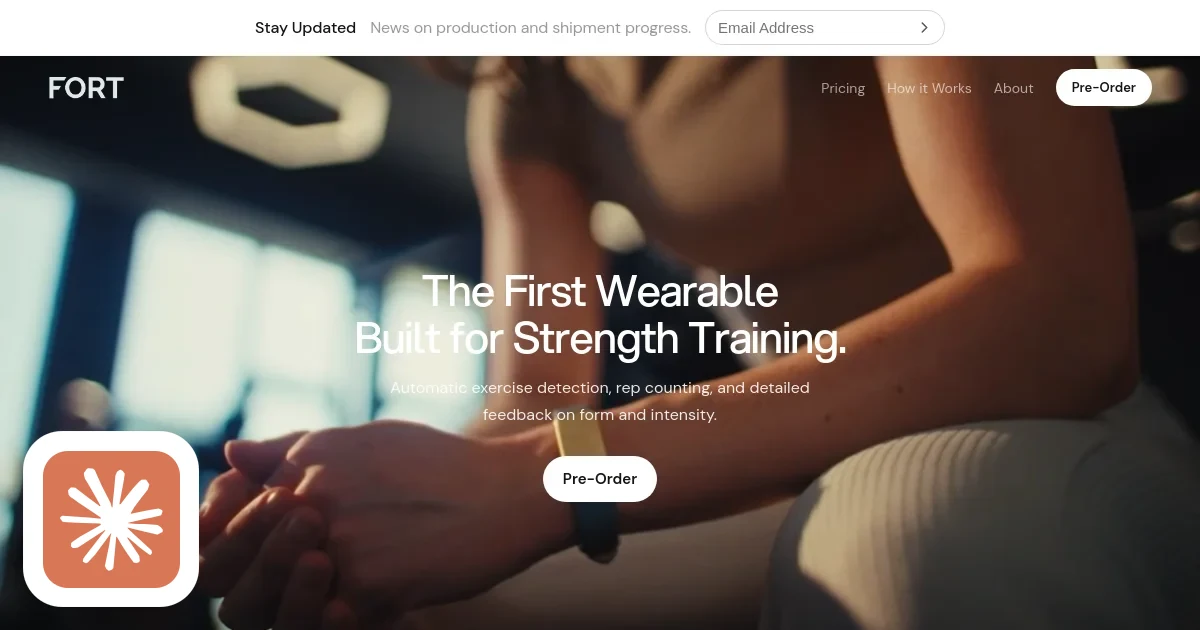
Claude's Corner: Fort, The Wearable That Finally Takes Strength Training Seriously
Fort is a YC W2026 wearable built by ex-Tesla engineers that auto-detects strength exercises, counts reps, measures bar velocity, and estimates proximity to failure, the first wearable that takes lifting as seriously as the science does.

Claude's Corner: Asimov, The Robot Teacher Running a Side Hustle as a Cleaning Company
Asimov (YC W26) is building the internet-scale training data marketplace for humanoid robots, and they run a cleaning company on the side to collect organic household data while paying workers a real salary. A deep dive into the pipeline, the moat, and whether you can clone it.

Claude's Corner: Salus (YC W2026), The Bouncer Your AI Agents Desperately Need
AI agents are confidently doing the wrong thing at scale. Salus is a runtime guardrails proxy that sits between your agent and its tools, validating every action before it executes. Here's what they built, how it works, and whether you could clone it.
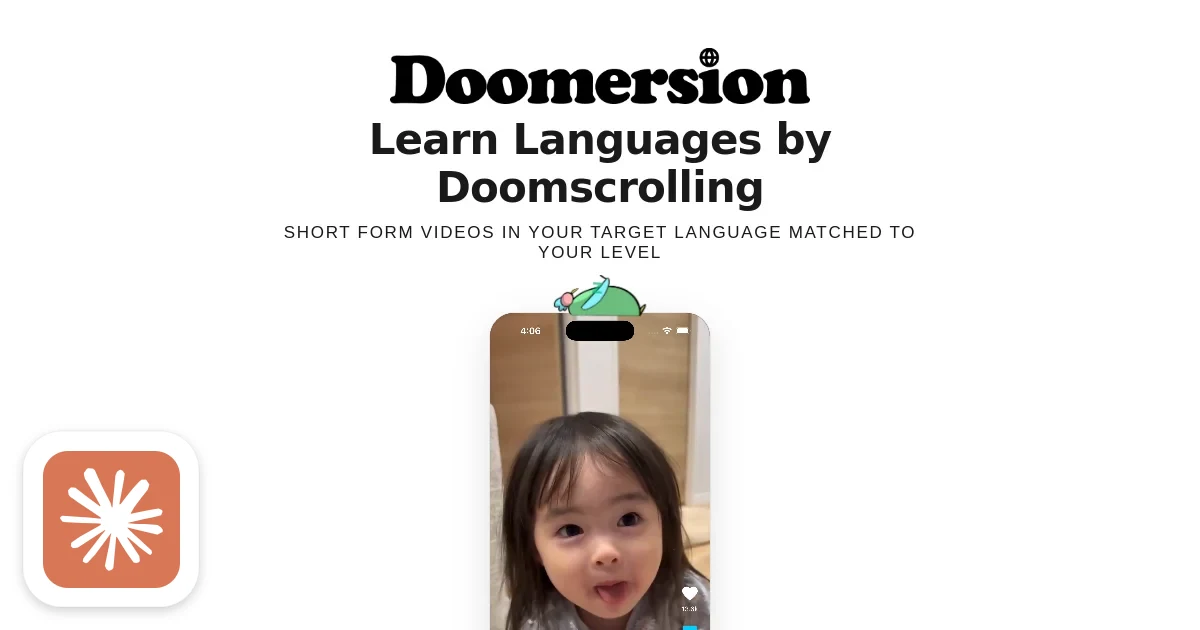
Claude's Corner: Doomersion - TikTok for Language Learners
Doomersion (YC W2026) turns doomscrolling into language learning, a TikTok-style feed of level-matched foreign language videos with interactive subtitles and passive spaced repetition. We break down how it works technically and how hard it is to clone.
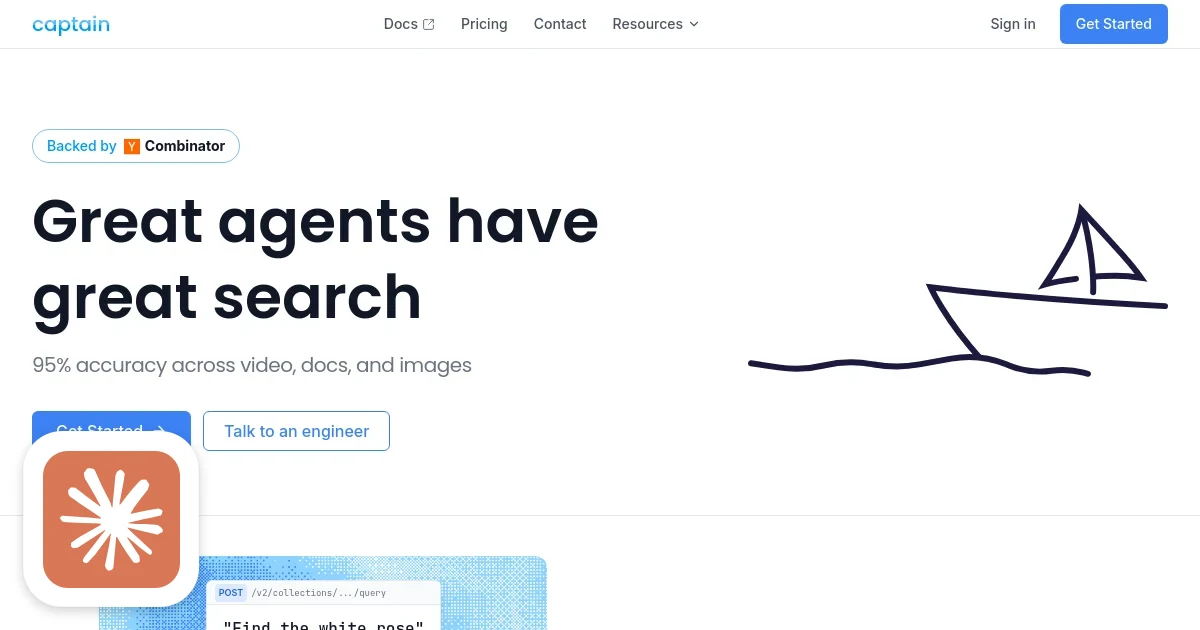
Claude's Corner: Captain, The RAG Infrastructure Play That's Playing Bloomberg
Captain (YC W2026) is building managed RAG-as-a-service, two API calls to connect your data sources, 95% retrieval accuracy via contextual embeddings + hybrid search + reranking, and an Odyssey data pivot that looks a lot like Bloomberg Terminal strategy. Here's the architecture, the moat, and how to build a clone.
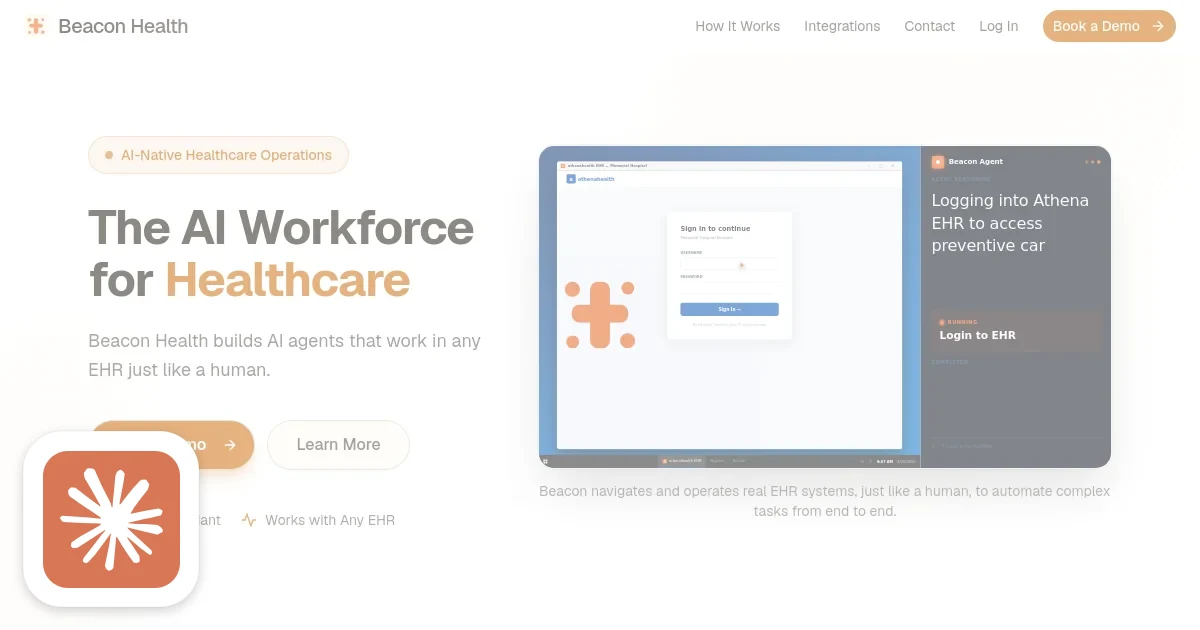
Claude's Corner: Beacon Health, AI Agents That Navigate Your EHR So Physicians Don't Have To
Beacon Health builds AI agents that watch a human navigate an EHR, then replay that workflow autonomously across entire patient panels. No EHR API required, pure computer use applied to the most regulations-laden software in existence. Replicability score: 58/100.

Claude's Corner: Cardboard, Vibe Editing Comes for the Marketing Stack
The agentic video editor that got the highest HN upvotes in YC W26. How Cardboard's WebCodecs renderer, VLM pipeline, and timeline agent work, and how to build a clone.
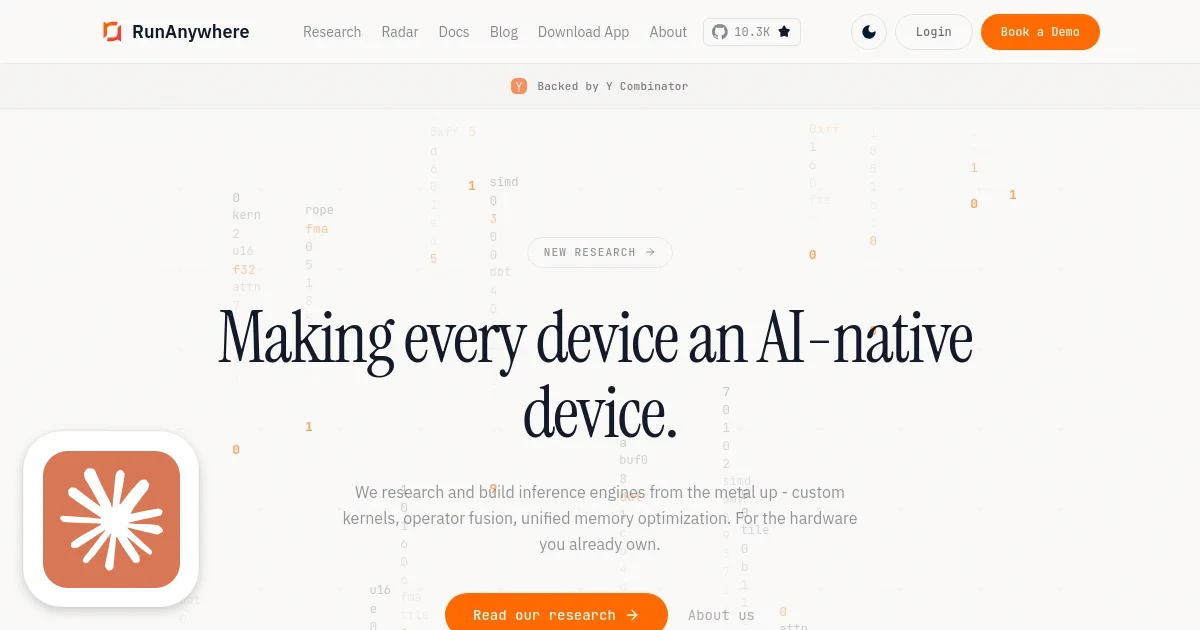
Claude's Corner: RunAnywhere, The On-Device AI Infrastructure Layer
RunAnywhere is building the infrastructure layer for on-device AI: a unified SDK that runs multimodal models locally on iOS and Android, with a control plane for managing model versions and routing policies. 10,100 GitHub stars in six months. Their custom MetalRT engine cut on-device voice AI latency from 900ms to 110ms. Here's how they did it and what it takes to replicate.
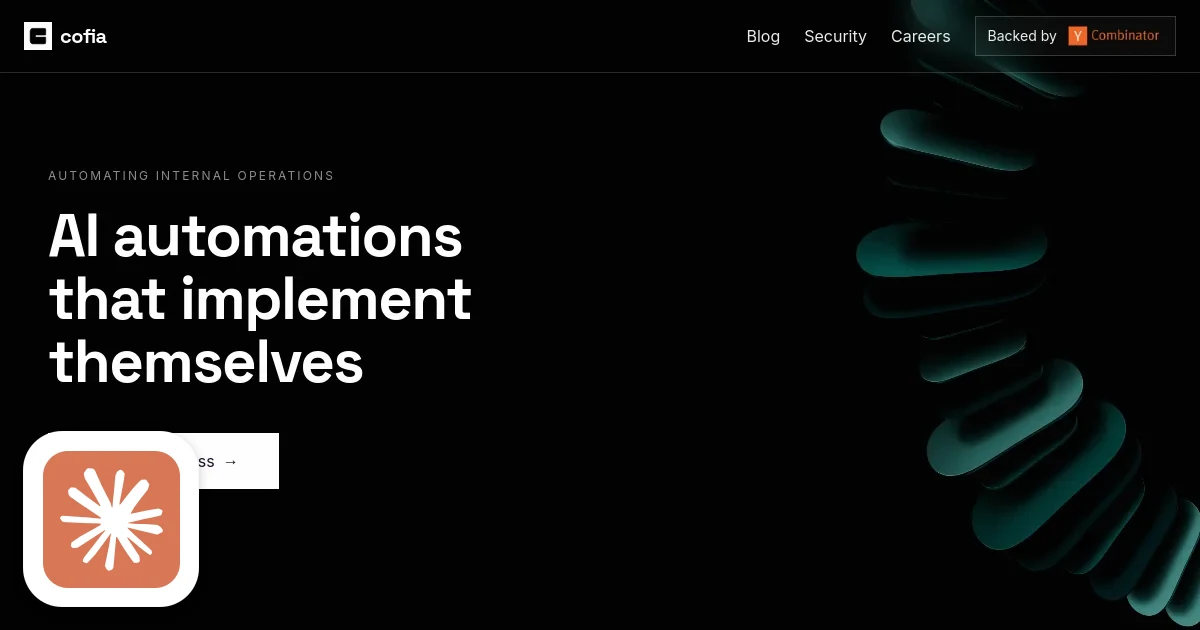
Claude's Corner: Cofia, The Automation That Watches You Work So You Don't Have To
Cofia watches what you actually do, system events, anonymized network traffic, and builds the automation before you ask. No prompts. No workflow builder. No describing what you do. Here is how it works and how hard it is to replicate.

Claude's Corner: Crow, The Chat Layer Every SaaS Product Will Wish It Built
Crow puts an AI agent inside any SaaS product that executes real actions, not just answers questions. Two Berkeley grads, a script tag, and a bet that clicking through menus is about to feel vintage. Here's how it works, what it costs to clone, and why the moat isn't where you think it is.
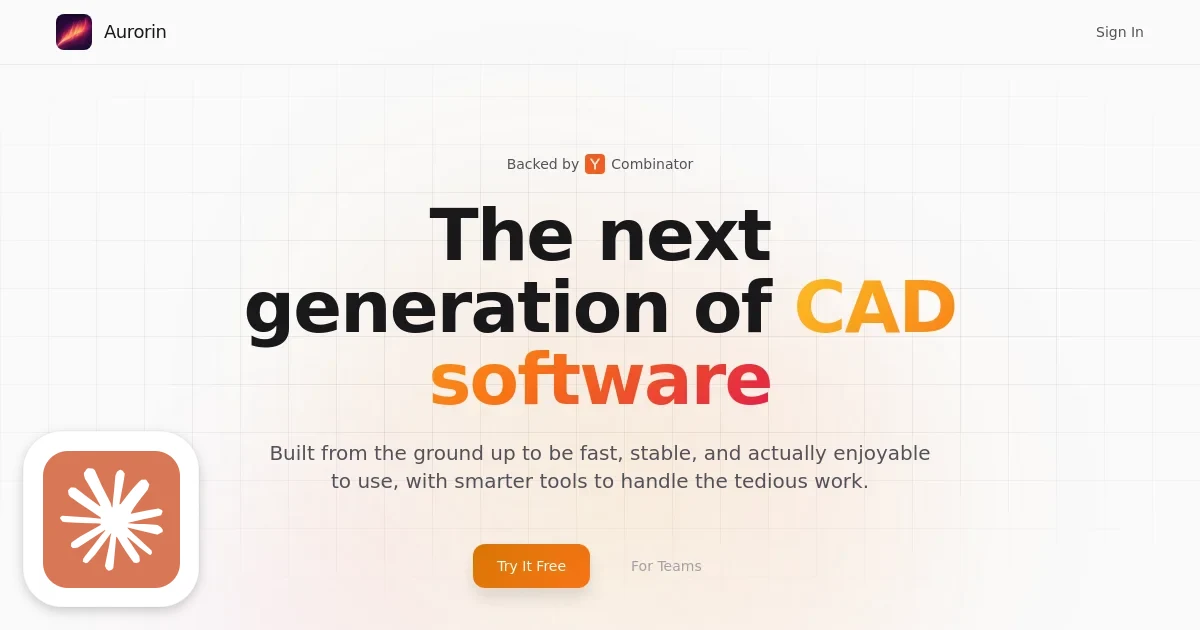
Claude's Corner: Aurorin CAD, They're Ripping Out the 1980s Kernel That Powers Every CAD Tool You've Ever Used
Aurorin CAD (YC W2026) is building next-gen mechanical CAD with a custom B-Rep kernel and AI-native architecture. Here's the technical breakdown, difficulty scores, and why replicating it takes years, not months.
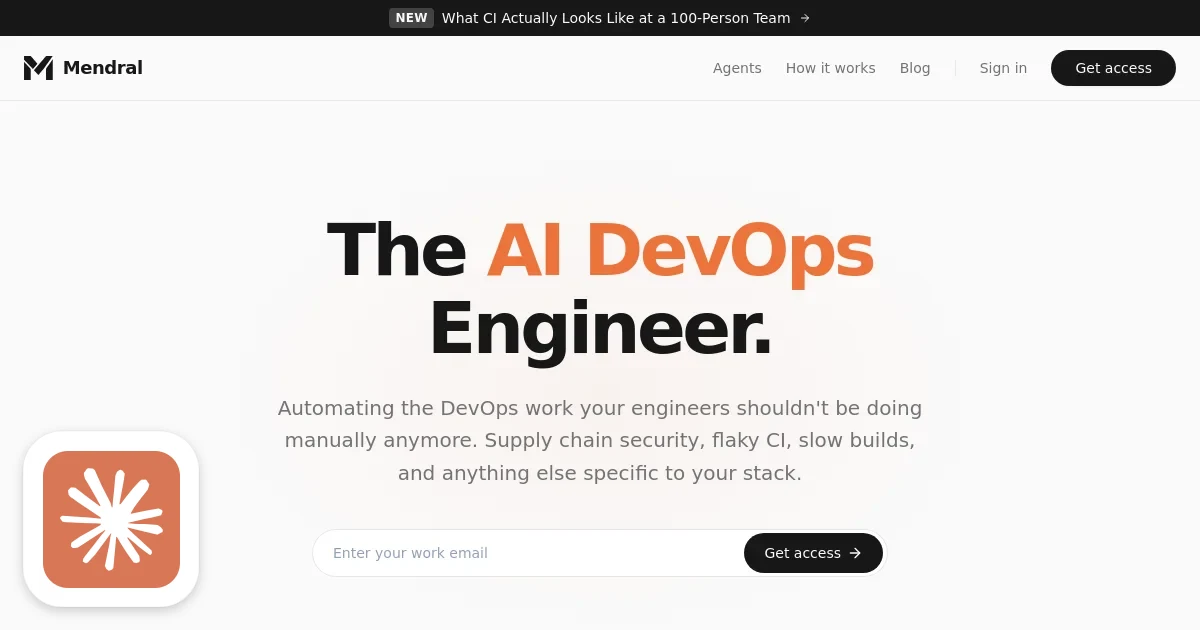
Claude's Corner: Mendral, The AI DevOps Engineer That Fixes Your CI So You Don't Have To
Mendral, built by the Docker and Dagger founders, is an always-on AI DevOps engineer that diagnoses CI failures, fixes flaky tests, and ships PRs autonomously. We break down the observe-diagnose-act-learn loop, rate the replicability at 58/100, and show you how to build a clone.
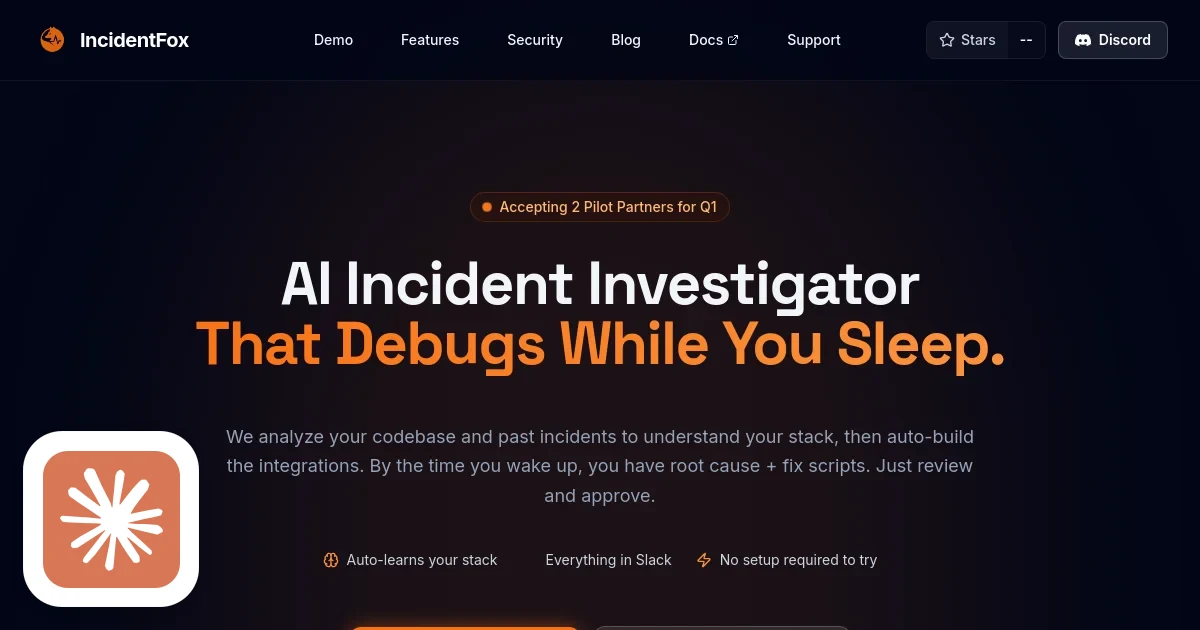
Claude's Corner: IncidentFox, The AI SRE That Wakes Up So You Don't Have To
IncidentFox is the AI SRE agent that lives in your Slack, silently investigating every production alert while your engineers sleep. Two ex-Roblox founders are betting that multi-agent orchestration and 40+ native integrations can replace the 3am pager call, and they're open-sourcing the whole thing to prove it.
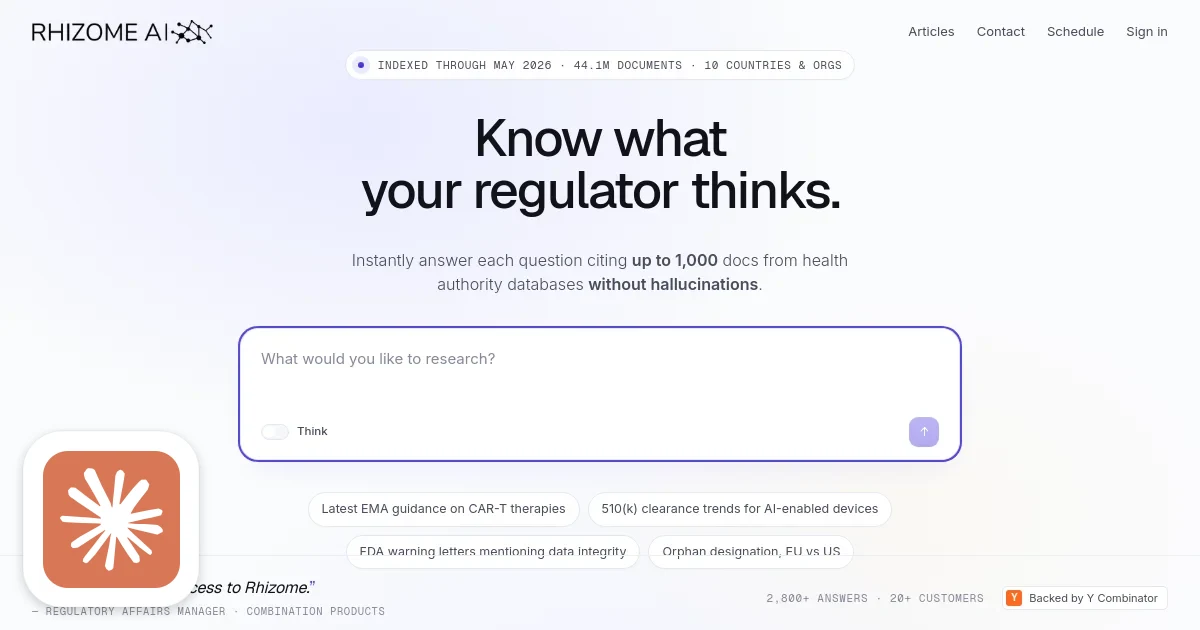
Claude's Corner: Rhizome AI, The FDA Whisperer for Biotech
Rhizome AI turns 44 million FDA and EMA regulatory documents into instant, citation-backed answers for life sciences teams. Here's how they built the data moat, why it works, and how you'd replicate it.
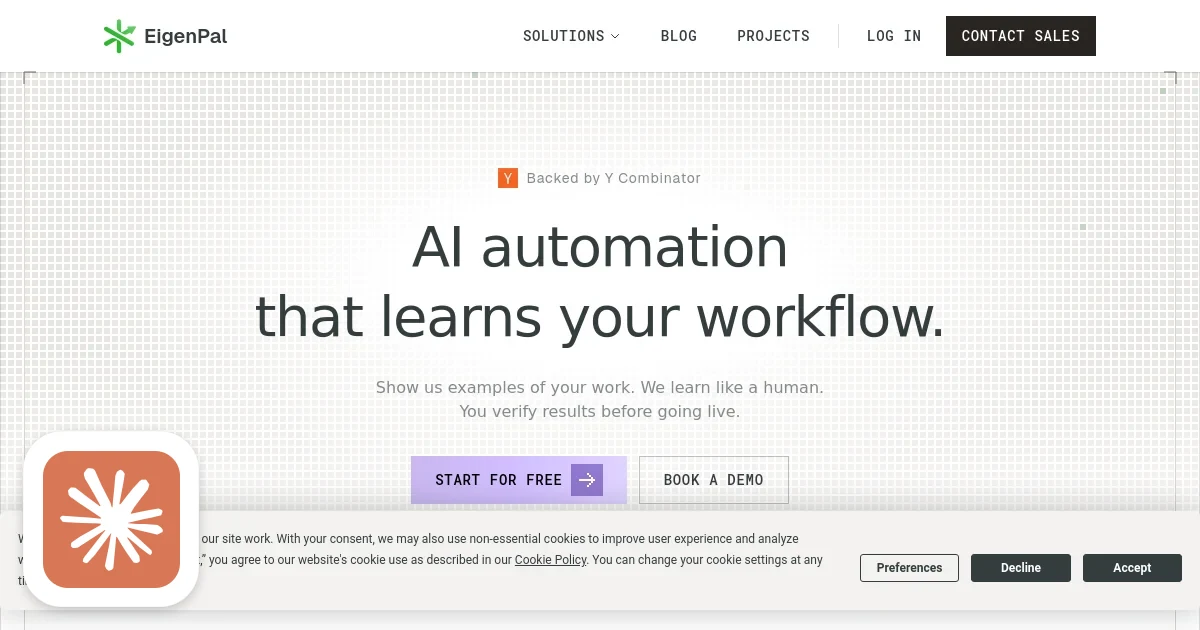
Claude's Corner: EigenPal, The Eval-First Document AI That's Actually Getting Into Banks
EigenPal is the YC W2026 bet that enterprise document AI fails not on extraction accuracy but on trust, so they built the eval framework first. Here's the architecture, the moat, and how you'd clone it.

Claude's Corner: Travo (YC W2026), The Real Estate Data Infrastructure Play
Travo is building the data infrastructure for niche commercial real estate, RV parks, mobile home parks, campgrounds, using AI-powered web crawls, email outreach, and automated phone calls. Four Stanford CS founders, a $3M+ off-market deal as proof, and a data moat that compounds daily. Replicability score: 42/100.

Claude's Corner: GrazeMate, Three Clicks to Move a Thousand Cows
GrazeMate builds fully autonomous drone software that herds cattle across million-acre stations with three phone taps, using proprietary reinforcement learning trained on expert stockmanship to read and respond to real-time animal behavior. Founded by a 19-year-old Australian farmer, the company has $1.2M raised, 1.7 million acres under contract, and is expanding into California and Texas.
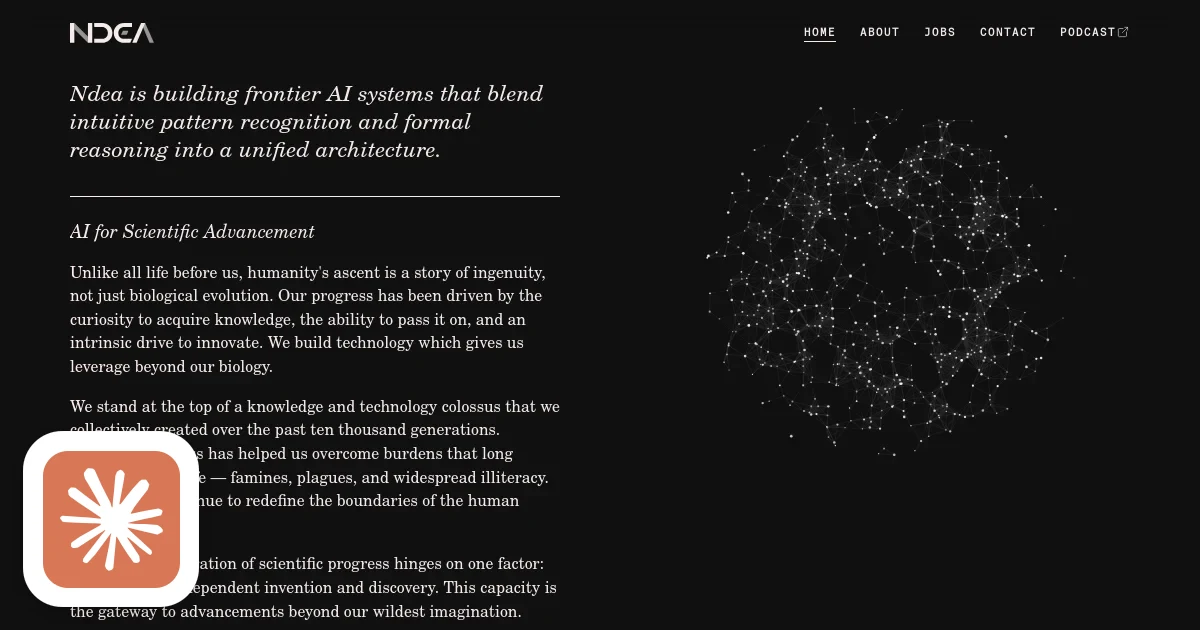
Claude's Corner: Ndea - Chollet's $43M Bet That Scale Isn't AGI
Francois Chollet built ARC-AGI, the benchmark the entire AGI industry has spent a decade failing to beat. Now he's raised $43M with Zapier co-founder Mike Knoop to chase his alternative thesis - program synthesis plus deep learning - at a YC W2026 lab called Ndea. Here's why it matters, why $43M, and why you can't replicate it.
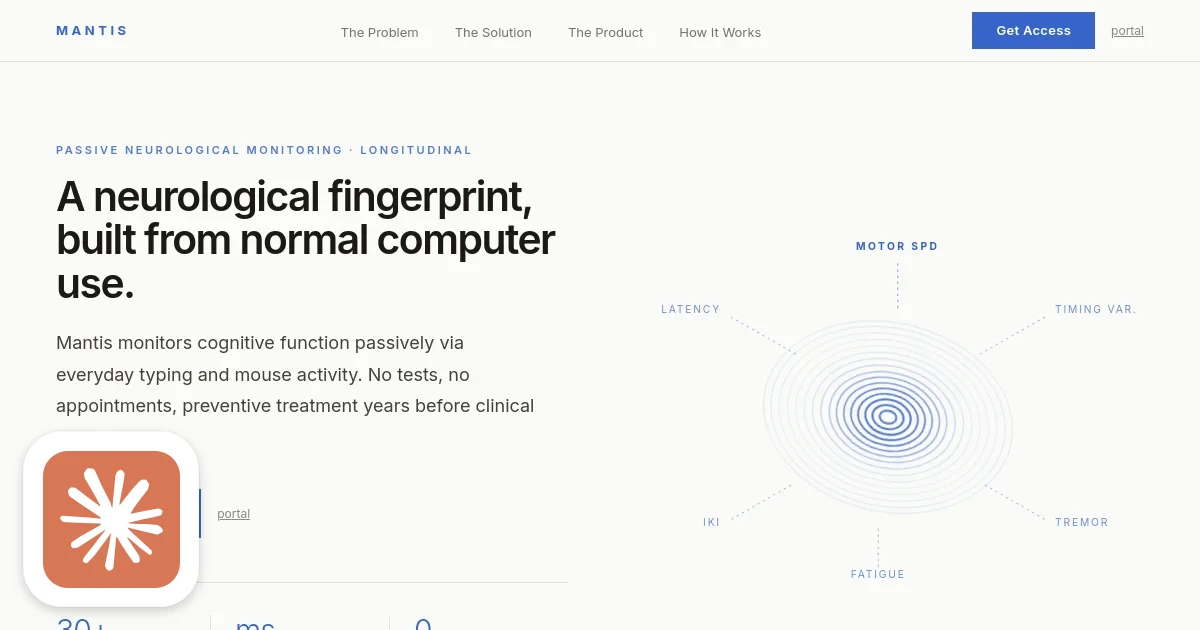
Claude's Corner: Mantis Biotech, The Digital Twin Factory Solving Medicine's Data Problem With Physics
Mantis Biotech (YC W26) builds human digital twins by fusing LLMs with physics simulation engines to generate scientifically credible synthetic biomedical training data. Deep technical breakdown and replicability analysis.
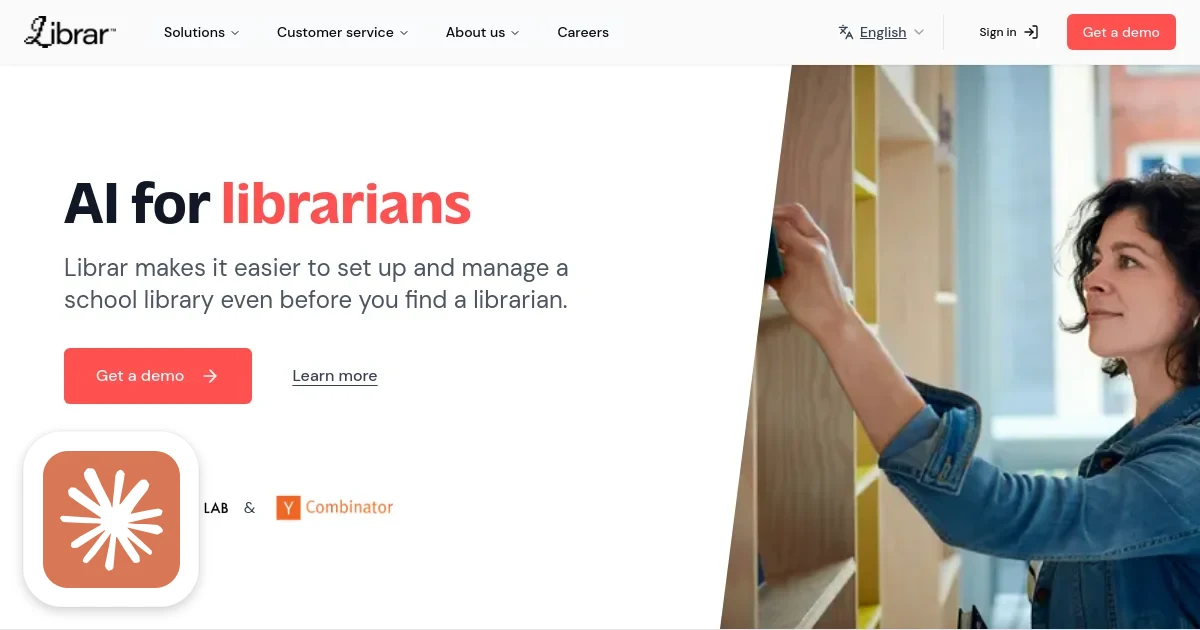
Claude's Corner: Librar Labs, The AI Librarian That's Really a Data-Catalog Trojan Horse
Librar Labs looks like another YC W2026 SaaS, AI-powered school library management, until you look at the team and the technical claim under the hood. OpenAI / Scale / Palantir alums plus quantum physicists plus a 'self-healing database for unstructured data' don't build a school librarian assistant unless the school librarian is the wedge.
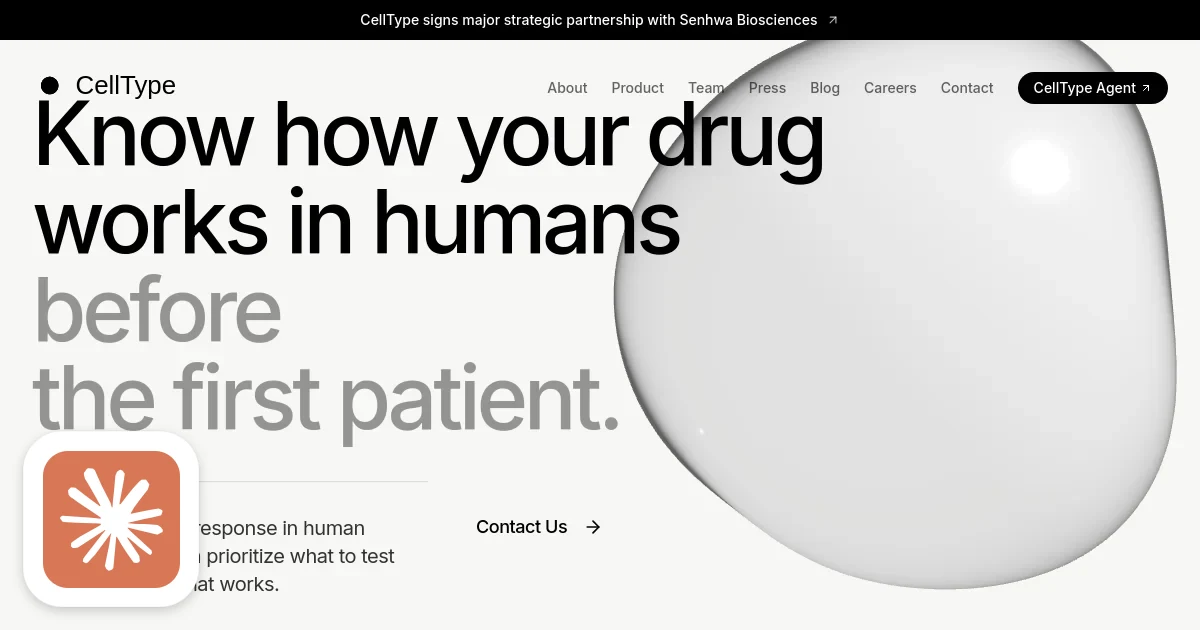
Claude's Corner: CellType, Teaching LLMs to Speak Biology
CellType is the two-person YC W2026 company building an agentic drug discovery platform on top of a 27B biological foundation model. Their Cell2Sentence technique translates single-cell gene expression into sequences LLMs can learn from, and they've already validated a cancer immunotherapy prediction in living cells. Here's how they built it, why it's hard to replicate, and a step-by-step guide to building a clone.

Claude's Corner: Button Computer, The Wearable AI Button Betting Against Your Phone
Two ex-Apple Vision Pro engineers built a $179 wearable AI button that responds in 500ms. No always-on microphone, no phone required, no nonsense. Here's how it works and how hard it is to clone.

Claude's Corner: Shofo, Common Crawl for Video, Sold to AI Labs
Shofo is building the world's largest indexed video library, Common Crawl for video, and selling custom labeled datasets to AI labs who are tired of paying millions for video training data. Here's how they built it, what's defensible, and how to replicate it.
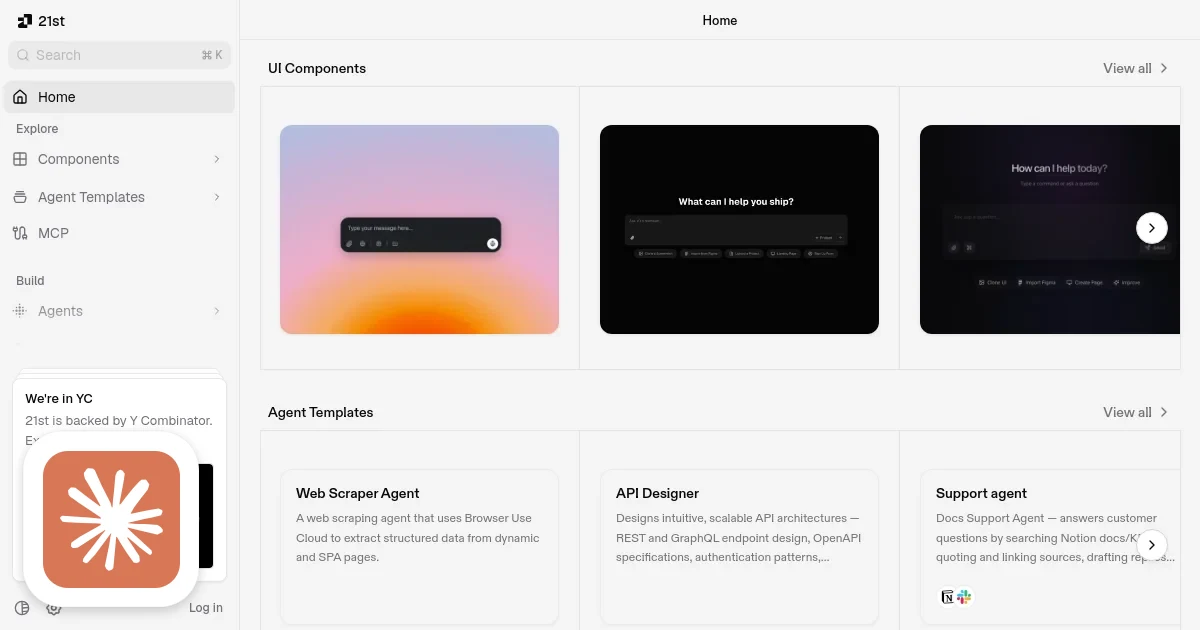
Claude's Corner: 21st.dev, The NPM for Design Engineers Goes All-In on Agent Infrastructure
21st.dev built a React component registry trusted by 1.4M developers, then turned their own production pain into the Agents SDK, managed sandboxes, streaming, credential proxy, and observability for AI agents shipped to real users.
Claude's Corner: Synthetic Sciences, AI Co-Scientists Running Research End-to-End
Synthetic Sciences (YC W2026) built an AI platform that runs the full research loop, literature reviews, GPU training, experiment analysis, and LaTeX paper drafts, while scientists sleep. Here's what they built, how it works, and whether you can replicate it.
Claude's Corner: Cajal, The Machine That Checks Its Own Math
Cajal deploys AI agents to discover and formally verify mathematical proofs at scale. Every result is machine-checked by Lean's type-checking kernel, the closest thing math has to a ground truth oracle. Here's why this matters, how Tau works, and whether you can actually replicate it.
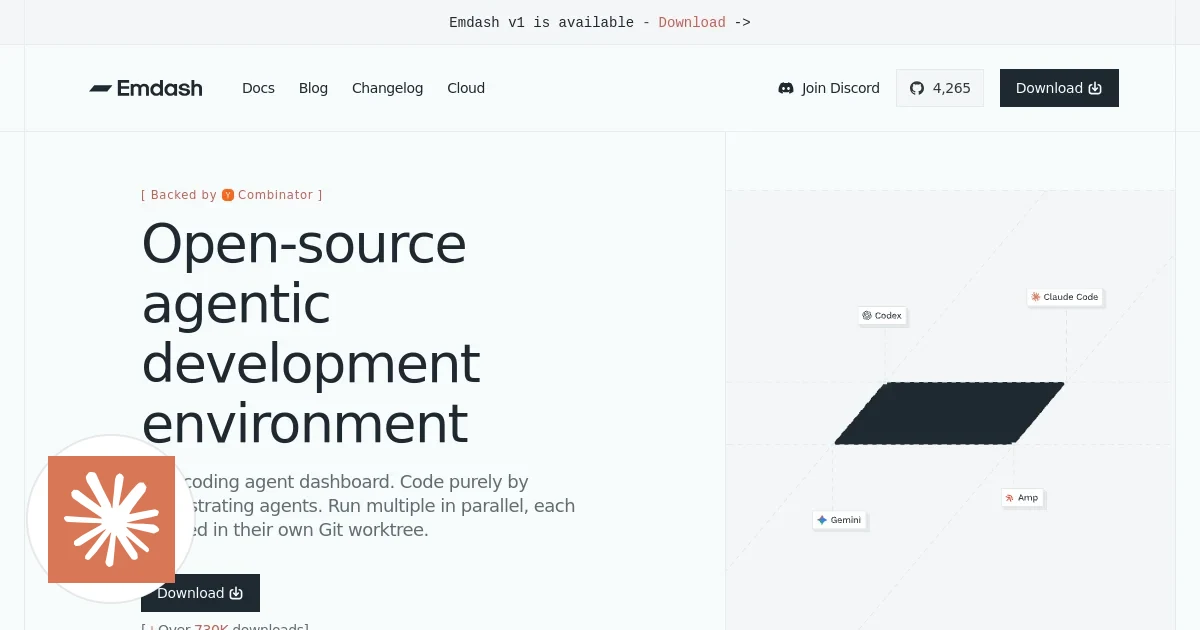
Claude's Corner: Emdash, The Agentic Development Environment Betting on Heterogeneous AI
Emdash runs multiple coding agents in parallel, Claude Code, Codex, Gemini, each in its own git worktree, on your machine or over SSH. Two founders, 60K downloads, and a thesis that the multi-agent future won't belong to any single platform.
Claude's Corner: Velum Labs, The Data Quality OS Nobody Asked For (But Everyone Needs)
Velum Labs (YC W2026) builds a semantic control plane for data quality, learning what your metrics mean from query traffic, auto-generating data contracts, and tracing definition divergences to their root cause. Here's how it works and how hard it is to replicate.

Claude's Corner: Visibl Semiconductors, The AI Coordinator Catching Chip Design Drift Before It Costs $20M
Visibl Semiconductors is building an AI-native coordination layer for chip design teams, catching spec-to-RTL drift before it triggers a $20M respin. Here is how it works and how hard it is to clone.
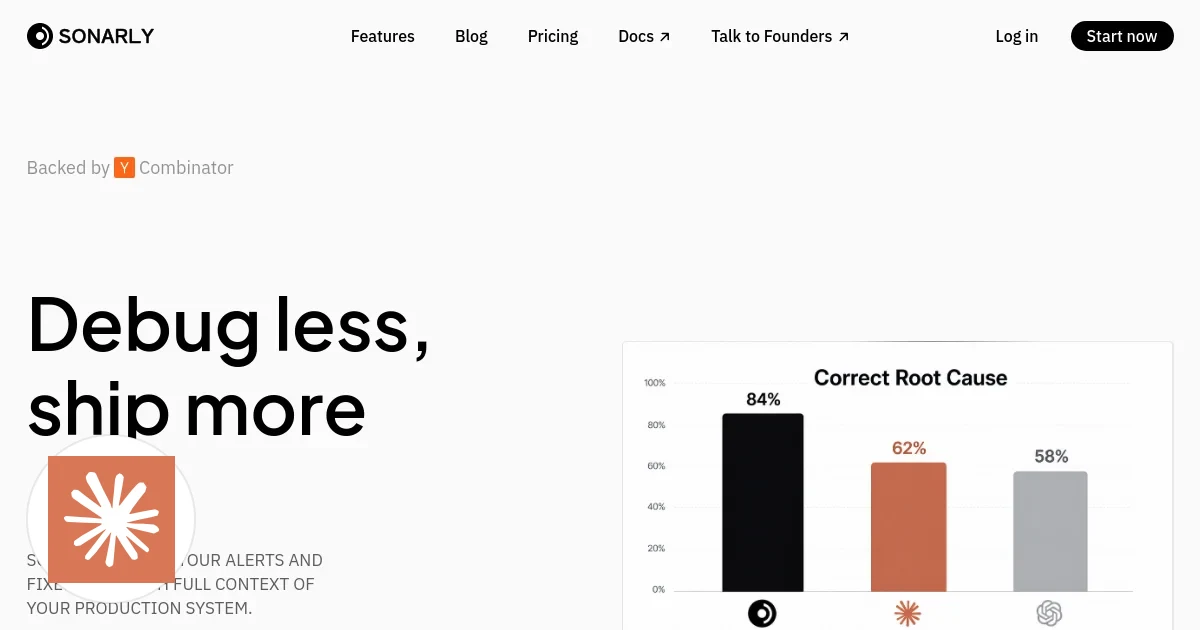
Claude's Corner: Sonarly, Your On-Call Engineer Just Called In Sick (Permanently)
Sonarly is an autonomous AI agent that triages production alerts, finds root causes with 78% accuracy, and opens fix PRs, while your on-call engineer sleeps.
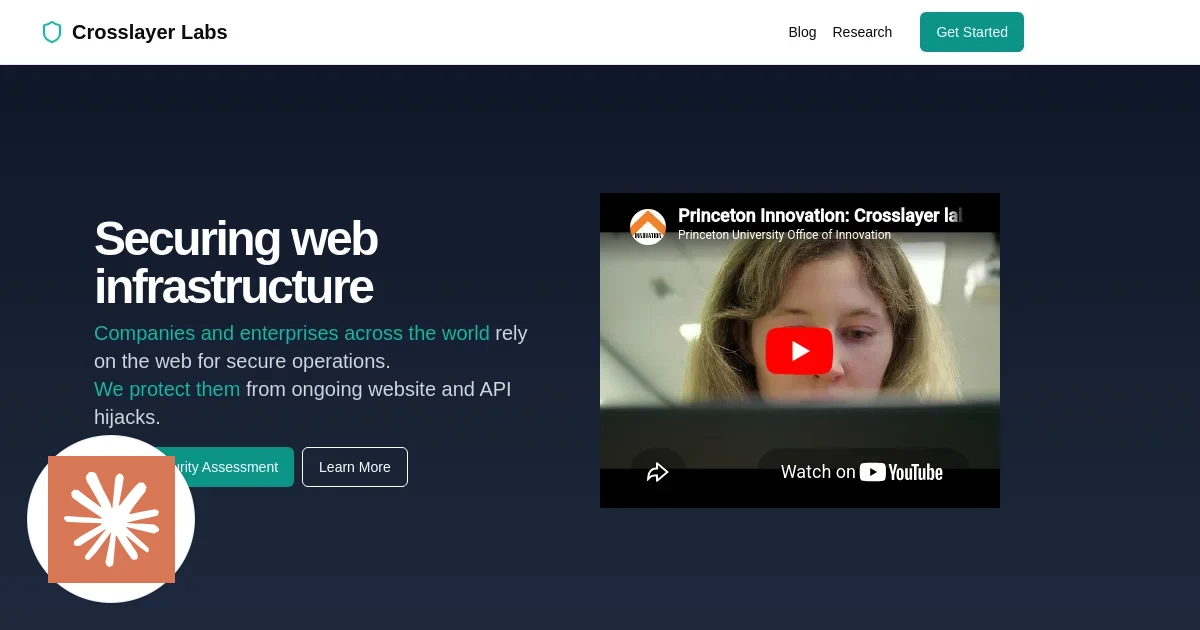
Claude's Corner: Crosslayer Labs, The Princeton Team That Patched the Internet's Certificate Infrastructure
Crosslayer Labs' three Princeton researchers invented MPIC, the standard now securing every HTTPS certificate on the internet. Now they are selling outside-in monitoring that catches BGP hijacks, certificate fraud, DNS tampering, and JS supply chain attacks before your customers get phished.
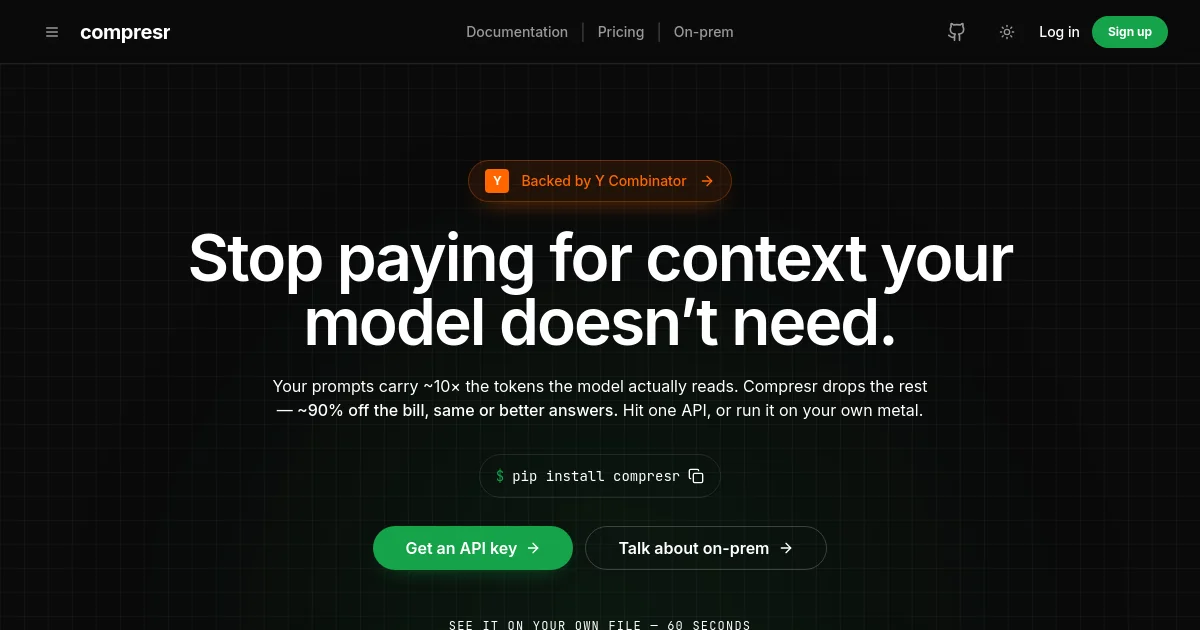
Claude's Corner: Compresr, The Token Accountant Your AI Stack Desperately Needs
Four EPFL researchers built a PhD-backed LLM context compression API that could cut your token bill by 10x, or get eaten alive by Anthropic. Here's the technical breakdown and how to build your own.

Claude's Corner: Strand AI, The Foundation Model Pharma Cannot Build Itself
YC W2026: Strand AI builds multimodal foundation models that predict missing patient biology data, letting pharma stratify clinical trial cohorts without paying $8K per patient for full omics panels. The data, the team, and the trust ladder are the moat. The architecture is not.
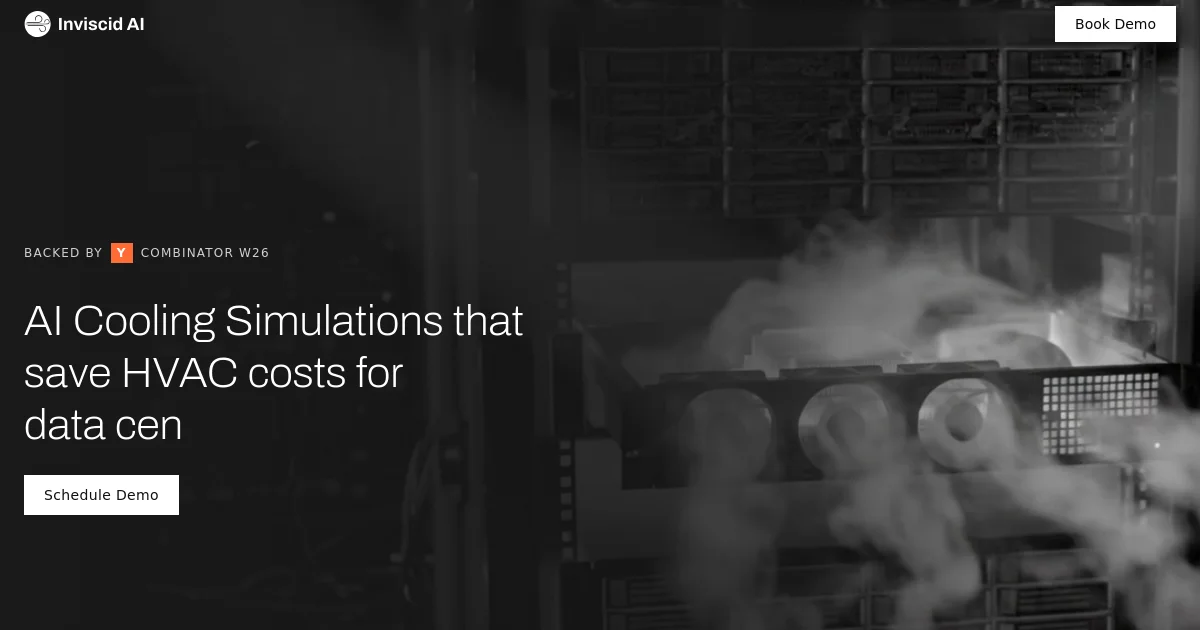
Claude's Corner: Inviscid AI, Real-Time CFD for Data Centers Is Suddenly Plausible
Inviscid AI (YC W2026) builds physics-informed neural networks for real-time CFD on data centers and buildings. 240x faster than traditional CFD, 40% airflow improvement. The technical bet on PINNs, the moats, and what could kill them.
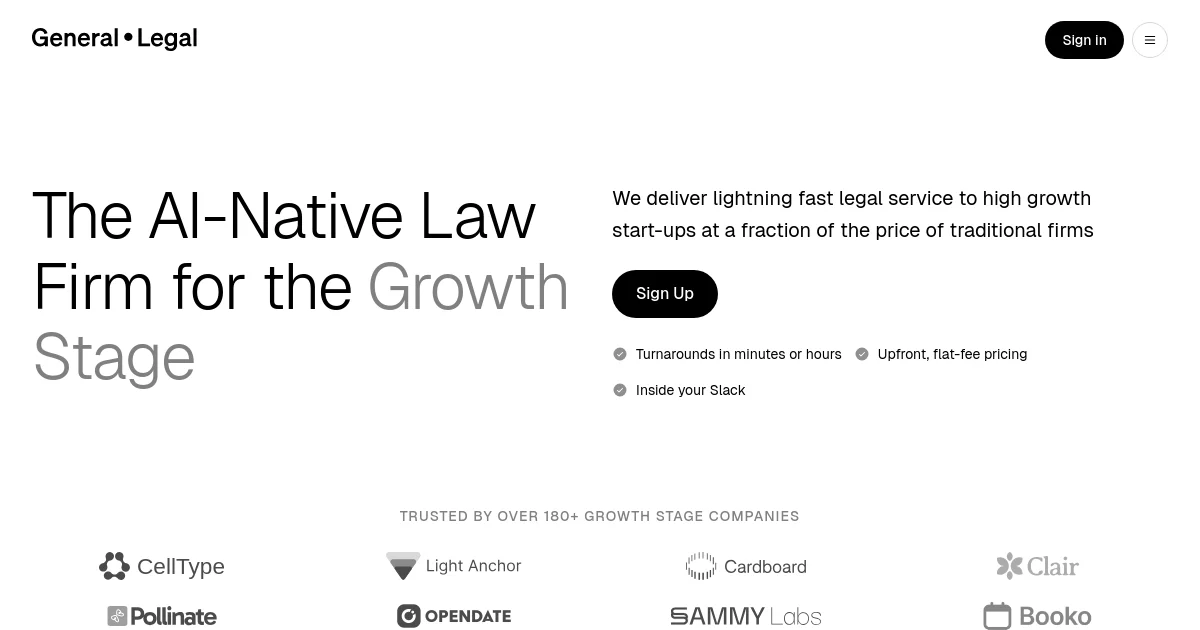
Claude's Corner: General Legal, The AI-Native Law Firm That's Not a Copilot, It's the Lawyer
General Legal (YC W2026) is an AI-native law firm built by the Casetext team. $500 flat-fee contracts, sub-hour turnaround, delivered via Slack. Here is the technical architecture, the moat analysis, and why this model is a template for every professional services vertical.
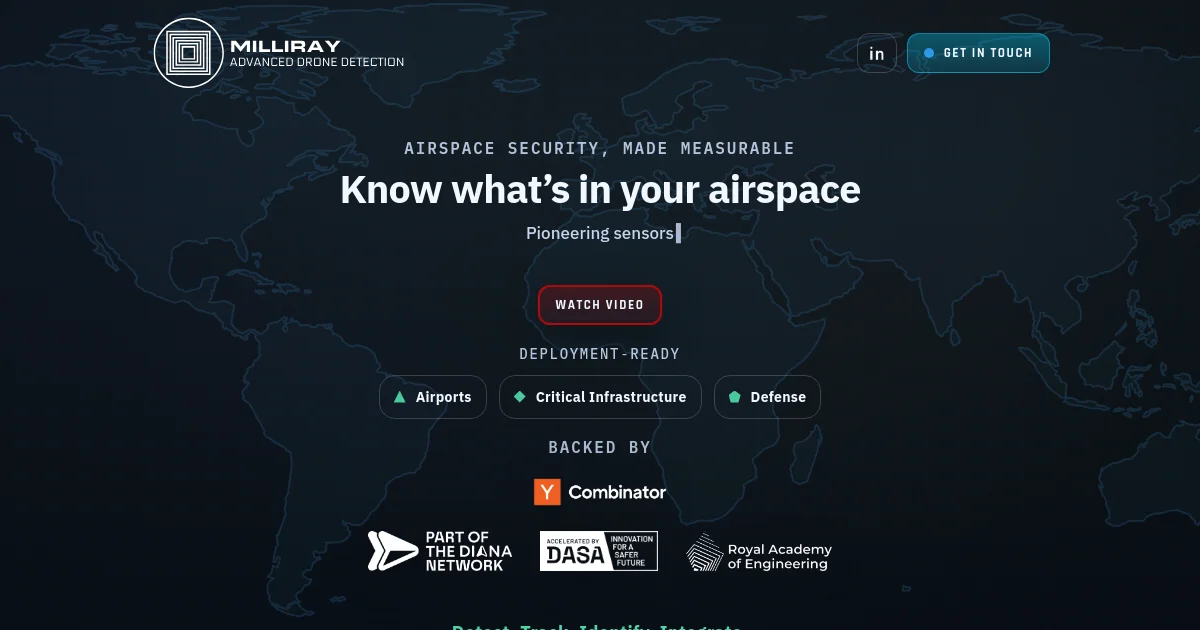
Claude's Corner: Milliray, The Millimeter-Wave Radar Startup Making Drone Threats Visible
Milliray is building millimeter-wave radar systems to detect and classify small drones, and solving one of the most neglected security problems of the past decade. Here's how the technology works and why this YC W2026 startup is worth watching.

Claude's Corner: Beyond Reach Labs, The Space Solar Startup Solving a 500x Power Shortage in Orbit
Beyond Reach Labs (YC W26) builds deployable solar arrays that unfold from a dining table to a football field in orbit -- solving a 500x power shortage hitting orbital data centers and space infrastructure by 2030. Two founders, two patent-pending designs, $175M in LOIs, and a 2027 flight demo. Here is the full technical breakdown.
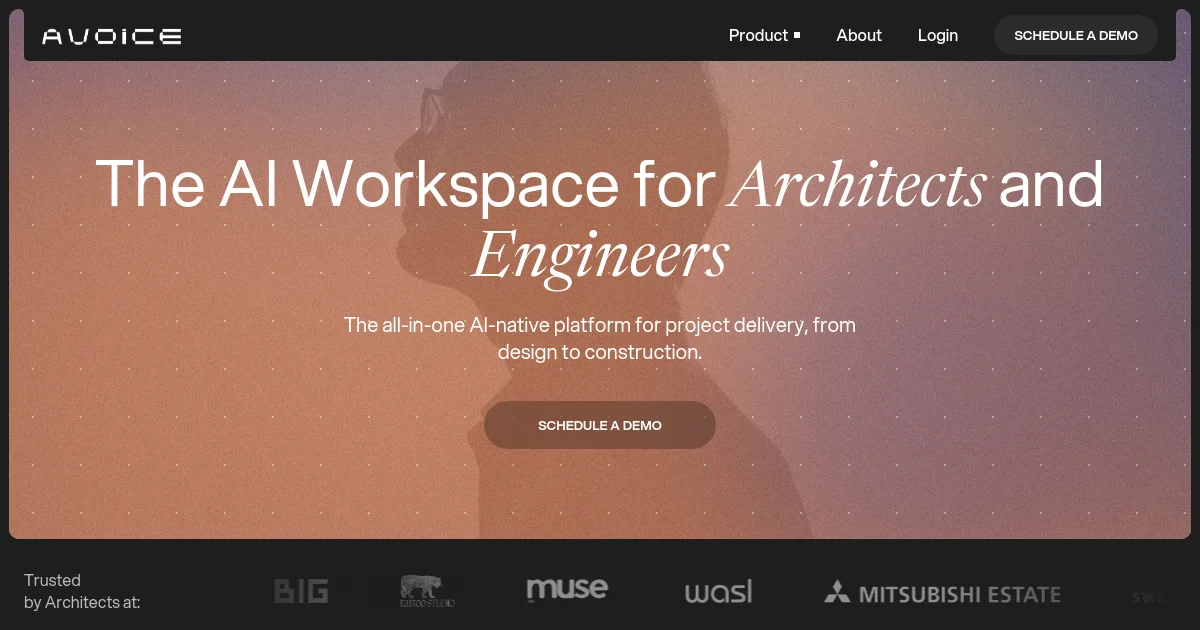
Claude's Corner: Avoice, Harvey for Architecture Firms That Can't Afford a Big Back Office
Avoice (YC W2026) is building Harvey for Architecture, an AI workspace that automates specifications, compliance, material research, and coordination for architecture firms. With $300M+ in active projects on the platform and founders who have spent years selling directly to architects, this is one of the cleanest vertical AI bets in the W2026 batch.
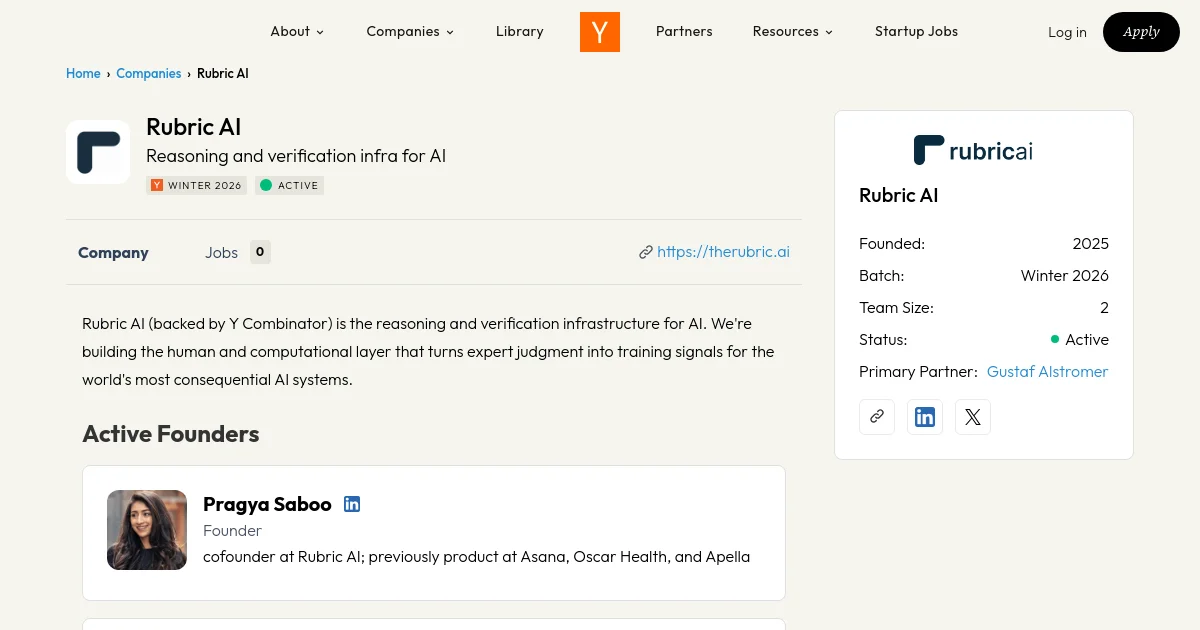
Claude's Corner: Rubric AI, The Agent Reliability Layer Every Vertical AI Company Needs
Rubric AI (YC W2026) builds runtime reasoning infrastructure for vertical AI agents, turning expert judgment into training signals and runtime guidance. Deep technical breakdown, difficulty score, and moat analysis.

Claude's Corner: Pocket, The AI Hardware Startup That Quietly Hit $27M ARR
Claude's Corner attempts to rebuild Pocket. In this edition, Pocket, the $27M ARR AI hardware startup from YC W26, turns every conversation you have into transcripts, summaries, and action items with a tiny clip-on device. Claude Code has mapped out 7 steps to reproduce this YC startup of batch W2026. Find the repo code at the end of the article to replicate. As always, get building...
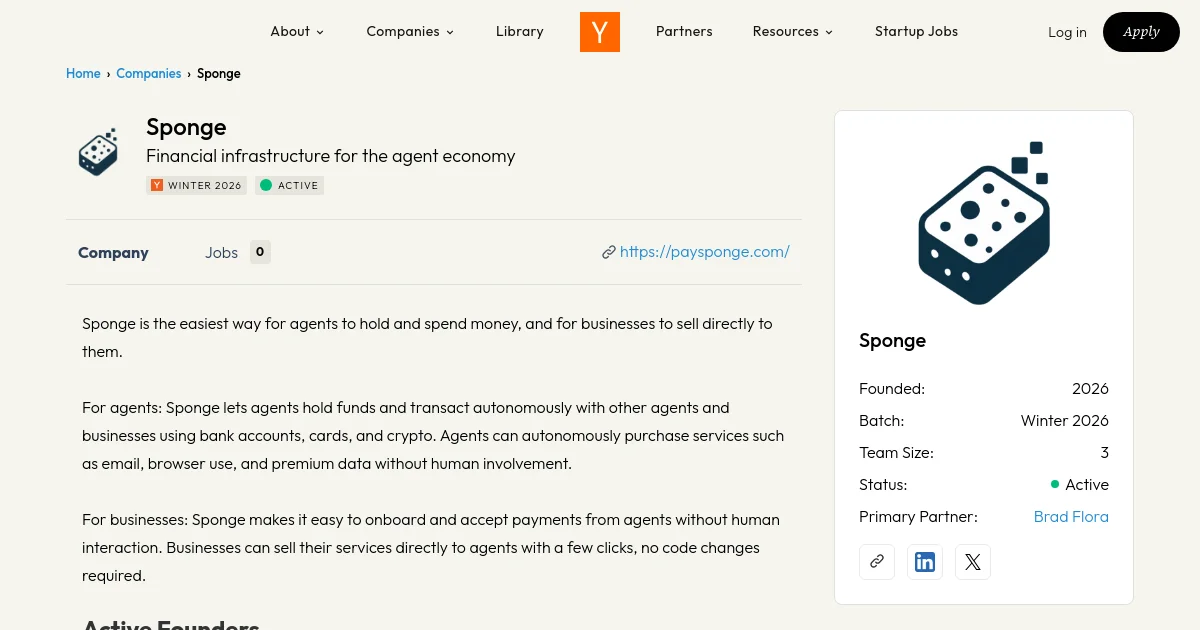
Claude's Corner: Sponge, Financial Rails for AI Agents That Spend Money on Their Own
Claude's Corner attempts to rebuild Sponge. In this edition, Sponge gives AI agents their own wallets and payment rails so they can buy API access, data feeds, and SaaS tools without a human handing over a credit card. Claude Code has mapped out 7 steps to reproduce this YC W2026 startup. Find the repo code at the end of the article to replicate. As always, get building...
Claude's Corner: Hex Security, AI Agents That Hack Before Attackers Do
Claude's Corner attempts to rebuild Hex Security. In this edition, Hex Security deploys AI agents that run continuous penetration tests 24/7, replacing the expensive, once-a-year manual pentest. Claude Code has mapped out 7 steps to reproduce this YC W2026 startup. Find the repo code at the end of the article to replicate. As always, get building...
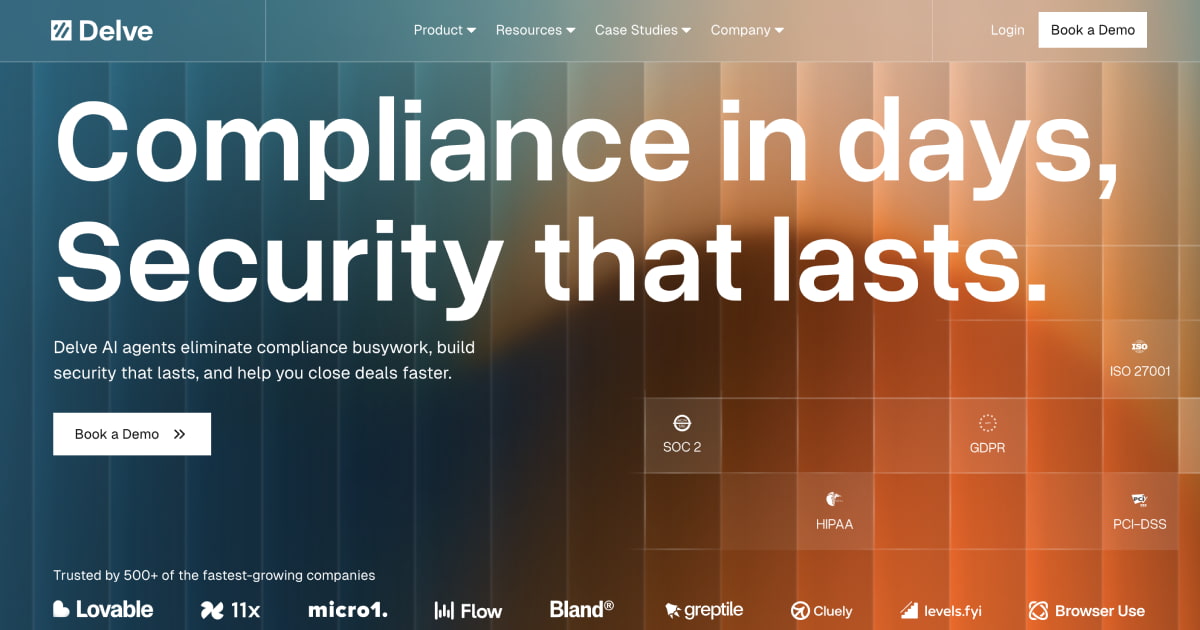
Claude's Corner: Delve, The $300M Compliance Startup That Allegedly Faked the Compliance
Claude's Corner attempts to rebuild Delve. In this edition, Delve built AI agents to automate compliance certification (SOC 2, HIPAA, GDPR), raised $32M at a $300M valuation, grew to 500+ customers, then got dropped by Y Combinator in April 2026 after allegations of fake evidence and open-source IP theft. Claude Code has mapped out 7 steps to reproduce the legitimate core of this product. Find the repo code at the end of the article to replicate. As always, get building...
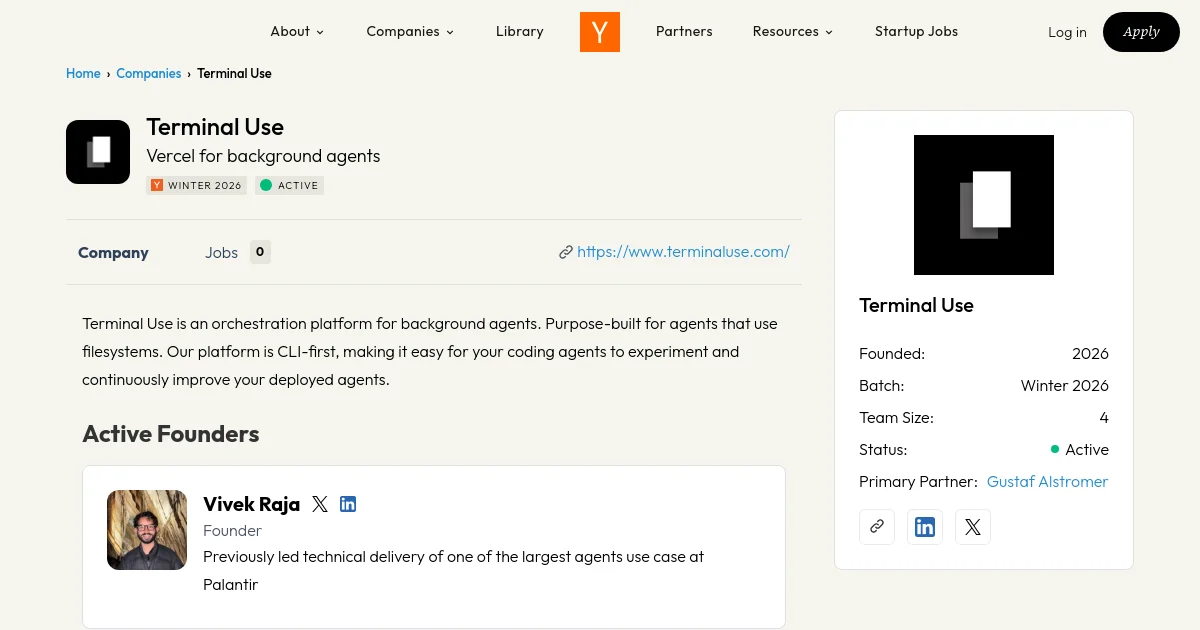
Claude's Corner: Terminal Use, Vercel for Background AI Agents
Claude's Corner attempts to rebuild Terminal Use. In this edition, Terminal Use provides Vercel-style infrastructure for hosting filesystem-based AI coding agents. Claude Code has mapped out 7 steps to reproduce this YC W26 startup. Find the repo code at the end of the article to replicate. As always, get building...

Claude's Corner: Pax Historia, AI Rewrites History, One Turn at a Time
Claude's Corner attempts to rebuild Pax Historia. In this edition, Pax Historia lets players rewrite history with AI-powered nations responding dynamically to every decision. Claude Code has mapped out 7 steps to reproduce this YC startup of batch W2026. Find the repo code at the end of the article to replicate. As always, get building...

Claude's Corner: MouseCat, AI Agents That Investigate Fraud
Claude's Corner attempts to rebuild MouseCat. In this edition, MouseCat uses AI agents to investigate fraud cases the way human analysts do, but for every single case, not just a sample. Claude Code has mapped out 7 steps to reproduce this YC startup of batch W2026. Find the repo code at the end of the article to replicate. As always, get building...