


AI Research
50 articles in this category
Compute Once: Unlocking AI Agent Efficiency
A radical proposal to precompute LLM KV caches, slashing inference costs by up to 50x and enabling a new compute-efficient AI agent paradigm.
HYDRA-X: Unifying Image & Video Tokenization
HYDRA-X, a novel Vision Transformer-based UMM, unifies image and video tokenization, enhancing editing consistency and performance through causal attention and latent-level manipulation.
Humanoids Learn Self-Other Distinction
Humanoid robots now learn self-other distinction and build predictive self-models from sensory data, enabling better collaboration and task performance in human-robot environments.

AI spots new LOTUSLITE variant
Microsoft's AI agent 'Ire' has identified a new LOTUSLITE malware variant missed by traditional security tools, showcasing AI's prowess in behavioral analysis.
Unlocking Ultra-Long Context for LLMs
MiniMax Sparse Attention breaks the context window barrier for LLMs, enabling millions of tokens with significant compute reduction and practical speedups.
Mana Reimagines Dexterous Robotics
Mana framework reinterprets dexterous robotics as animation, achieving zero-shot sim-to-real transfer for articulated tool manipulation.
From LLM Agents to Scientific Knowledge Graphs
Agents-K1 revolutionizes LLM research agents by creating agent-native scientific knowledge graphs from full papers, enabling deeper scientific reasoning.
5 AI Research Papers Shaping AI's Future
Discover five key AI research papers that reveal the current trajectory and future directions of artificial intelligence development.
Rethinking VLM Token Reduction
Reroute transforms VLM token reduction from irreversible pruning to recoverable routing, improving grounding performance without sacrificing efficiency.
Automating Scientific Discovery
ATLAS, an active learning framework, automates the discovery of interpretable mechanistic models, achieving 5-10x sample efficiency gains.
VLA Models Unlock Decentralized Multi-Robot Teams
CHORUS leverages pretrained VLA models for decentralized multi-robot collaboration, achieving significant performance gains without inference-time communication.
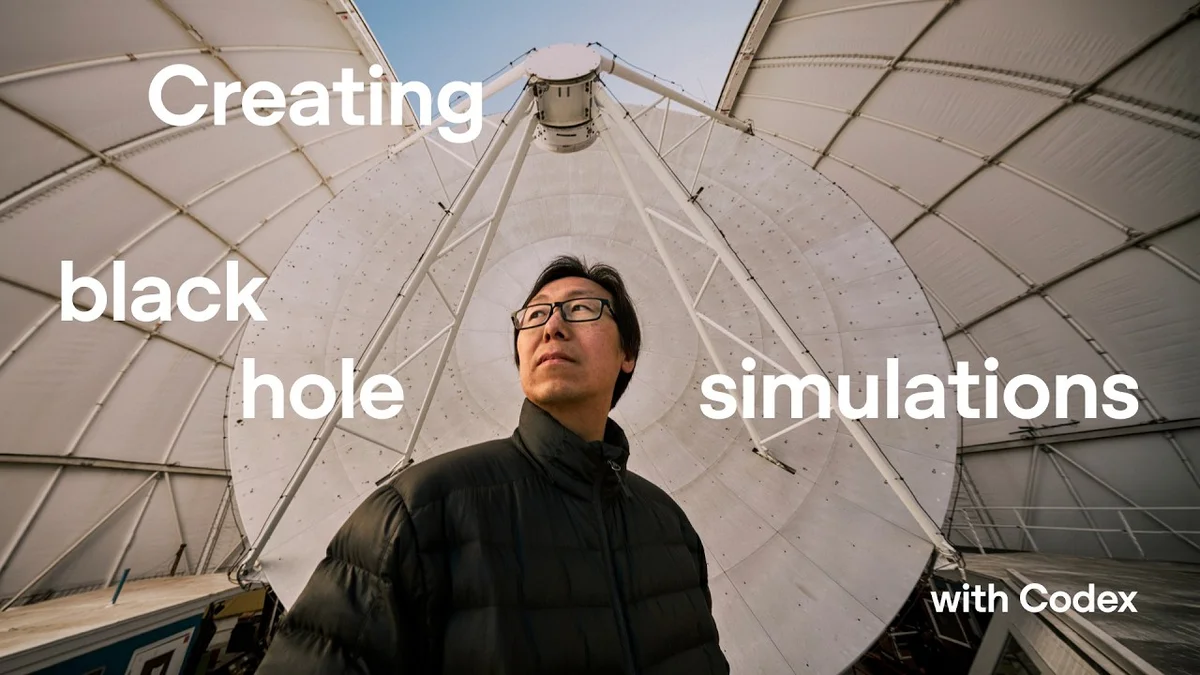
Codex Aids Black Hole Simulation Breakthrough
This video explores how the AI model Codex is revolutionizing the creation of black hole simulations, making previously intractable problems computationally feasible and accelerating astrophysical research.

DeepMind's Kilpatrick on AI Models Eating Harnesses
Google DeepMind's Logan Kilpatrick delves into the AI concept of models "eating the harness," explaining how over-specialization hinders generalization and what can be done to prevent it.
Causal Inference's Counterfactual Blind Spot
Predictive AI models fail on counterfactual couplings. A new world model using semidefinite kernels offers a solution for robust causal inference.
Steering LRMs Beyond Output Degradation
A new probe-based method, FPCG, distinguishes prediction from detection features to enable precise large reasoning models steering with minimal output quality degradation.
LLMs Accelerate FPGA Design
LLMs are now automating complex FPGA accelerator design, reducing time and expertise needed for efficient AI hardware deployment.
DiffusionGemma: Google's AI is 4x Faster
Google DeepMind's DiffusionGemma model offers up to 4x faster text generation, enabling new real-time AI applications.
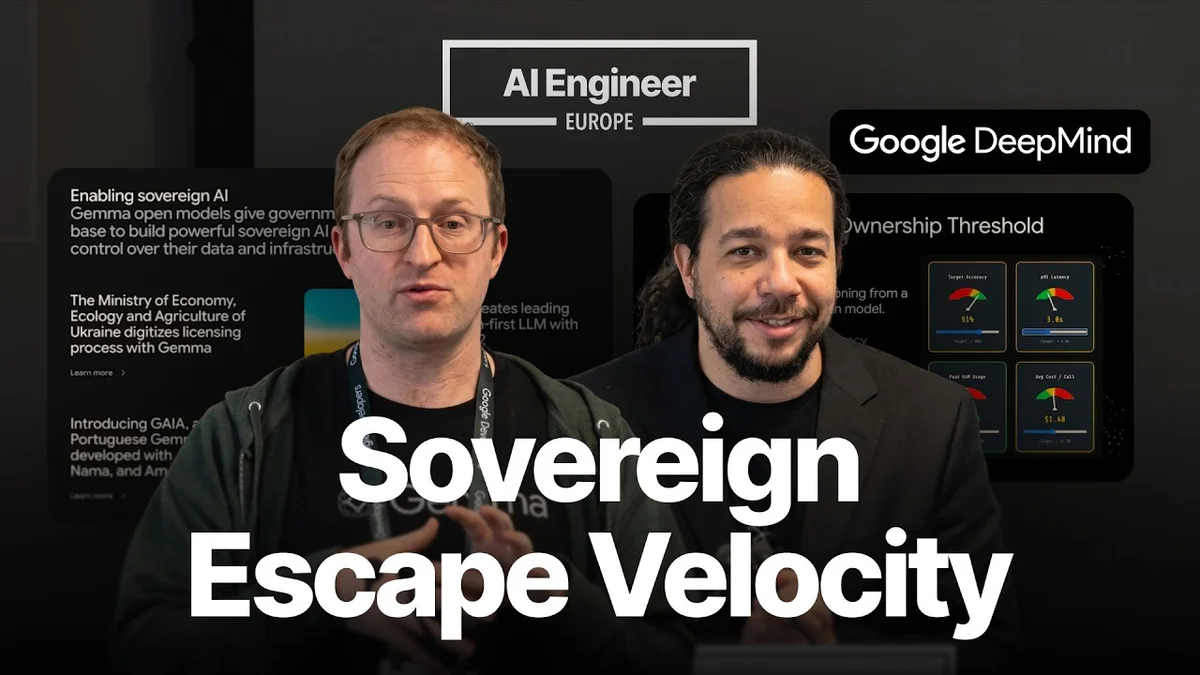
Google DeepMind Discusses Open Models & AI Ownership
Google DeepMind's Gus Martins and Ian Ballantyne discuss the benefits of open AI models like Gemma for ownership, control, and custom applications.
Topology-Aware Operator Learning
Topological Neural Operators (TNOs) provide a unified framework for operator learning on cell complexes, improving PDE benchmark accuracy by integrating topological structures.
Personalized AI Agents Now Have a Benchmark
A new iOSWorld benchmark reveals AI agents' struggles with personalized, multi-app tasks, highlighting the need for richer context and advanced reasoning capabilities.
Images as the New Reasoning Medium
This paper introduces optical reasoning, enabling images to serve as the primary medium for LLM and MLLM reasoning, achieving higher token efficiency and competitive performance.
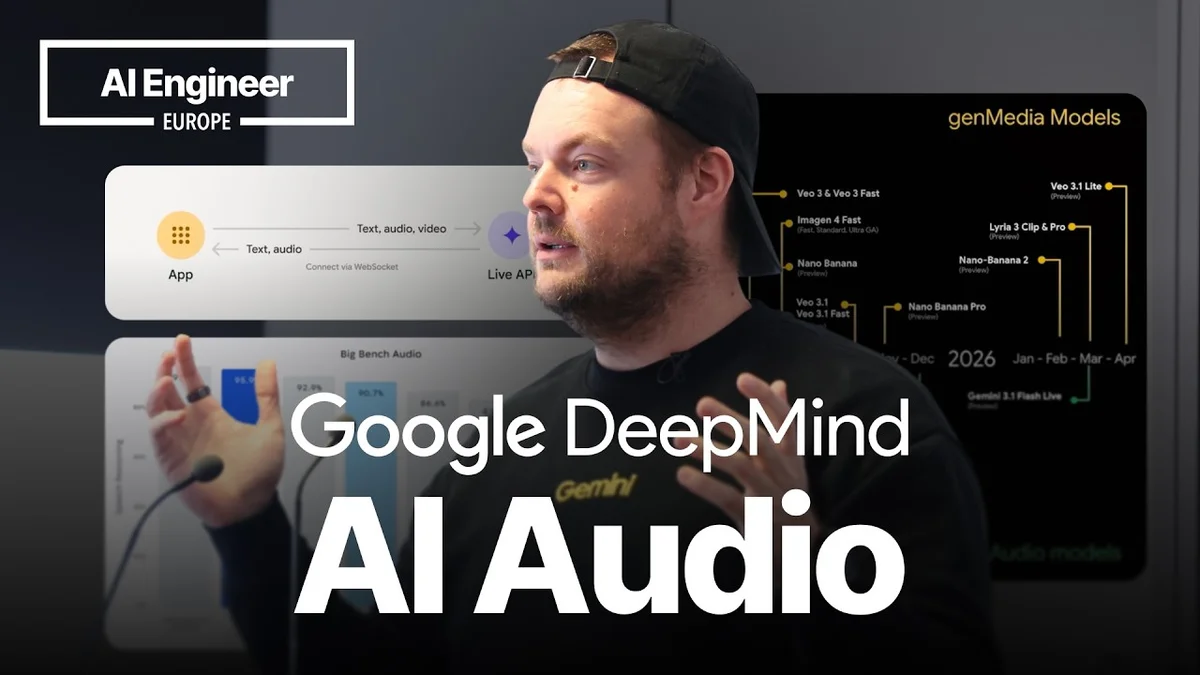
Gemini's Audio Stack: From Transcription to Music Generation
Google DeepMind's Thor Schaeff explores Gemini's audio stack, from advanced transcription to music generation with Lyria 3.
Google Rolls Out Gemini 3.5 Live Translate
Google's new Gemini 3.5 Live Translate offers real-time speech-to-speech translation across 70+ languages, enhancing Google Translate and Meet.
Google's Gemma 4 12B: AI on Your Laptop
Google's Gemma 4 12B model brings efficient, multimodal AI directly to laptops with a novel unified architecture.
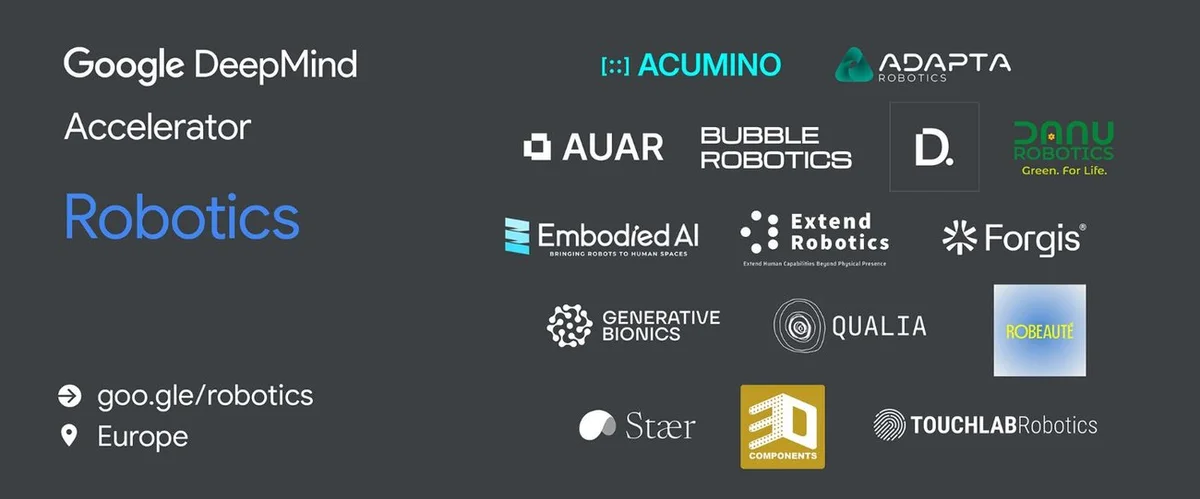
Google DeepMind Fuels European Robotics Startups
Google DeepMind's new accelerator program supports 15 European robotics startups, providing AI expertise and mentorship to build the future of physical AI.
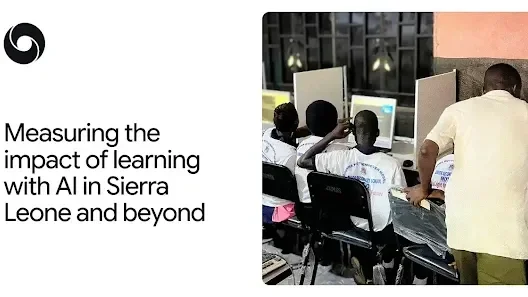
Gemini AI Boosts Math Skills in Sierra Leone Trial
Gemini's Guided Learning AI significantly boosted math scores in an 8-week Sierra Leone trial, demonstrating AI's potential as a teacher's assistant without replacing educators.
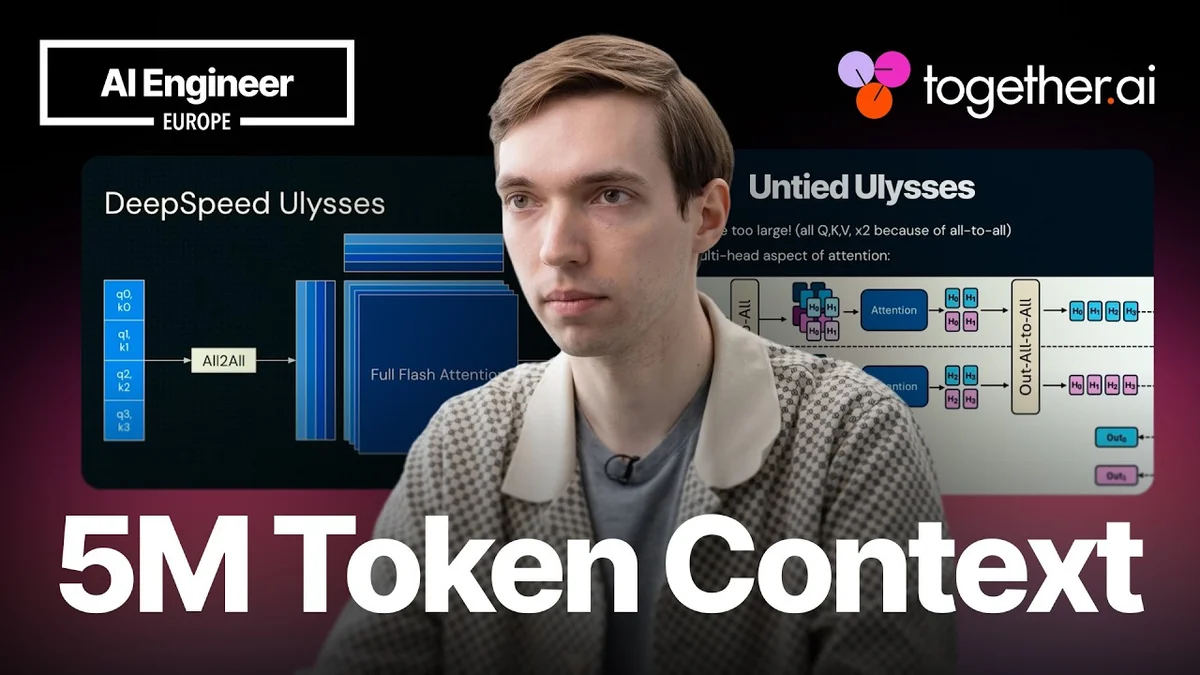
Together AI Pushes LLM Context Limits to 5 Million Tokens
Max Ryabinin from Together AI discusses breaking barriers in LLM training, detailing techniques to achieve 5 million token context lengths and their impact on memory and performance.
HANDOFF: Bridging AI Planning and Robot Control
HANDOFF revolutionizes the humanoid robot command space, enabling intuitive task planning and robust real-world manipulation through a distilled, multi-expert controller.
Code2LoRA: Repository Context without Overhead
Code2LoRA generates dynamic LoRA adapters for code LLMs, offering repository context without inference overhead and adapting to evolving codebases.

NF-CoT: High-Bandwidth Latent Reasoning
NF-CoT framework enables high-bandwidth latent reasoning using normalizing flows, boosting LLM performance and efficiency while preserving autoregressive strengths.
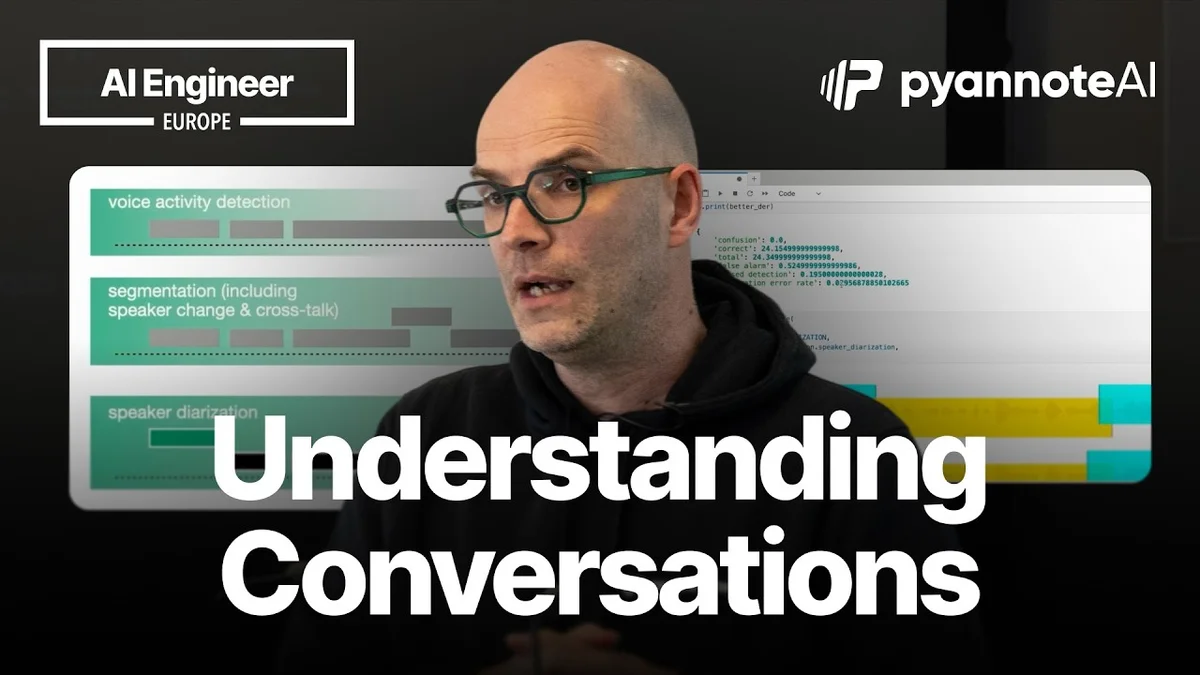
PyannoteAI's Bredin on Building Conversational Voice AI
Hervé Bredin of pyannoteAI discusses the crucial role of speaker diarization in building voice AI that understands conversations, showcasing open-source tools and future advancements.
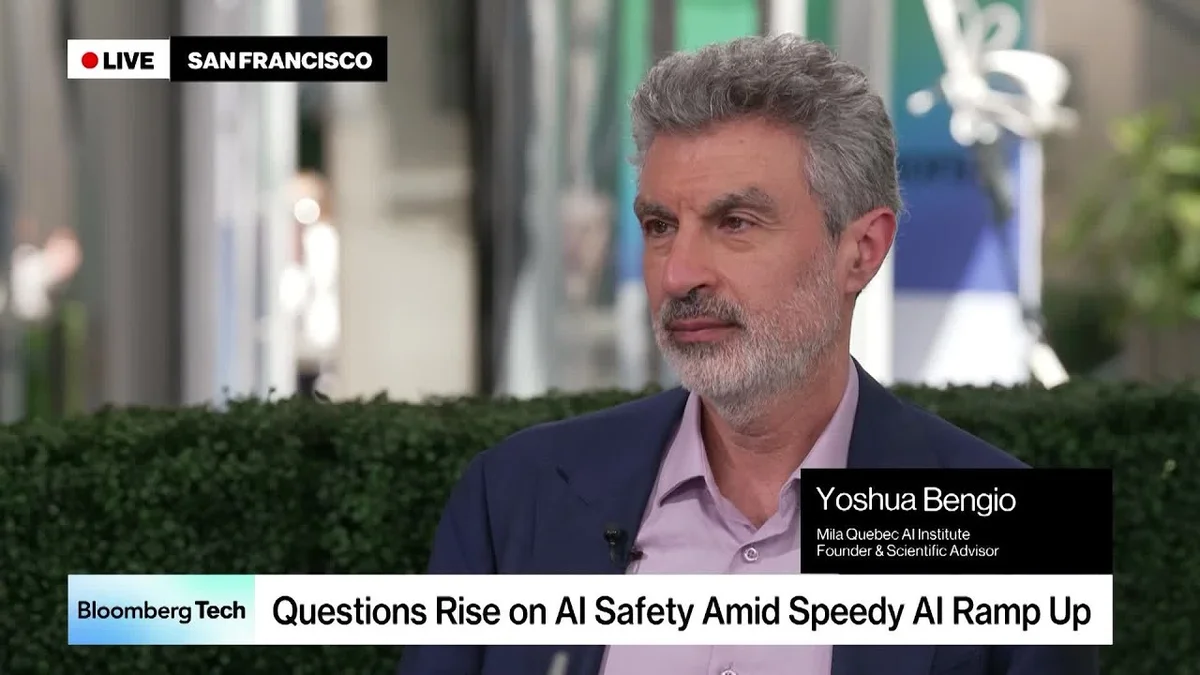
Bengio: We're Building AI We Can't Control
AI pioneer Yoshua Bengio warns that we are building increasingly powerful AI systems without fully understanding or controlling them, raising concerns about potential risks and the need for global safety standards.
Unifying Audio: The Rise of the Real-Time LALM
Researchers unveil the Audio Interaction Model, a unified real-time LALM with the SoundFlow framework, enabling proactive audio understanding and response.
Unpacking Multi-Modal Memory Bottlenecks
A new benchmark, M³Eval, reveals critical memory deficiencies in multi-modal models, particularly in disentangled representations, interference patterns, and temporal grounding.
LifeSkill: LLM Agents Learn Continuously
LifeSkill framework enables LLM agents to continuously learn from test-time feedback, significantly improving performance on long-horizon tasks by internalizing skills.
Anthropic Ethicist on AI Consciousness
Anthropic's ethicist discusses the challenges and approaches to instilling human values and ethical behavior in AI models.
Brendon Dillon on Text Diffusion at Google DeepMind
Brendon Dillon from Google DeepMind discusses the advancements and potential of text diffusion models in language generation, highlighting advantages over autoregressive models.
AI Cracks 80-Year Math Problem on OpenAI Podcast
OpenAI researchers discuss how their AI model solved an 80-year-old math problem, highlighting AI's growing reasoning capabilities.
Benchmarking AI Agents: Snorkel AI's Vincent Chen Explains
Vincent Chen from Snorkel AI explores the art and science of benchmarking AI agents, detailing the complexities and methodologies involved in evaluation.
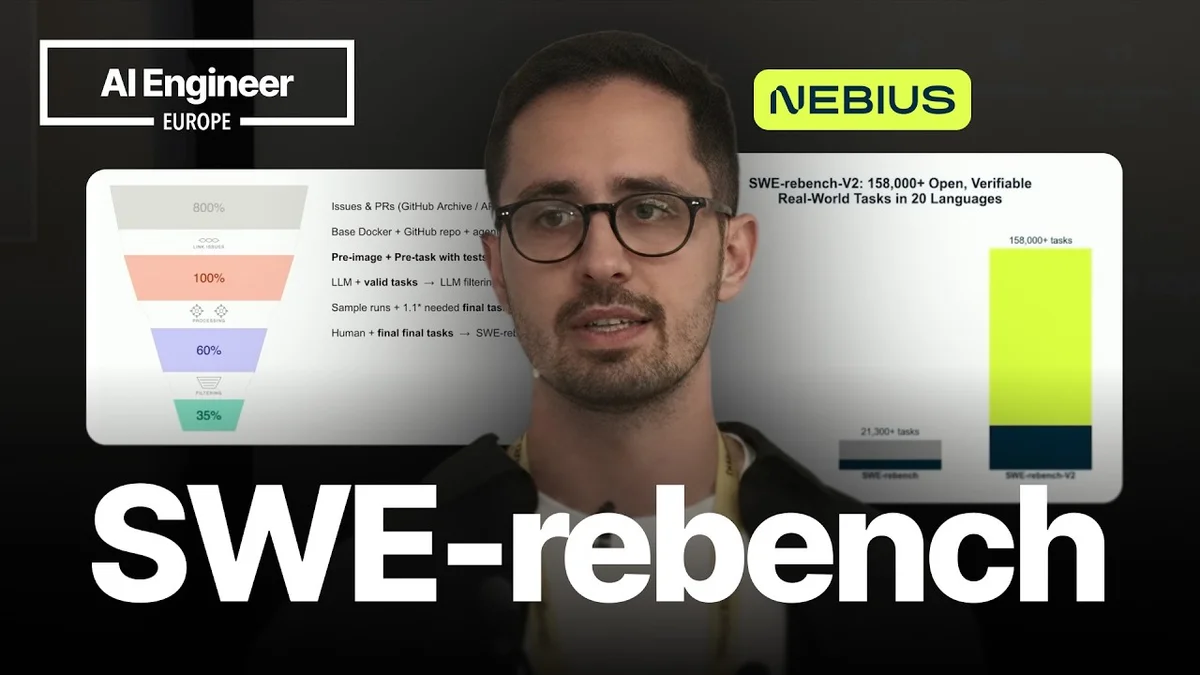
Evaluating Coding Agents: Lessons from SWE-rebench
Ibragim Badertdinov from Nebius shares key lessons from evaluating coding agents using the SWE-rebench benchmark, highlighting the importance of real-world tasks, reliable verification, and cost-effectiveness.
Beyond Observable Data: Imaginative Perception for VLMs
Researchers introduce Imaginative Perception Tokens (IPTs) to enable VLMs to reason about unobserved spatial configurations, outperforming textual chain-of-thought.
AI Agents Automate Drone Navigation Rewards
AgenticRL framework uses AI agents to autonomously design rewards and refine policies for UAV navigation, achieving 91% real-world success.
AI Analysts Lag on Real-World Reasoning
New Hedge-Bench 1.0 benchmark reveals frontier AI models score under 16% on real-world financial reasoning tasks, exposing a critical gap in expert-level judgment.
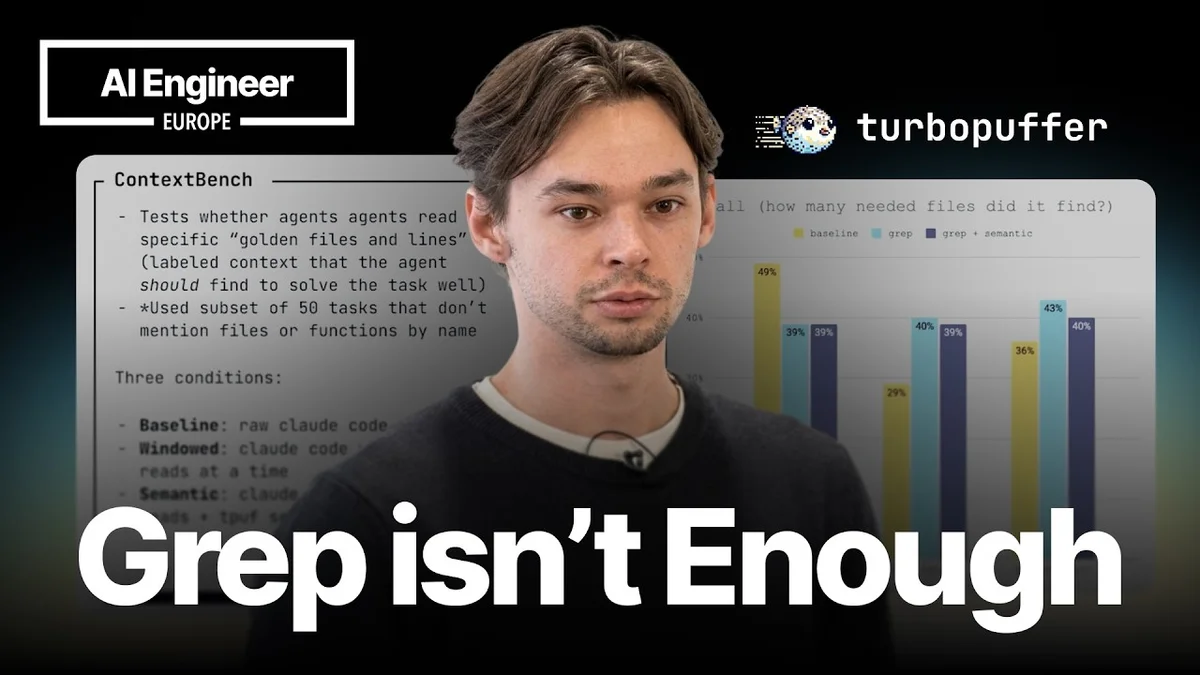
Claude Code Benchmarking: Semantic Search vs. Grep
Turbopuffer's Kuba Rogut benchmarks semantic code retrieval on Claude Code, revealing how semantic search enhances AI agent precision and efficiency compared to grep.
AdaCodec: Efficient Video MLLM Encoding
AdaCodec revolutionizes video MLLMs by using predictive visual coding to drastically cut tokenization costs and latency, achieving superior performance at a fraction of the budget.
ClinEnv: Bridging LLM Gaps in Clinical Decision-Making
The ClinEnv benchmark reveals LLMs struggle with sequential medical decision-making, showing a gap between diagnostic and management capabilities.
Bridging Diffusion LLMs and Speculative Decoding
A novel SimSD speculative decoding method enables diffusion LLMs to achieve up to 7.46x higher throughput without sacrificing generation quality.
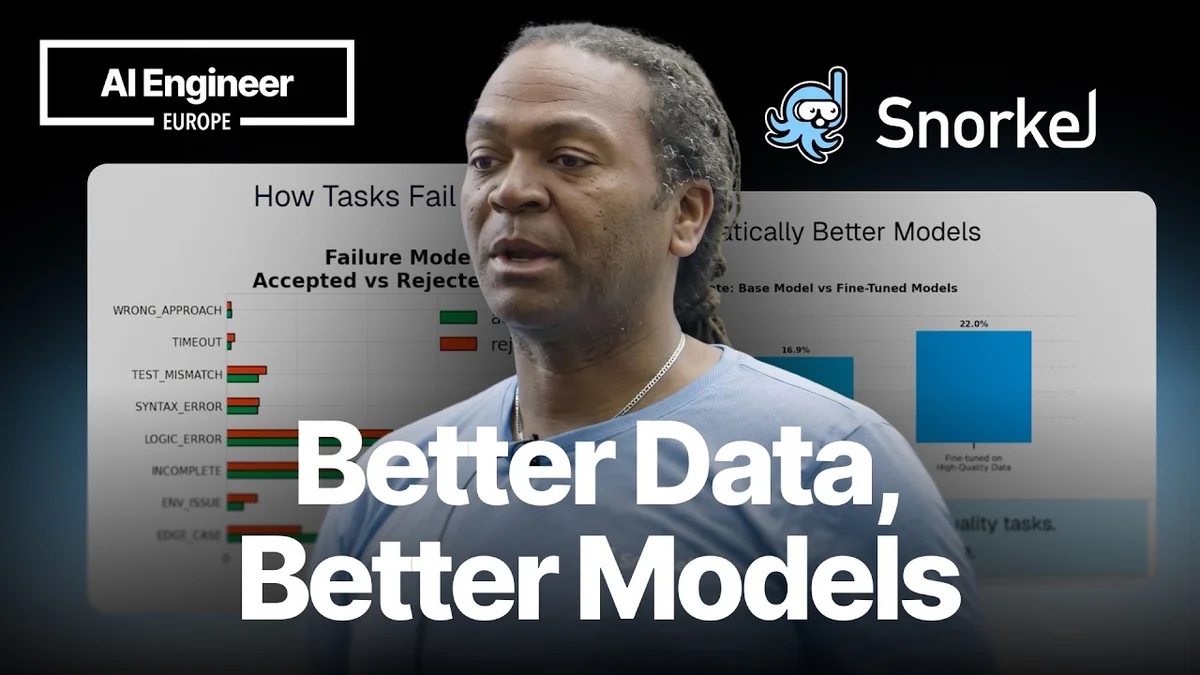
Task Fidelity Scaling Laws: Kobie Crawford on AI Data Quality
Kobie Crawford of Snorkel discusses 'Task Fidelity Scaling Laws,' emphasizing how data quality impacts AI model performance and outlining Snorkel's approach to creating verifiable datasets.
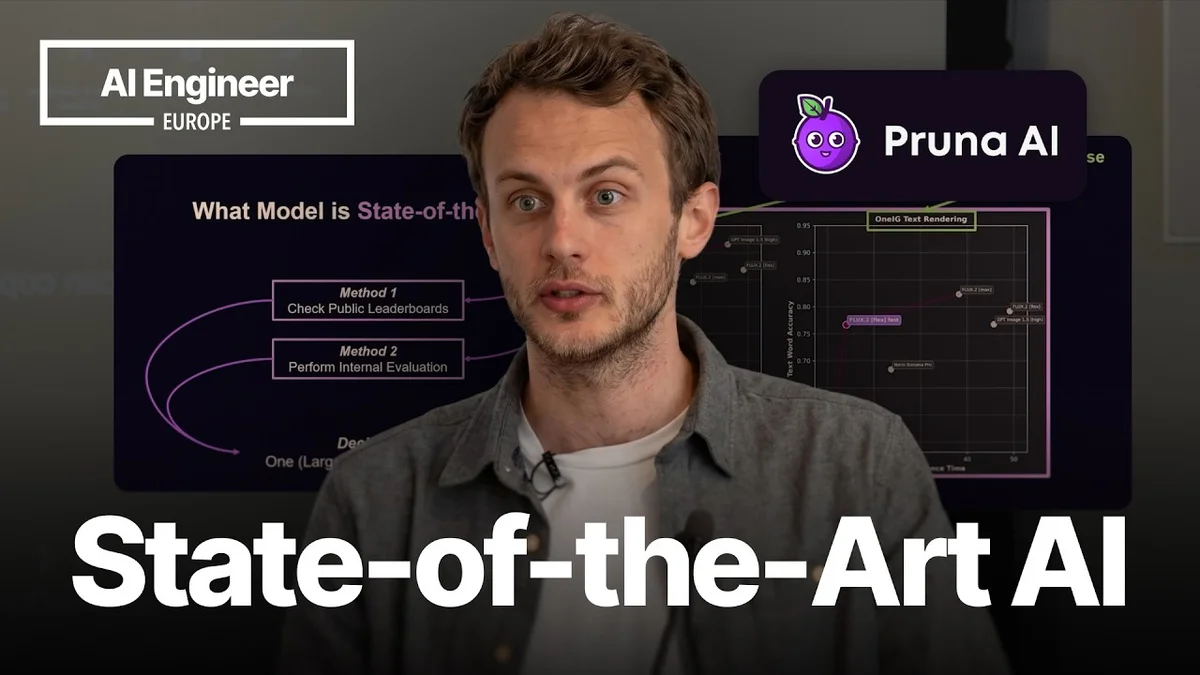
Bertrand Charpentier on AI Benchmarking Challenges
Bertrand Charpentier of Pruna AI discusses the challenges in AI benchmarking, the limitations of public leaderboards, and the importance of considering both quality and efficiency.
xAI's Ethan He on Grok, Video Agents & AI Futures
xAI's Ethan He discusses how language models drive visual AI, the rapid development of Grok Imagine, and the future of AI-generated interfaces.