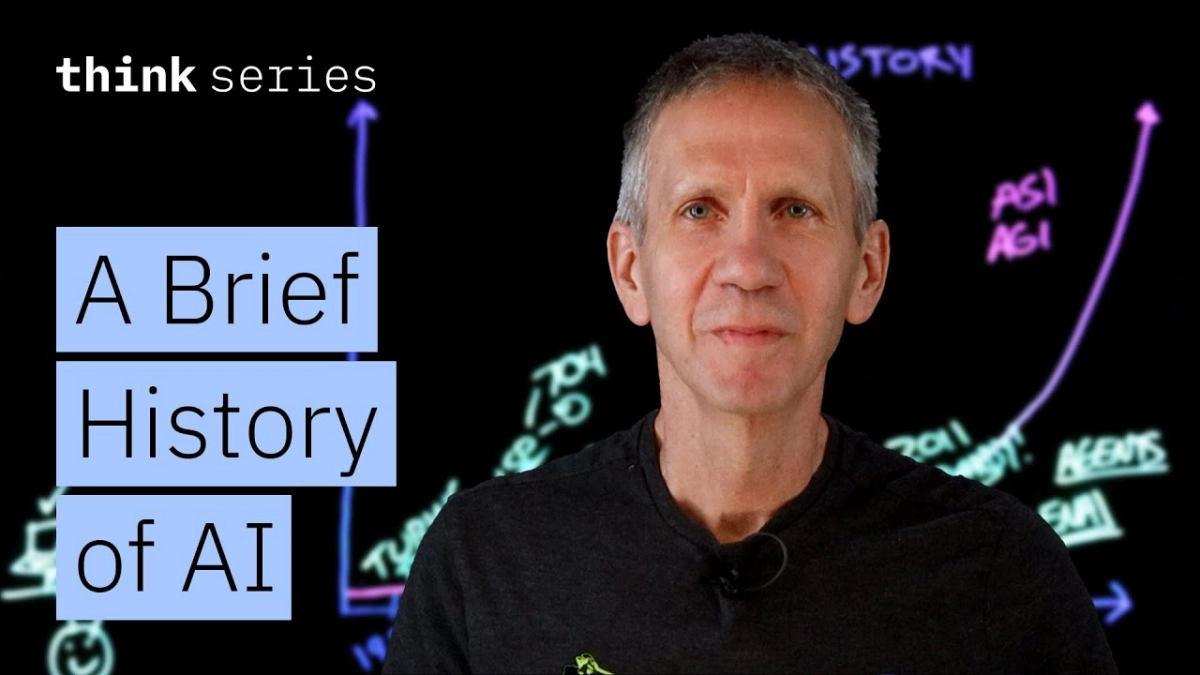
"Artificial intelligence may feel like some brand new tech trend, but the truth is, AI has been evolving for over 70 years." This incisive observation from Jeff Crume, a Distinguished Engineer at IBM, sets the stage for a compelling journey through the history of artificial intelligence. In a recent presentation, Crume meticulously traced the winding path of AI, highlighting critical inflection points that transformed it from theoretical constructs and programmed logic into the sophisticated, learning systems we encounter today, and those on the horizon. His commentary offers a valuable perspective for founders, investors, and AI professionals grappling with the rapid pace of innovation.
The genesis of artificial intelligence as a conceptual framework dates back to the 1950s with Alan Turing's groundbreaking work. Turing, often hailed as the father of computer science, proposed the "Turing Test" in 1950 as a benchmark for machine intelligence: if a human interrogator could not distinguish between typed responses from a computer and a human, the machine was deemed intelligent. This foundational idea, alongside the coining of the term "AI" in 1956 and the development of the LISP programming language, marked AI’s theoretical and early practical beginnings. LISP, short for List Processing, relied heavily on recursion, a complex programming paradigm that required extensive manual coding to imbue systems with any semblance of intelligence.