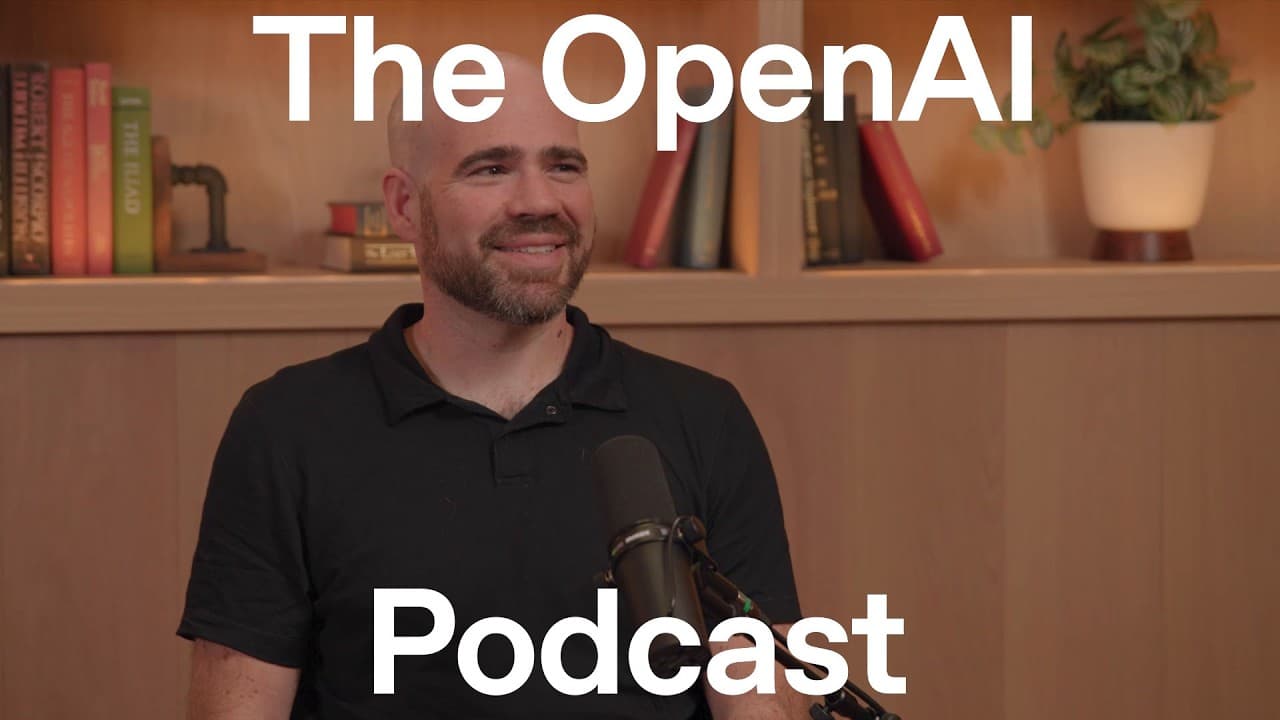
In a recent episode of The OpenAI Podcast, Jason Wolfe, a researcher on OpenAI's alignment team, delved into the intricacies of 'model specs' and their role in shaping the behavior of AI models like ChatGPT.
Understanding the 'Model Spec'
Wolfe clarified that a 'model spec' is not merely a static document but a comprehensive internal guide detailing the desired behavior of OpenAI's models. It acts as a blueprint, outlining the principles and objectives that guide the development and evaluation process. These specs are crucial for ensuring that AI models align with OpenAI's mission to benefit humanity.
The full discussion can be found on OpenAI Youtube's YouTube channel.
The Evolving Nature of Model Specs
Wolfe emphasized that model specifications are not set in stone. They are dynamic documents that are continually updated based on new research, user feedback, and the ongoing understanding of how models interact with the world. This iterative process allows OpenAI to refine the models' behavior, aiming for a delicate balance between being helpful, honest, and harmless.
From Policy to Practice: The Alignment Process
The conversation highlighted that simply articulating policies is insufficient for achieving AI alignment. Wolfe explained that the real challenge lies in translating these policies into tangible model behavior. This is achieved through a rigorous process of empirical testing and feedback loops, where researchers analyze model outputs and make necessary adjustments to the underlying training and fine-tuning processes.
The Importance of Transparency
Wolfe underscored the significance of transparency in the development of AI. He explained that by making the model specs publicly accessible, even in a summarized form, OpenAI aims to foster trust and provide clarity on the principles guiding their work. This transparency is essential for researchers, developers, and the public to understand how AI models are being shaped and to contribute to a more responsible AI ecosystem.
Navigating Conflicting Goals
A key challenge discussed was the inherent complexity of balancing multiple, sometimes conflicting, goals. For instance, while models are trained to be helpful and provide comprehensive answers, they must also adhere to safety guidelines and avoid generating harmful content. Wolfe noted that navigating these trade-offs is an ongoing area of research and development, with the model spec serving as a framework for making these critical decisions.
The Role of Human Feedback
Wolfe touched upon the vital role of human feedback in the model development process. He explained that human evaluators provide crucial insights into model behavior, helping to identify instances where models deviate from desired outcomes. This feedback loop is instrumental in refining the model specs and ensuring that the AI systems are aligned with human values and intentions.
The Future of Model Alignment
Looking ahead, Wolfe suggested that as AI models become more sophisticated, the methods for specifying and achieving desired behavior will also need to evolve. He hinted at the possibility of more nuanced and dynamic specification mechanisms that can adapt to the increasingly complex capabilities of future AI systems.