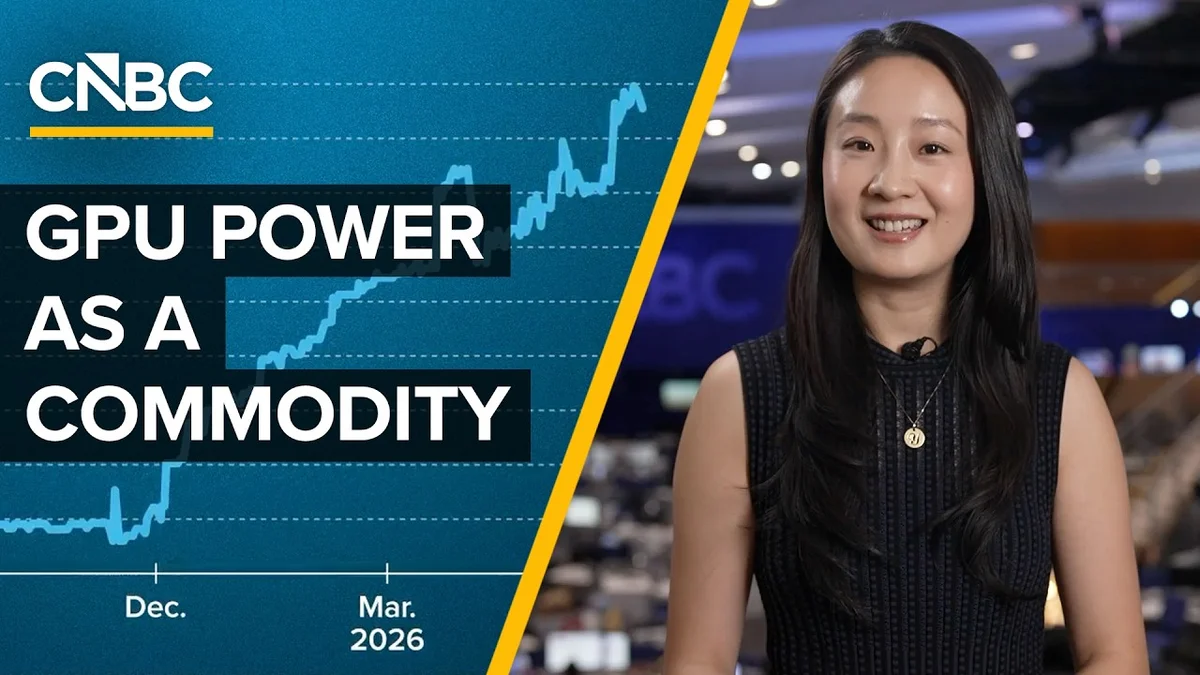
AI Compute Futures: The Next Big Market?

CME Group and Silicon Data are launching the first futures market for AI compute, aiming to bring price stability to the volatile GPU market.

Close-up of a complex computer chip, likely a GPU, with a blurred background.
CNBC
Visual TL;DR
AI Demand SurgesDriver
exponential growth of artificial intelligence creating immense strain
From the articleThe insatiable demand for artificial intelligence is creating a new frontier in financial markets: futures contracts for AI computing power.
GPU Costs VolatileDriver
rental prices for high-performance GPUs fluctuate significantly
From the articleThis move aims to bring much-needed stability and predictability to the rapidly evolving and often volatile costs associated with training and running AI models.
Standardization ChallengeDriver
difficulty in creating uniform contracts for compute power
From the article 2 mentionsA key challenge in creating a futures market for AI compute lies in standardization.
Need for StabilityDriver
companies struggle to forecast and manage AI infrastructure expenses
From the article 4 mentionsYou want to hedge that away using futures as well." This need for hedging is precisely what the new futures market aims to address.
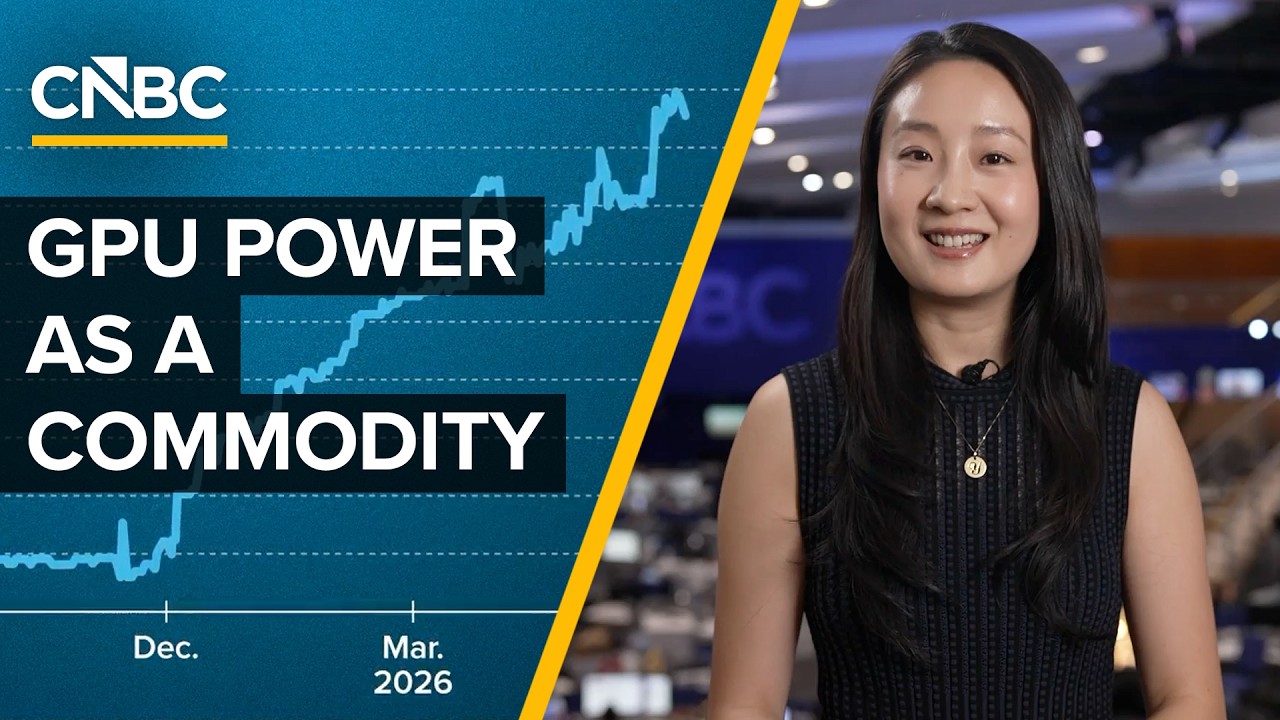
CME Group & Silicon DataCore
partnering to launch first AI compute futures market
From the article 4 mentionsCNBC reports that CME Group, a leading derivatives marketplace, has partnered with Silicon Data to launch the first-ever futures market for AI compute, pending regulatory review.
AI Compute FuturesContext
new financial market for computing power
From the article 9+ mentionsThe concept of futures markets, long established for commodities like oil and corn, is being adapted for AI compute.
Price StabilityOutcome
aiming to bring predictability to GPU market costs
From the article 9+ mentionsThe Commodity Futures Trading Commission (CFTC) will oversee this new market, ensuring its integrity and stability.
Hedging & SpeculationContext
potential for managing risk and profiting from price changes
From the articleYou want to hedge that away using futures as well." This need for hedging is precisely what the new futures market aims to address.
Contents(5)

The insatiable demand for artificial intelligence is creating a new frontier in financial markets: futures contracts for AI computing power. CNBC reports that CME Group, a leading derivatives marketplace, has partnered with Silicon Data to launch the first-ever futures market for AI compute, pending regulatory review. This move aims to bring much-needed stability and predictability to the rapidly evolving and often volatile costs associated with training and running AI models.

Companies working on this

StartupHub profiles of the companies this article names, with funding and a one-liner from our database.

Silicon Data
$1.1B
Market intelligence for AI compute infrastructure.
Bloomberg L.P.
$42.6B
Global financial, software, data, and media company providing real-time information and analytics.
Databricks
$190.0B
A unified data analytics and AI platform built on the lakehouse architecture.
HumanX
$23.0B
A company that organizes premier AI conferences and publishes data-driven reports on the AI economy.
AI Compute Futures: The Next Big Market? - CNBC
AI Compute Futures: The Next Big Market?, from CNBC

The Driving Force: AI Demand and GPU Costs

The exponential growth of AI has placed immense strain on the availability and cost of specialized hardware, particularly high-performance GPUs like NVIDIA's H100. These chips are the workhorses behind complex AI computations, and their rental prices can fluctuate significantly. As Carmen Li, Founder and CEO of Silicon Data, explains, this volatility makes it difficult for companies to forecast and manage their AI infrastructure expenses.

"You have a big cost of electricity, you consume a lot of GPUs, you consume a lot of compute," Li stated. "You will be facing big cost volatility. You want to hedge that away using futures as well." This need for hedging is precisely what the new futures market aims to address.

How Futures Contracts Bring Stability

The concept of futures markets, long established for commodities like oil and corn, is being adapted for AI compute. In traditional futures markets, buyers and sellers agree on a price for a commodity to be delivered at a future date. This locks in a price, protecting both parties from adverse market movements. For AI compute, this means companies can lock in the hourly rental rate for specific types of GPUs, such as the NVIDIA H100, months in advance.

Silicon Data has been tracking these rental prices, identifying over 50 different configurations of NVIDIA's H100 chip. Each configuration, varying in processors, RAM, connectivity, and datacenter location, trades at a different price. The futures market will aim to standardize these offerings, providing a benchmark for the cost of AI compute. As Li noted, "We want to make it easier for people to hedge. You can't do that in the spot market today."

Hedging and Speculation in the Compute Market

The introduction of futures contracts serves two primary purposes. Firstly, it allows companies that rely heavily on AI compute, such as AI startups and large enterprises, to hedge their exposure. By entering into futures contracts, they can secure computing power at a predictable price, mitigating the risk of sudden price hikes or short-term unavailability. This is crucial for long-term AI development and deployment.

Secondly, the market will attract speculators. These are traders who do not necessarily need AI compute themselves but aim to profit from anticipated price movements. Their participation adds liquidity to the market, making it easier for hedgers to find counterparties and contributing to efficient price discovery. The Commodity Futures Trading Commission (CFTC) will oversee this new market, ensuring its integrity and stability.

The Challenge of Standardization

A key challenge in creating a futures market for AI compute lies in standardization. Unlike a barrel of oil, which has established specifications, AI compute is highly granular. Silicon Data’s analysis highlights the complexity, noting that factors like processor type, RAM, connectivity, data center location, and even the specific settlement terms of a contract can influence the price. Standardizing these variables to create tradable futures contracts is a significant undertaking.

The success of this venture will depend on how effectively these complex variables can be distilled into standardized contract specifications that are both attractive to hedgers and liquid enough for speculators. The precedent set by commodities futures, where standardization has been key to market development, offers a roadmap for this nascent AI compute market.

© 2026 StartupHub.ai. All rights reserved. You may not republish this article in full without a license. Search engines and AI research tools may crawl and summarize for reference. Bulk reproduction or model training requires a license. See our terms.
Daniel Singer

Written by

Daniel Singer

Editor, StartupHub.ai

Daniel Singer is the editor of StartupHub.ai, a technology expert and thought leader on AI and its applications across sectors, from fintech and healthcare to developer tooling and consumer software. He writes and tests the tools covered here thoroughly and regularly, and built StartupHub.ai to give founders, operators and buyers a clearer read on what they are actually being sold.

More from Daniel Singer