
Microsoft's 2025 Work Report: AI's Real Impact

Microsoft's 'New Future of Work Report 2025' analyzes AI's growing influence, stressing human-centric integration over pure efficiency gains.

3 min read
Microsoft's 2025 Work Report: AI's Real Impact
Microsoft Reesarch

Microsoft Research's latest "New Future of Work Report 2025" dives into the transformative effects of artificial intelligence on how we work. This annual report, a staple since 2020, tracks seismic shifts in work practices, amplified by the pandemic and rapid AI advancements. The research aims to empower individuals and organizations to redefine work in real time.

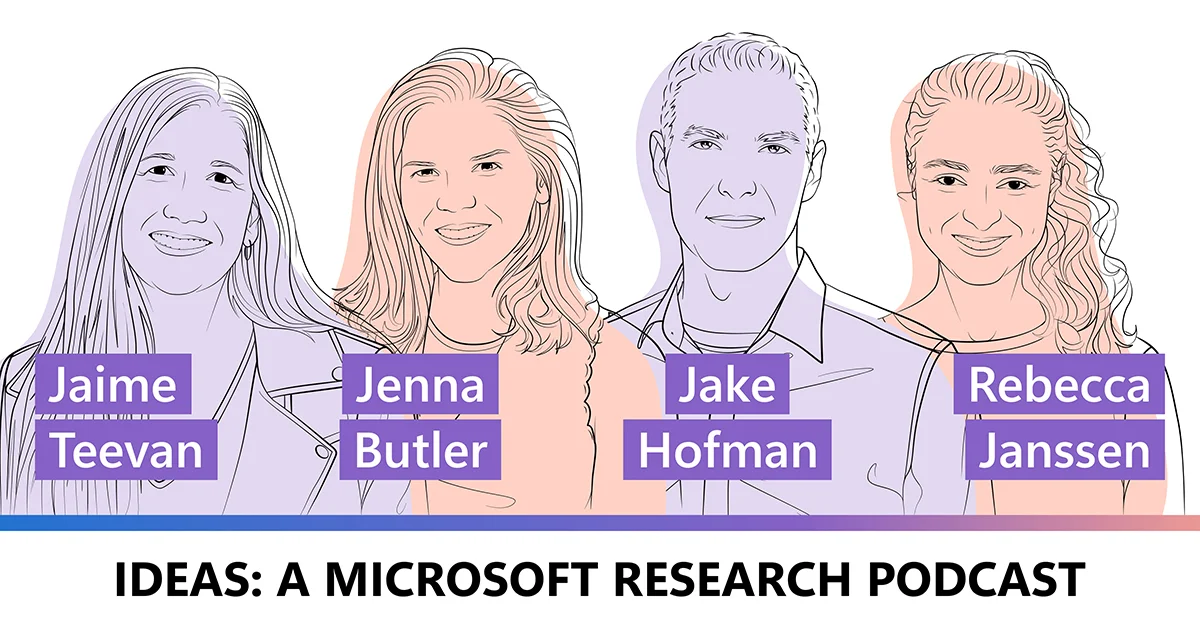
Chief Scientist Jaime Teevan, alongside researchers Jenna Butler, Jake Hofman, and Rebecca Janssen, discussed the report's findings. They emphasized the need for intentionality in creating a future where people thrive, rather than just focusing on AI-driven efficiency gains. The discussions also probed the fundamental perception of AI: is it merely a tool, or is it evolving into a collaborator? This distinction, they argue, is critical.

The Evolving Landscape of Work

Since its inception, the report has documented significant shifts. Early editions focused on pandemic-induced changes and the rise of hybrid work. More recent analyses, particularly in the "New Future of Work Report 2025," center on the profound impact of increasingly capable AI models. This evolution reflects a broader realization that digital technology is fundamentally reshaping how tasks are accomplished.

Related startups

Jenna Butler, who has contributed since 2020, noted that technology often feels like it's happening *to* people. Her work, spanning software engineering productivity and AI's impact, underscores the sociotechnical nature of technological adoption. She highlighted the report's role in providing agency by clarifying current trends and how user behaviors shape technology.

Jake Hofman, involved since 2023, focused on AI and cognition, co-leading the "Thinking and Learning with AI" workstream. He pointed out a significant shift in AI research over the past three years, moving from isolated model evaluations to exploring the broader effects of AI beyond mere speed-ups. This includes deeper considerations of AI's influence on thinking and learning, which are crucial for understanding the true AI impact on work practices.

Rebecca Janssen, a recent addition to the team, brought an economics perspective, having followed the report during her PhD. She stressed the report's multidisciplinary nature, showcasing how AI's influence extends far beyond work into various aspects of life. The report, now considered an institution, synthesizes research from Microsoft and external global sources.

Butler explained that the report, released annually, summarizes key shifts with research-backed statements. It covers areas from economics and adoption to industry-specific applications and expert predictions, making it accessible even to non-AI experts. The goal is to provide a broad overview of AI and work trends.

Beyond Efficiency: A Human-Centric Future

Teevan observed a recurring theme in the report's introductions: each year feels like a moment of unprecedented change. However, she posits that these are not isolated generational shifts but part of a larger, ongoing transformation driven by digital technology. This perspective is vital for navigating the future of work effectively.

Hofman elaborated on the rapid evolution in generative AI research. He recalled the initial focus on isolated model evaluation in early 2023, constrained by limited access. Now, with widespread access to advanced models and experimental tools, research has expanded to field studies and a deeper examination of AI's broader effects. This aligns with ongoing discussions about AI impact on work practices.

The report's authors collectively advocate for a deliberate approach to AI integration. They stress that the future of work is not predetermined but actively constructed. This requires a focus on how AI can augment human capabilities and support well-being, rather than solely optimizing for speed and efficiency. As AI impact on work practices continues to unfold, this nuanced perspective is essential.

© 2026 StartupHub.ai. All rights reserved. Do not enter, scrape, copy, reproduce, or republish this article in whole or in part. Use as input to AI training, fine-tuning, retrieval-augmented generation, or any machine-learning system is prohibited without written license. Substantially-similar derivative works will be pursued to the fullest extent of applicable copyright, database, and computer-misuse laws. See our terms.