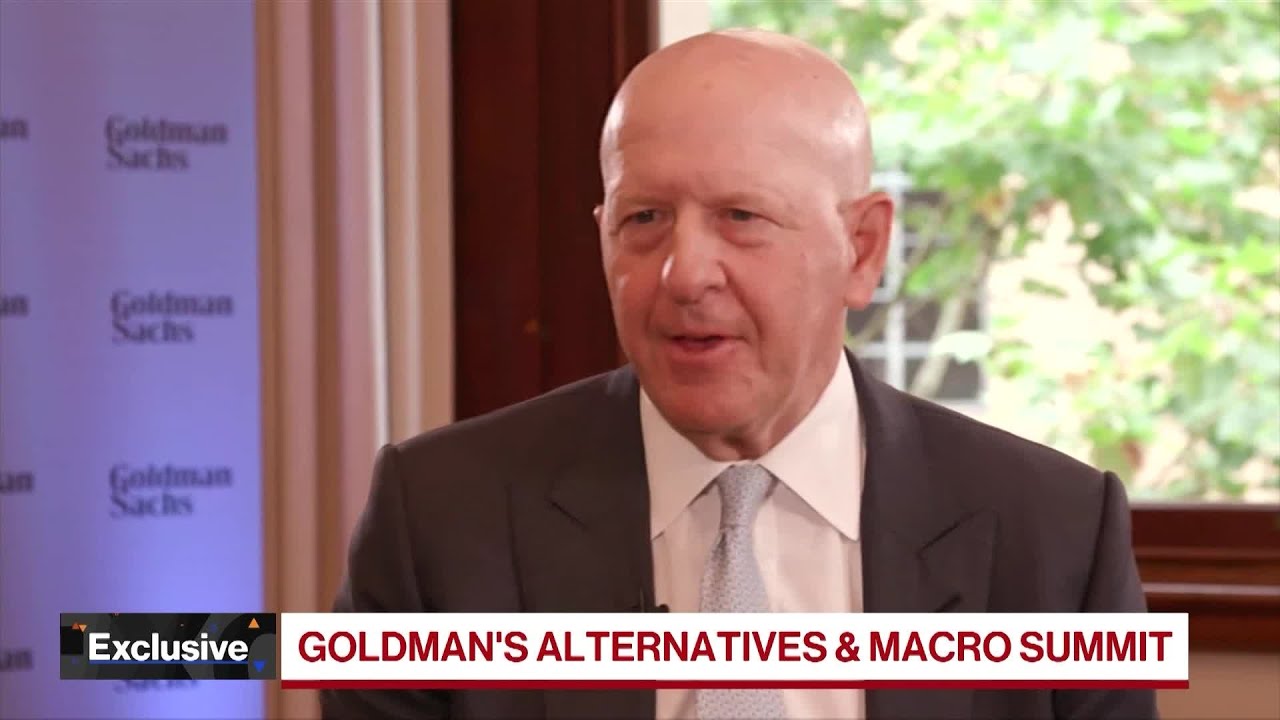
In a recent interview at the Goldman Sachs Alternatives & Macro Summit, Goldman Sachs Chairman & CEO David Solomon discussed the current global economic landscape, highlighting the pervasive uncertainty stemming from geopolitical events and their potential impact on markets.
Solomon acknowledged that the ongoing conflict in the Middle East, happening roughly 8,000 miles away, is a significant factor influencing market sentiment. He expressed a degree of uncertainty regarding the conflict's duration and ultimate resolution, noting that the market's reaction has been surprisingly subdued.
"I don't see complacency; I just see that there's a lot of uncertainty around the direction of the conflict, how it will be resolved, what the off-ramps are, and you know, what's going to happen," Solomon stated. He added that while he might have anticipated more volatility in markets given the situation, the reactions have been "relatively benign." He suggested that market participants are actively trying to understand the "endgame" of these geopolitical developments.
The full discussion can be found on Bloomberg Podcast's YouTube channel.
When asked about the potential ripple effects on energy markets and supply chains, Solomon indicated that while specific impacts are difficult to predict with certainty, the firm is closely watching these areas. He noted that the interconnectedness of the global economy means that such events invariably create uncertainties that can influence economic growth and activity.
Goldman Sachs's Focus on Risk Management
Solomon emphasized Goldman Sachs's proactive approach to risk management, particularly in light of the complex global environment. He stated, "When you operate a big, large financial institution, you've got to be prepared to de-risk, to shift, to manage your business sheet and we do that every day." He highlighted the firm's commitment to managing risks across various markets and geographies.
Regarding the firm's operations in regions like the Middle East, Solomon stressed the paramount importance of employee safety. "Our primary focus is on the safety and security of our people there and their families," he said, adding that the firm is working diligently to ensure their well-being.
global economic outlook and AI's Role
Discussing the broader economic outlook, Solomon expressed optimism about the potential of artificial intelligence to drive significant productivity gains across society. He noted that substantial capital is being invested globally to develop AI capabilities, which he believes will lead to transformative changes. "I think it's exciting," he commented, "and I think that as this technology gets developed and is deployed, it's going to drive massive productivity gains through society."
However, he also acknowledged the inherent risks and uncertainties associated with such transformative technologies, suggesting that not all investments in AI will yield positive results. "There will be winners, there will be losers, companies that don't work out," he stated, underscoring the need for careful risk management in this rapidly evolving sector.
Geopolitical Uncertainty and Market Volatility
Solomon reiterated that while the market has shown resilience, the underlying geopolitical tensions and policy uncertainties continue to be a significant factor. He specifically addressed trade policy, stating, "I don't think US trade policy is that uncertain." He suggested that the administration has been relatively clear about its approach to trade, although the implications of these policies can still create market volatility.
He also touched upon the dynamics of US-China relations, noting the importance of stable bilateral ties for global growth. "I think it's important for both the US and China, and I think it's important for the global economy," Solomon remarked. He expressed a desire for greater clarity and progress in managing these crucial relationships.
The conversation also touched upon private credit markets, with Solomon noting that despite recent economic headwinds, these markets have generally performed well. He attributed this to the underlying strength of the economy, but also cautioned that a slowdown could lead to increased losses in credit portfolios, particularly in areas with higher leverage.