In a recent insightful discussion, NVIDIA CEO Jensen Huang, a pivotal figure in the company's ascent to the forefront of the AI revolution, delved into the intricate challenges and strategic decisions shaping the future of artificial intelligence. Huang, a visionary leader and engineer, has been instrumental in positioning NVIDIA's GPUs as the foundational engine powering modern AI development, from cutting-edge research to widespread commercial applications.
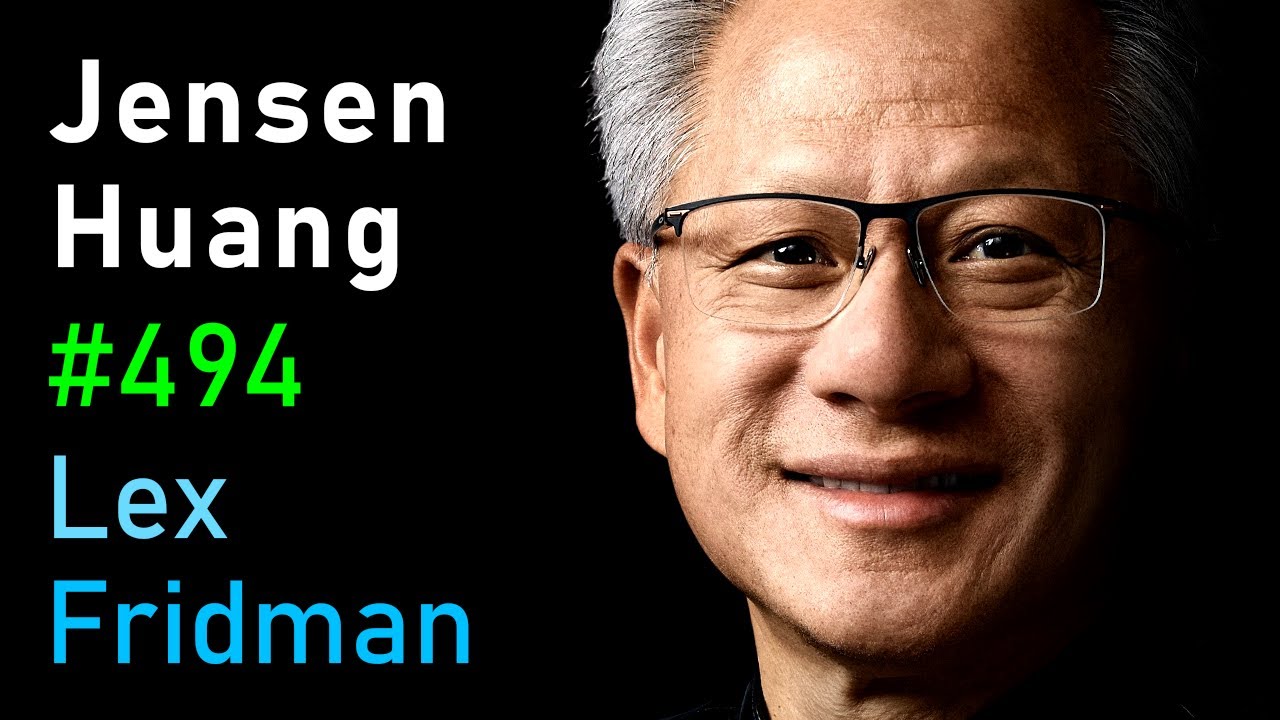
Jensen Huang's Visionary Leadership
Huang's tenure as CEO of NVIDIA, which he co-founded in 1993, has been marked by a relentless pursuit of innovation and a keen ability to anticipate market shifts. His leadership has not only driven the company's dominance in graphics processing but has also been pivotal in harnessing the power of GPUs for accelerated computing and artificial intelligence. His strategic foresight has enabled NVIDIA to capitalize on emerging trends, transforming the company into an indispensable player in the AI ecosystem.
The AI Revolution: From Single Chips to Giant Systems
Huang highlighted the evolution of AI development, noting that NVIDIA's journey has progressed from focusing on optimizing individual GPUs to designing and orchestrating massive, integrated AI systems. He emphasized that the complexity of modern AI models and the sheer volume of data involved necessitate a holistic approach, where hardware, software, and algorithms are co-designed to work in concert. This transition, he explained, is crucial for overcoming the inherent limitations of traditional scaling approaches, such as Amdahl's Law, which dictates that the speedup achievable through parallelization is limited by the sequential portion of a task.
Overcoming Scaling Bottlenecks: The Need for Co-Design
The conversation underscored the critical role of co-design in pushing the boundaries of AI. Huang elaborated on how optimizing the entire computing stack—from silicon design to software frameworks and AI models—is paramount for achieving breakthroughs. He pointed out that as AI models become larger and more complex, the bottlenecks shift from raw compute power to factors like memory bandwidth, interconnectivity, and efficient data movement. NVIDIA's strategy, he revealed, involves a deep understanding of these interdependencies, enabling them to build systems that are not just powerful but also highly efficient and scalable.
The Critical Role of Developers and Ecosystem
A significant portion of the discussion focused on the importance of fostering a robust developer ecosystem. Huang stressed that while NVIDIA provides the underlying hardware and software platforms, it is the vibrant community of developers who truly unlock the potential of AI. He highlighted NVIDIA's continuous efforts to empower these developers through tools, libraries, and platforms that simplify the creation and deployment of AI applications. By building a comprehensive ecosystem, NVIDIA aims to accelerate the adoption of AI across various industries and to drive innovation across the entire AI landscape.