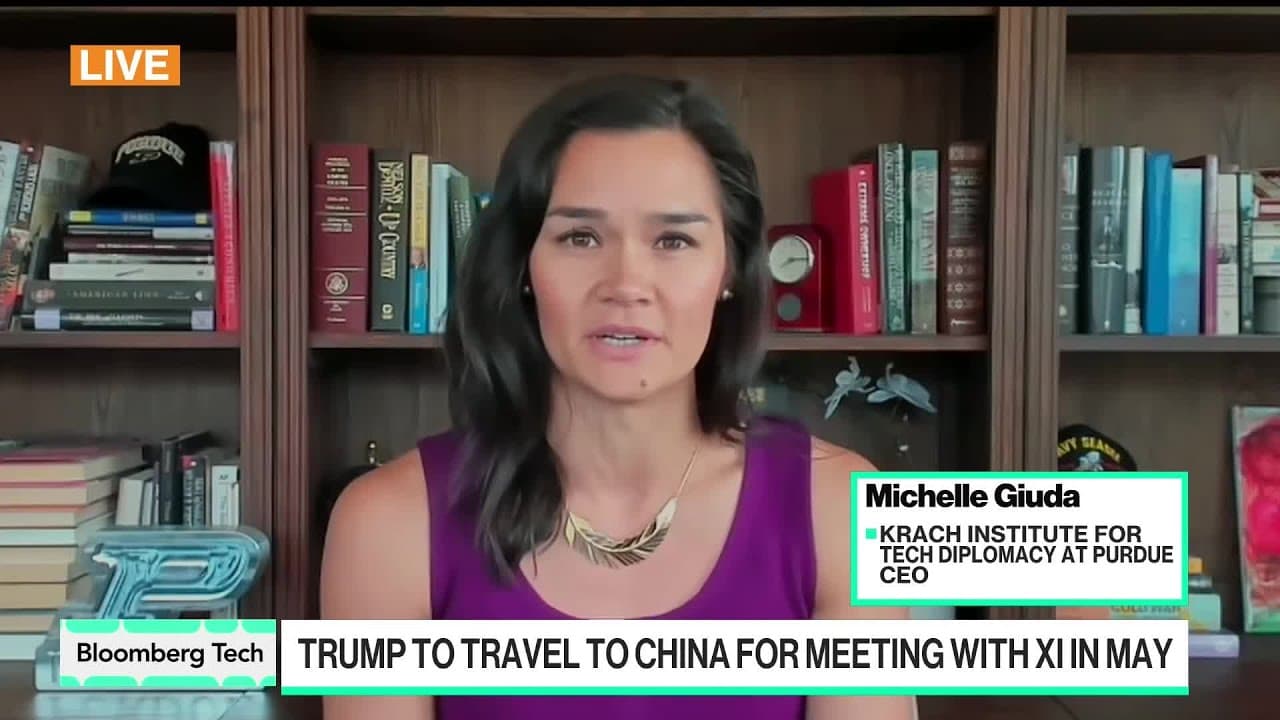
In a recent Bloomberg Tech appearance, Michelle Yuđa, CEO of the Krach Institute for Tech Diplomacy at Purdue, discussed the complex interplay between the United States and China in the realm of artificial intelligence. Yuđa highlighted the evolving landscape of AI development, emphasizing the growing competitiveness of Chinese AI models and the strategic importance of international collaboration for the United States.
The full discussion can be found on Bloomberg Technology's YouTube channel.
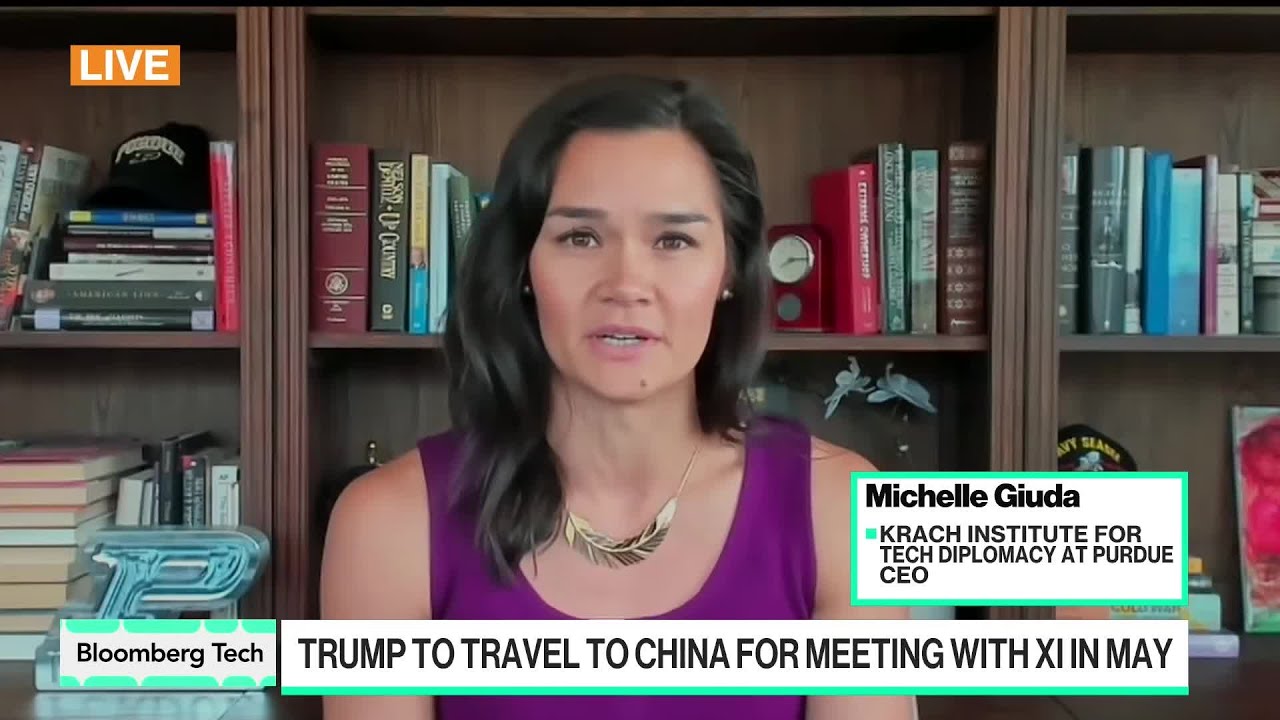
Michelle Yuđa: A Voice for Tech Diplomacy
Michelle Yuđa brings a unique perspective to the intersection of technology and international relations. As the CEO of the Krach Institute for Tech Diplomacy, she is at the forefront of advocating for a strategic approach to global technological engagement. Her work focuses on understanding and navigating the geopolitical implications of technological advancements, particularly in the context of US-China relations.
The Rise of Chinese AI Models
Yuđa pointed out a significant trend: the increasing quality and accessibility of Chinese AI models. She noted that while a year prior, these models were considered negligible in terms of global AI usage, they have rapidly advanced. Yuđa stated, "[Chinese open-source models] are cheaper, they're good enough, and... they're going from 1% to almost 30% of global AI token usage all of a sudden." This rapid growth is attributed to their cost-effectiveness and increasing capability, posing a challenge to the US's dominance in the AI space. She further elaborated that Chinese companies are not necessarily focused on having the absolute best models, but rather on having the most widely used ones, a strategy that could yield significant market share.
The Strategic Importance of Allies
In response to the growing influence of Chinese AI, Yuđa stressed the critical need for the United States to bolster its relationships with allies. She argued that the US cannot win the AI race alone and must foster a collaborative approach. "The US is going to lead in AI... by working hand in hand with our allies as well," Yuđa emphasized. This collaborative strategy is crucial for maintaining a competitive edge and ensuring that technological development aligns with democratic values. She also highlighted that AI is a borderless technology, making international cooperation essential for everything from innovation to data center development.
Navigating the Geopolitical Landscape
The discussion also touched upon the broader geopolitical context, including the potential implications of the US President's travel to China. Yuđa suggested that such high-level discussions are vital for managing the complex relationship between the two technological superpowers. She pointed out that conversations around technology, trade, and geopolitical competition are ongoing and that understanding the motivations and strategies of each side is paramount. The ability to bridge the gap between tech leaders and government policy is seen as a key factor in shaping a positive outcome for the US.
The Role of PCAST in Shaping Policy
The conversation also referenced the formation of the President's Council on Science and Technology (PCAST) and its members. Yuđa alluded to the importance of individuals like David Sacks and Michael Kratsios, who were appointed to co-chair the PCAST. The composition of such councils, featuring prominent figures from the tech industry, signifies an effort to integrate technological expertise into policy-making. This inclusion is intended to ensure that US policy remains informed by the realities of the tech landscape, including the competitive dynamics with China.
The China Factor in US Tech Strategy
Yuđa's remarks underscore the dual nature of the US-China relationship in technology. While there is intense competition, there is also a recognition that collaboration and understanding are necessary. The rise of Chinese AI models and their distribution strategies present a direct challenge that requires a nuanced and strategic response from the United States, one that leverages its own technological strengths and fosters strong international partnerships.