

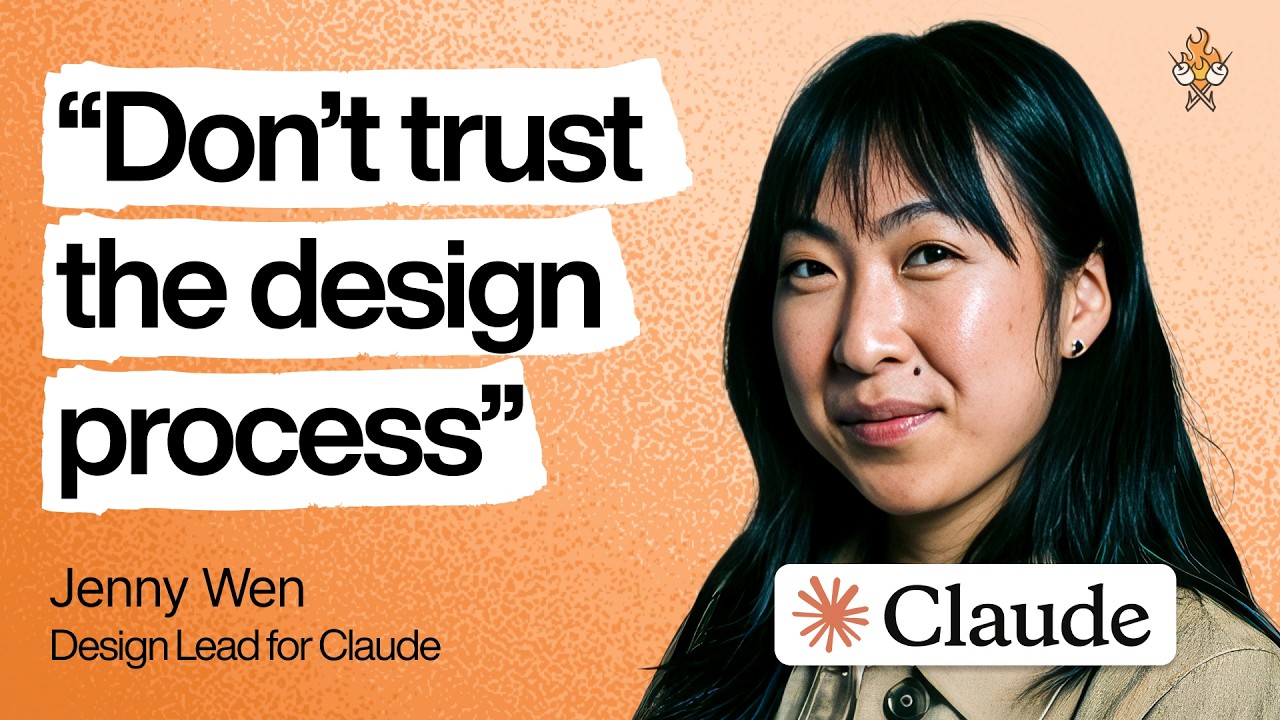
In a recent discussion, Jenny Wen, Head of Design for Claude Cowork and formerly Director of Design at Figma, explored the profound impact of AI on the design process and the evolving role of designers. Wen, who also has experience at Dropbox, Square, and Shopify, highlighted how AI tools are not only changing the way products are built but also redefining the skills and workflows essential for success in the design field.
The Evolving Role of the Designer
Wen noted a significant shift in the design process. Previously, a substantial portion of a designer's time, estimated at 60-70%, was dedicated to mocking and prototyping. However, with the advent of advanced AI tools, this ratio is changing, with AI now handling a significant chunk of the grunt work. Wen suggested that the traditional, time-consuming prototyping phase is becoming less central, with designers now spending about 30-40% of their time on it.
This shift is enabling designers to focus more on strategic aspects of product development, such as defining the vision and ensuring that the final product aligns with user needs and business goals. The ability of AI to quickly generate variations and iterate on ideas is freeing up designers to explore more possibilities and refine their concepts more effectively.
AI as a design partner
Wen emphasized that AI is not merely a tool for automation but is becoming a collaborative partner for designers. She shared an example from Claude, where AI is used to help generate ideas and even write code for product features. This allows designers to explore a wider range of solutions and bring them to life more rapidly.
She illustrated this with the example of creating an analog clock component. Instead of manually coding every aspect, a designer could prompt an AI to generate the code, specifying parameters like size, border color, and hand color. This process, Wen explained, is not just about efficiency but also about enabling designers to focus on the more nuanced aspects of design, like user experience and aesthetic refinement.
The Importance of Human Insight
Despite the increasing capabilities of AI, Wen stressed that human intuition and judgment remain indispensable. AI can generate code and suggest design elements, but it cannot replace the designer's understanding of user psychology, empathy, and the ability to make subjective decisions about what truly resonates with users.
She pointed out that while AI can be a powerful tool for rapid prototyping and iteration, the final decisions about which designs to pursue and how to implement them still rest with human designers. This is particularly true when it comes to ensuring a product's success in the market and maintaining a strong brand identity.
Designing for the Future
Wen also touched upon the future of design in an AI-driven world. She suggested that designers will need to adapt to new workflows that incorporate AI, focusing on skills such as prompt engineering, AI-assisted ideation, and critical evaluation of AI-generated outputs. The ability to effectively collaborate with AI will be a key differentiator for designers in the coming years.
The conversation also touched upon the challenges of keeping up with the rapid pace of AI development. Wen acknowledged that the field is constantly evolving, and designers need to be continuous learners to stay relevant. However, she also expressed optimism about the potential of AI to augment human creativity and drive innovation in design.
Ultimately, Wen's insights highlight a future where AI and human designers work in tandem, leveraging each other's strengths to create more impactful and user-centric products. The ability to adapt, learn, and integrate new tools will be paramount for designers navigating this exciting and rapidly changing landscape.