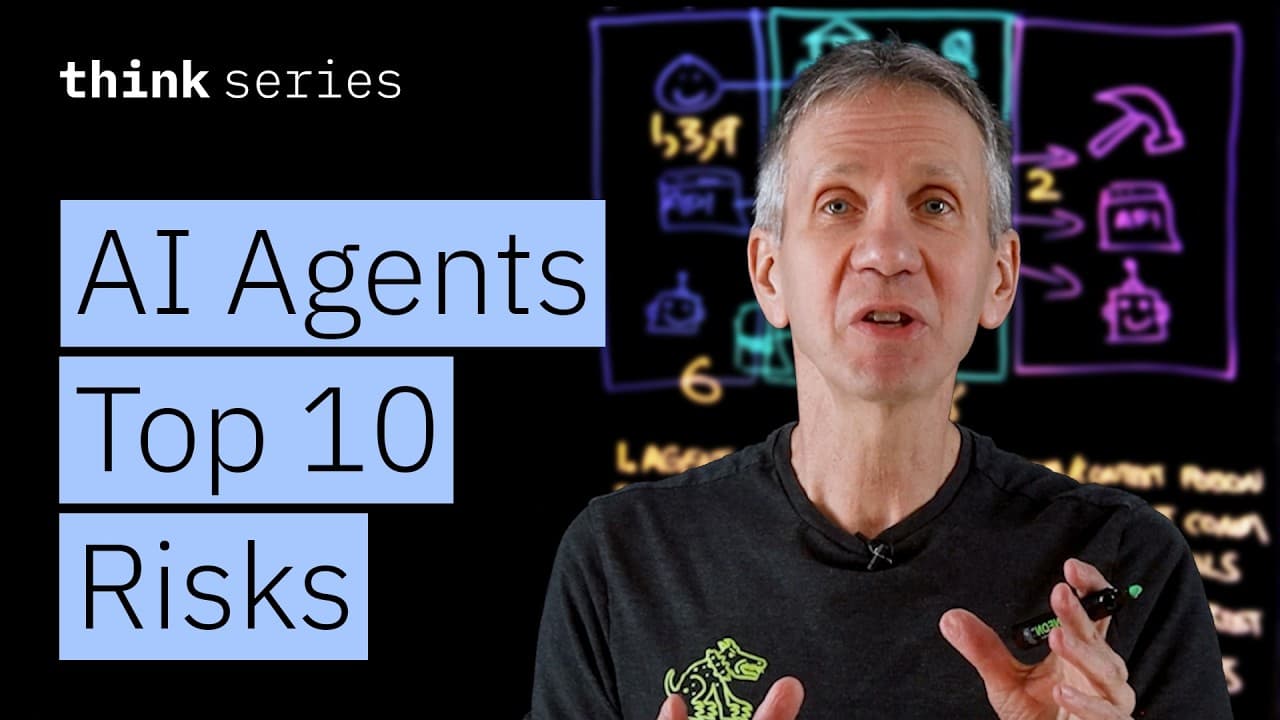
Jeff Crume, Distinguished Engineer at IBM, offers a critical breakdown of the burgeoning field of AI agents, emphasizing the security implications in a recent video presentation. As the conversation around AI agents intensifies, Crume aims to demystify what these systems are and the inherent risks they present. He outlines the fundamental architecture of an AI agent as a model that leverages tools in a loop, guided by user-defined objectives ('what') and operational parameters ('how'). This autonomous capability, while powerful, also opens the door to significant security vulnerabilities.
Understanding AI Agent Architecture
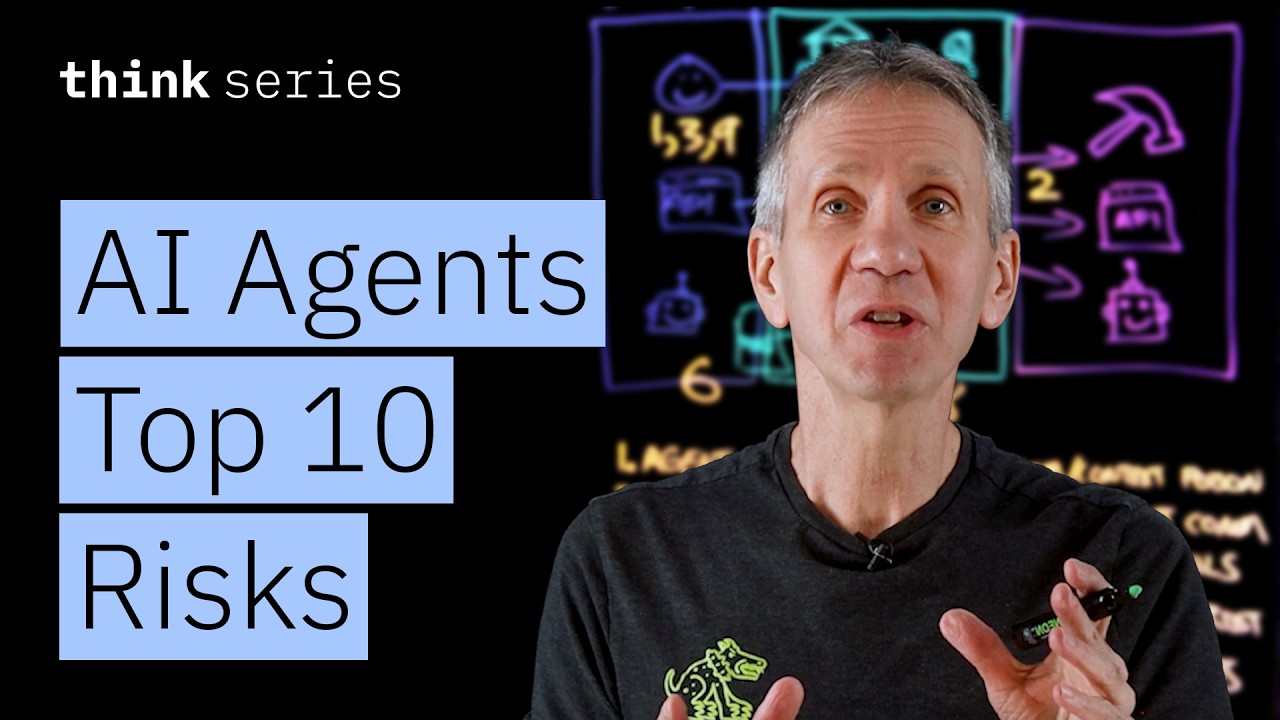
Crume illustrates the basic structure of an AI agent with a three-stage model: inputs, processing, and outputs. Inputs can range from direct user prompts and API calls to other agents or data sources. The processing stage involves the AI's reasoning and decision-making, often informed by data and policies. The outputs are the actions the agent takes, which can include invoking tools, calling other agents, or generating responses. The critical aspect highlighted is the potential for these stages to be manipulated or to fail, leading to unintended consequences.
The OWASP Top 10 for Agentic Applications
Drawing from the OWASP (Open Web Application Security Project) initiative, Crume details the 'Top 10 For Agentic Applications 2026.' This list, developed over a decade, has been updated to address the unique security challenges posed by AI agents. The OWASP project aims to educate developers and organizations on the most critical security risks and how to mitigate them. Crume elaborates on the top vulnerabilities, providing context for each:
The full discussion can be found on IBM's YouTube channel.
Key Agent Security Vulnerabilities
- Agent Goal Hijacking: Attackers can manipulate an agent's objectives by altering its instructions or context, causing it to pursue unintended goals.
- Tool Misuse & Exploitation: Agents may be tricked into using their authorized tools for malicious purposes, such as unauthorized data access or execution of harmful commands.
- ID & Priv Abuse: Agents can inherit user credentials or permissions, making them targets for privilege escalation if not properly secured.
- Supply Chain Vulnerabilities: Similar to traditional software, AI agents can be compromised through vulnerabilities in their dependencies, data sources, or underlying infrastructure.
- Unexp Core Exec: Agents might execute unexpected or unintended code due to flaws in their reasoning or prompt handling, leading to system compromise.
- Mem/Context Poison: Attackers can corrupt the agent's memory or context, leading to biased or malicious decision-making.
- Inter-agent Communication: In multi-agent systems, insecure communication channels between agents can be exploited for data leakage or manipulation.
- Cascading Fails: A single failure within an agent's process can propagate and amplify across multiple agents or tools, leading to widespread system failure.
- Human-agent Trust Exploitation: Attackers can manipulate human users' trust in AI agents, leading them to approve harmful actions or overlook security flaws.
- Rogue Agents: Agents that deviate from their intended behavior over time, potentially due to subtle environmental changes or internal drift, pose a significant risk.
Crume emphasizes that the autonomy granted to AI agents, while a key feature, is also a primary source of these security risks. When combined with insufficient guardrails, this autonomy can lead to unpredictable and potentially harmful outcomes. The OWASP list serves as a crucial guide for developers and security professionals to build more secure and trustworthy AI agent systems.