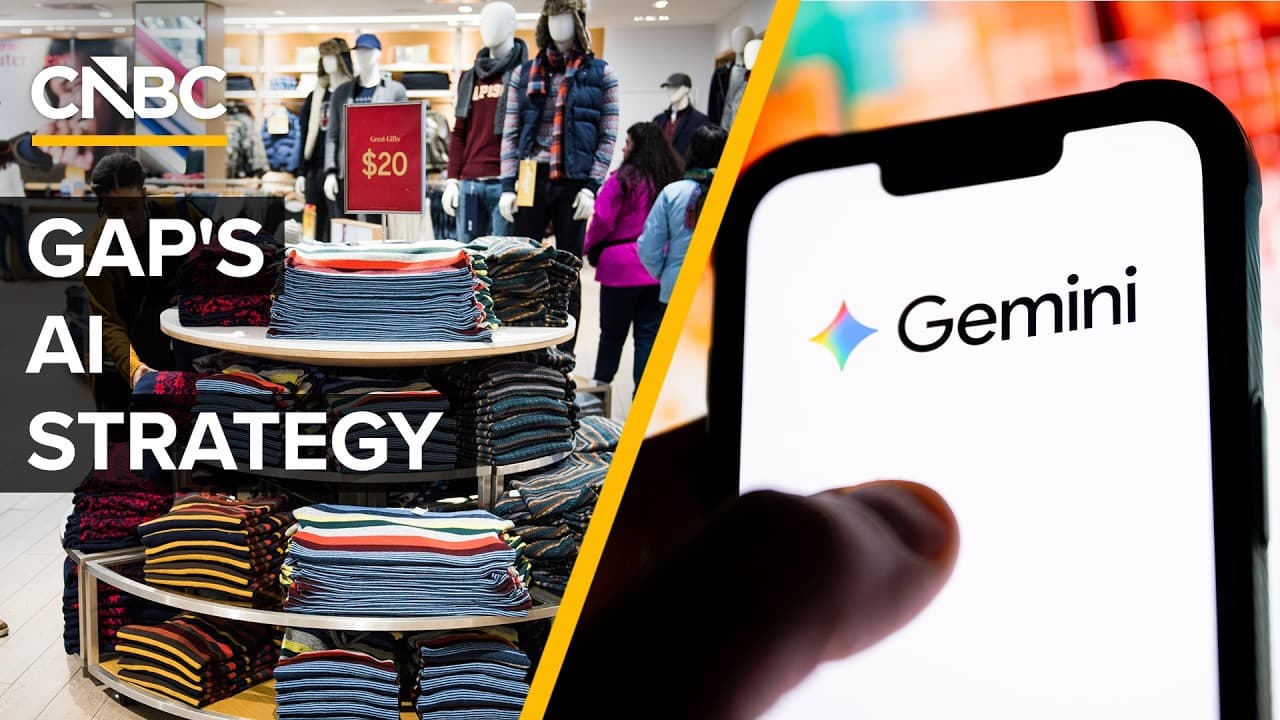
In the rapidly evolving landscape of artificial intelligence, retailers are increasingly turning to AI to reshape the customer journey. CNBC's Gabrielle Fonrouge reports on how Gap, a long-standing player in the apparel industry, is at the forefront of this transformation with its innovative 'Universal Commerce Protocol.' This initiative aims to leverage AI, specifically large language models (LLMs), to create a more integrated and personalized shopping experience, addressing long-standing challenges in e-commerce.
Who Is Gabrielle Fonrouge?
Gabrielle Fonrouge is a Retail Reporter for CNBC, where she covers the latest trends and developments in the retail sector. Her reporting often delves into how technology is impacting consumer behavior and business strategies. In this segment, she provides an overview of how AI is poised to revolutionize online shopping.
Who Is Sven Gerjets?
Sven Gerjets is the Executive Vice President and Chief Technology Officer at Gap Inc. As a key technology leader, Gerjets is responsible for driving the company's technological innovation and strategy. His insights highlight Gap's proactive approach to adopting AI to enhance both customer experience and operational efficiency.
The Universal Commerce Protocol
The core of Gap's strategy lies in its development of a 'Universal Commerce Protocol.' This protocol is designed to allow AI LLM platforms, such as Google's Gemini, to directly interact with retailer data. The goal is to enable a more seamless shopping experience where consumers can not only discover products through AI but also purchase them directly within the AI interface, with the retailer handling the fulfillment.
Gerjets explains the vision: "The idea is that AI LLM platforms can now directly integrate with retailer data... we're going to learn a lot more about this as it becomes more mature." This integration aims to bridge the gap between AI-powered discovery and the actual transaction, making the process more intuitive for the consumer.
Agentic Commerce and Seamless Integration
The concept of 'agentic commerce' is central to this new protocol. It envisions AI acting as a shopping agent for the consumer, capable of understanding needs and preferences to recommend and facilitate purchases. The video demonstrates this by showing a user asking Gemini for vacation dress recommendations. Gemini then presents options from various retailers, including Gap, Old Navy, and Banana Republic. Upon selecting a dress, the user can view product details, select a size, and proceed to checkout, all within the AI interface. Gap handles the shipping, simplifying the entire process.
Gerjets emphasizes the benefit: "This is what Gap is doing; they're calling it the Universal Commerce Protocol, which allows them to show up on AI LLM platforms, particularly Google's Gemini, when people are shopping and asking Gemini for help looking for new items." This ensures that Gap products are discoverable and purchasable through emerging AI-driven shopping channels.
Addressing E-commerce Friction Points with AI
The conversation highlights how AI is being used to tackle significant pain points in online retail. One major issue is the difficulty consumers face in determining the correct size, which leads to high return rates and associated costs for retailers. Gap is implementing AI-powered sizing tools that ask for basic information like height, weight, and preferred fit to suggest the optimal size.
Fonrouge notes the impact on returns: "One of the biggest issues for online retail is returns. It's frustrating for you, you have to make a trip to UPS, print out a label, and do all of that. But also, it's very costly for the company." By using AI to improve sizing accuracy, Gap aims to reduce the number of returns, benefiting both the customer and the business.
Data Privacy and Trust in AI Shopping
While the potential of AI in commerce is vast, concerns about data privacy and trust are also significant. The video touches upon the fact that "2 in 3 Americans who use AI tools say they don't trust them but use them anyway." This highlights the need for transparency and robust data security measures as AI becomes more integrated into shopping experiences. Gap's approach aims to build trust by ensuring that the data used by AI for recommendations and sizing is handled responsibly and transparently, allowing users to opt out of data retention for model improvement.
The Future of Retail with AI
The integration of AI into the retail sector is not just about improving existing processes; it's about redefining the entire shopping paradigm. The 'Universal Commerce Protocol' and 'agentic commerce' represent a shift towards a more proactive and personalized shopping experience. As AI models become more sophisticated and data integration becomes more seamless, consumers can expect a future where finding and purchasing products is as simple as having a conversation with an intelligent shopping assistant.
Gerjets concludes by emphasizing the strategic importance: "It's very much designed so that we continue to own the relationship and the experience... by solving this area, we're going to have a real stake to win there for both the customer and the company." Gap's initiative positions them to be a leader in this new era of AI-driven retail, where the lines between discovery, decision-making, and purchase blur into a unified, intelligent, and convenient experience.