
In a candid conversation on The a16z Show, Tesla and SpaceX veteran, and now CEO of Galadyne, Chandler Guscio, sat down with a16z General Partner Erin Price-Wright to discuss the invaluable lessons learned from his time working at the forefront of some of the world's most ambitious companies. Guscio, who previously led propulsion engineering for SpaceX's Starship program and battery mineral supply chains at Tesla, shared insights into the relentless pursuit of innovation and the practicalities of building groundbreaking technology.
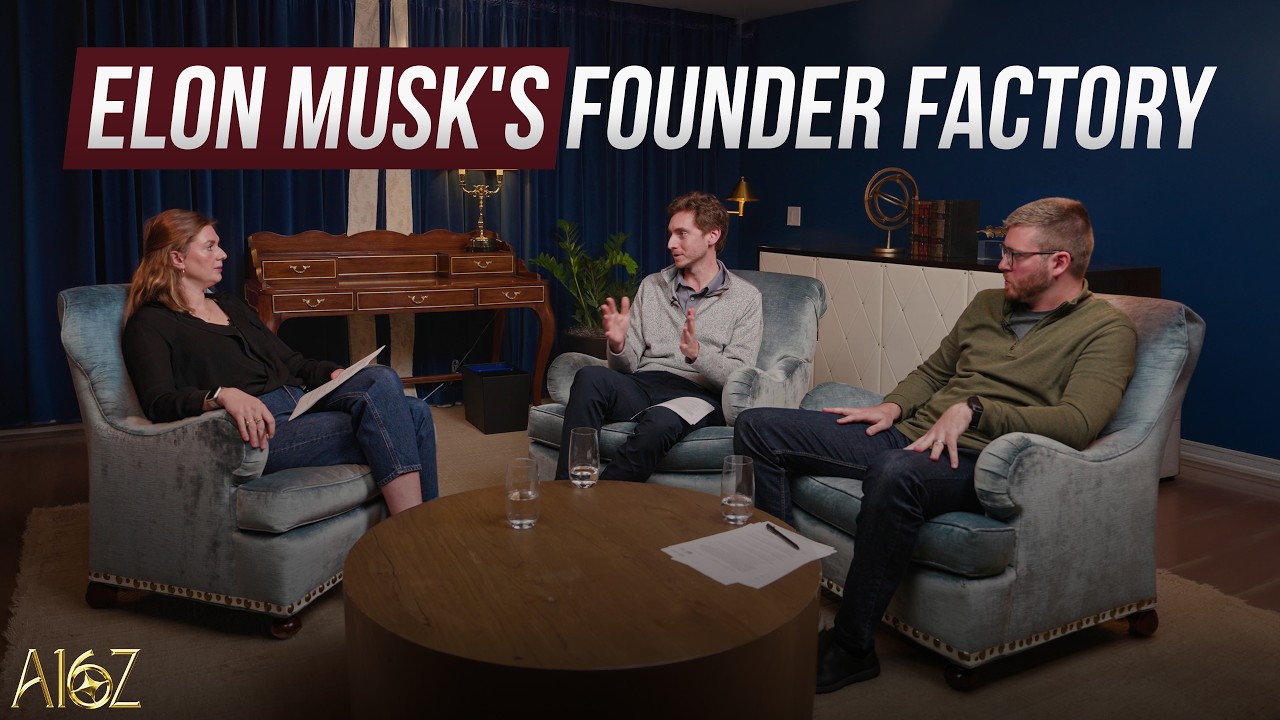
Chandler Guscio: From Rockets to Critical Minerals
Chandler Guscio's career trajectory is a testament to his ability to tackle complex engineering challenges across multiple high-impact industries. His early experience at SpaceX, particularly his leadership role in the Starship program, provided him with a deep understanding of rapid iteration, ambitious goal-setting, and the sheer grit required to push the boundaries of what's possible in space exploration. Following his tenure at SpaceX, Guscio transitioned to Tesla, where he focused on critical mineral supply chains, a vital but less visible aspect of the electric vehicle revolution. This broad experience, spanning aerospace engineering to materials science and supply chain management, positions him uniquely to comment on the operational and strategic challenges faced by innovative companies.
Turner Caldwell: Navigating Critical Mineral Supply Chains
Turner Caldwell, CEO of Mariana Minerals, brings a complementary perspective to the discussion, focusing on the intricate world of critical mineral supply chains. His company, Mariana Minerals, aims to revolutionize the sourcing and management of these essential materials, which are foundational to many advanced technologies, including batteries for electric vehicles and components for aerospace. Caldwell's insights into the challenges of securing reliable and sustainable supply chains for materials like lithium, cobalt, and nickel are crucial for understanding the broader ecosystem of innovation.
The "Impossible" Mission: Lessons from Tesla and SpaceX
The conversation pivoted to the core of Guscio's experience: the lessons learned from working in environments that constantly push the envelope. Guscio highlighted a key principle from his time at Tesla and SpaceX: the importance of setting incredibly ambitious, almost "impossible" goals. He explained that these audacious targets, like landing a rocket vertically or scaling battery production exponentially, force teams to think differently and innovate under pressure.
"The goal is actually to get the team to think deliberately," Guscio stated, emphasizing that setting such high bars necessitates a rigorous, step-by-step approach to problem-solving. He elaborated on the concept of breaking down massive challenges into smaller, manageable components, noting that even with a clear target, "there are a thousand things that have to happen, but 100 of them cannot be done in six months, so we have to go attack those 100 things." This highlights a strategic mindset focused on identifying and tackling the most critical bottlenecks first.
Mitigating Burnout: The Importance of Cadence and Ownership
A significant portion of the discussion focused on how to manage the intense pressure and avoid burnout within these high-performance cultures. Guscio shared a key takeaway from his experiences: the crucial role of a well-defined cadence and fostering a sense of ownership. He explained that while the work is demanding, establishing clear rhythms for work, progress tracking, and decision-making helps maintain momentum. More importantly, empowering individuals and teams to take ownership of their tasks and challenges, and to feel the direct impact of their contributions, is vital for sustained motivation.
"You have to be able to, you know, trust your people to go do it," Guscio remarked. He elaborated on how fostering a culture where individuals feel empowered to solve problems and make decisions, rather than constantly escalating, is key to scaling effectively. This includes setting clear goals but allowing teams the autonomy to figure out the best path to achieve them.
The Power of Data and Iteration
Both Guscio and Caldwell touched upon the critical role of data and iteration in their respective fields. Guscio emphasized how, in both aerospace and manufacturing, leveraging real-time data from tests and production lines is essential for rapid learning and improvement. "You have to have a system that allows you to learn from what happened," he stated, highlighting the iterative process of design, build, test, fail, and learn. This iterative loop, fueled by data, is what allows companies to achieve breakthroughs and overcome the inherent complexities of their work.
Caldwell echoed this sentiment in the context of critical mineral supply chains, noting that understanding the provenance and flow of materials requires robust data infrastructure. "You need to be able to see the context," he explained, emphasizing that data visibility is key to making informed decisions and mitigating risks in a complex global supply network.
From Theory to Practice: The "Why" Behind the "What"
When asked about the single most important lesson learned from working with Elon Musk, Guscio highlighted the emphasis on understanding the fundamental physics and first principles behind every challenge. He recalled Musk's relentless questioning of assumptions and his insistence on digging deep to understand the core problem before jumping to solutions. "It's not just about getting the answer, it's about understanding why that answer is correct," Guscio explained. This focus on first principles thinking, he believes, is what allows for truly disruptive innovation.
This principle extends to team building as well. Guscio stressed the importance of hiring individuals who not only possess the technical skills but also share the company's core mission and values. "You want people who are genuinely excited about solving the problem, not just collecting a paycheck," he stated, emphasizing the importance of intrinsic motivation in driving the extraordinary efforts required at companies like Tesla and SpaceX.
The Future of Manufacturing and Critical Industries
Looking ahead, both Guscio and Caldwell expressed optimism about the future of manufacturing and critical industries, driven by advancements in AI, automation, and a renewed focus on domestic production. Guscio noted that the lessons learned from his experiences are directly applicable to the challenges of building out new industries, from electric vehicles to sustainable energy and beyond. He emphasized the need for a mindset shift towards embracing complexity and fostering a culture of continuous learning and improvement.
"The goal is actually to get the team to think deliberately," Guscio reiterated, underscoring the importance of methodical problem-solving even in the face of seemingly insurmountable challenges. The conversation concluded with a shared sense of excitement about the potential for innovation to address some of the world's most pressing issues, from climate change to resource scarcity, and the critical role that disciplined, mission-driven engineering will play in achieving those goals.