

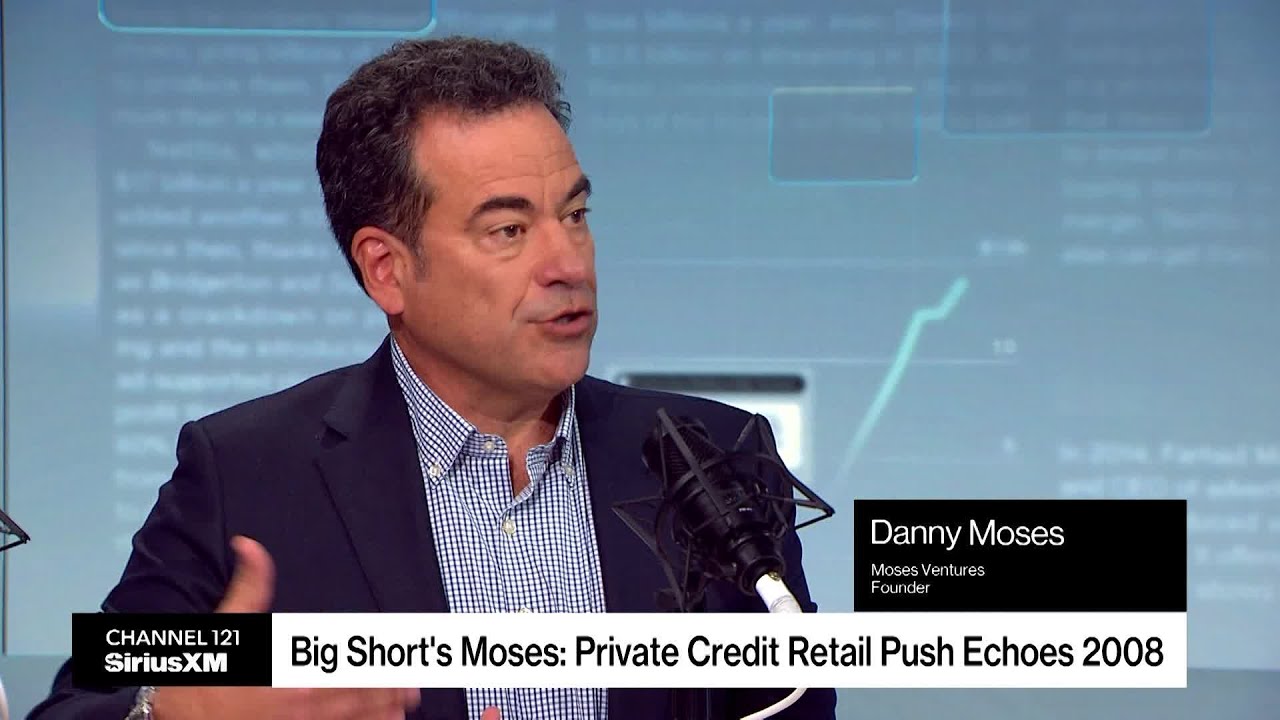
Danny Moses, founder of Moses Ventures and host of the "Danny Moses Show" on SiriusXM, expressed significant concern regarding current trends in the private credit market, drawing parallels to the conditions that preceded the 2008 financial crisis.
The Echoes of 2008 in Private Credit
Moses pointed out that the increasing availability of private credit to retail investors, facilitated by various platforms, mirrors the practices seen before the 2008 meltdown. He elaborated on how, in the lead-up to 2008, mortgage companies originated loans, packaged them into securities, and sold them to investors, a process that eventually became unsustainable as liquidity dried up and assets became stuck on balance sheets.
He drew a direct parallel to today's market, noting that similar institutions are now extending credit lines to private capital firms. Moses expressed his apprehension about this trend, suggesting that the perceived ease of access and the sheer volume of capital flowing into these less liquid assets could be a precursor to future instability. He emphasized that when liquidity tightens, the market for these assets can evaporate, leaving investors exposed.
The full discussion can be found on Bloomberg Podcast's YouTube channel.
Concerns Over US Debt and Economic Outlook
Beyond the private credit market, Moses also voiced his concerns about the escalating US national debt. He highlighted that the US debt has grown substantially, reaching approximately $34 trillion, with projections indicating it could reach $50 trillion by 2028. Moses expressed skepticism about the government's ability to manage this debt, especially if interest rates begin to rise significantly.
He stated, "I am very concerned about US debt. And the debt-to-GDP ratio. It matters. We're not going to run a surplus. We're going to run a deficit. We're going to have to borrow more money. If rates start to go up, it’s going to be a problem." He further elaborated that if interest rates increase, the cost of servicing this debt will become a significant burden, potentially impacting future fiscal policy and economic growth.
The Role of AI and Future Economic Trends
The conversation also touched upon the broader impact of AI on the economy. While acknowledging the potential for AI to boost efficiency and productivity, Moses also raised concerns about its potential to displace jobs across various sectors, including white-collar professions like law and accounting. He suggested that while AI might create new opportunities, the transition could be disruptive for many.
Moses indicated that the market is currently experiencing a period of transition, with many companies and sectors still adapting to the evolving economic landscape and the increasing influence of AI. He stressed the importance of staying informed and adaptable in such a dynamic environment.