In a recent discussion on the Latent Space podcast, NVIDIA executives Nader Khalil (Director of Developer Tech) and Kyle Kranen (Dynamo Architect) offered insights into the evolving landscape of AI, particularly focusing on the development and deployment of AI agents and the underlying hardware infrastructure. The conversation highlighted NVIDIA's strategy to empower developers and enterprises with accessible, scalable, and efficient AI solutions.
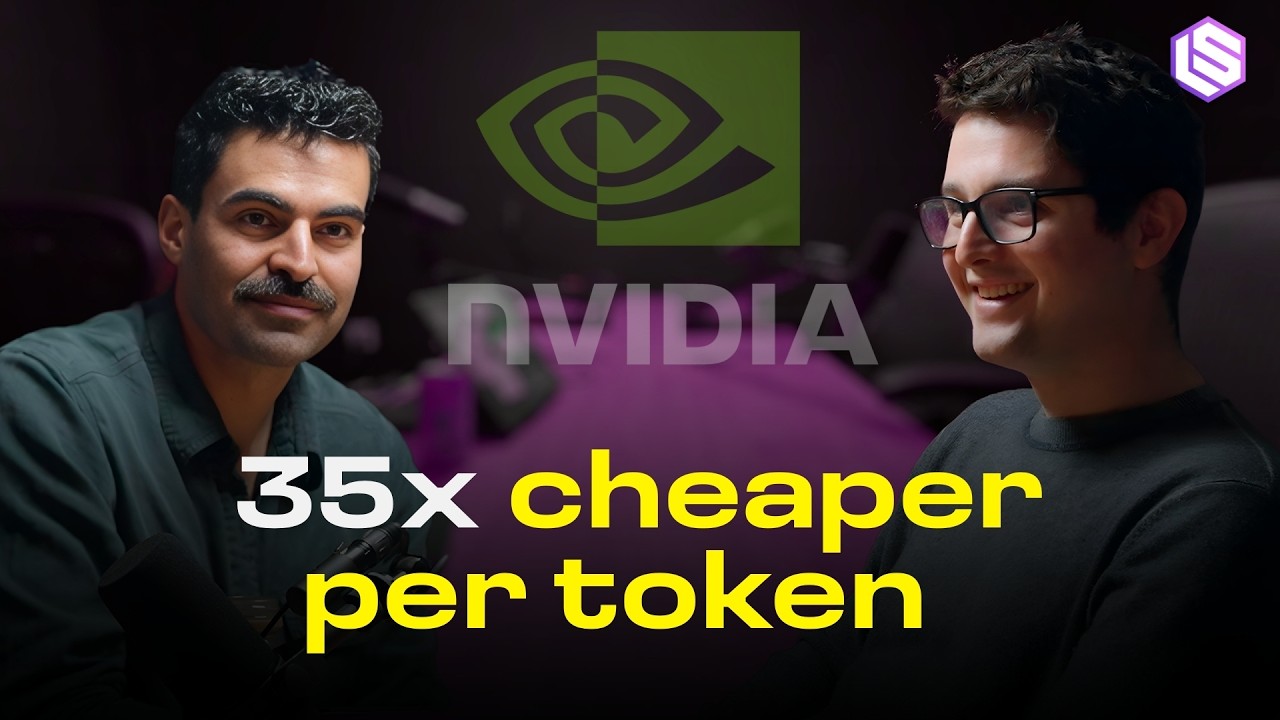
Meet the NVIDIA Experts
Nader Khalil, Director of Developer Technology at NVIDIA, brings a wealth of experience in bridging the gap between cutting-edge hardware and practical developer applications. His role involves ensuring that developers can effectively leverage NVIDIA's powerful platforms, including their GPUs and AI software stack, to build innovative solutions.
Kyle Kranen, a Dynamo Architect at NVIDIA, focuses on the architectural design and implementation of systems that utilize NVIDIA's technology. His work is instrumental in shaping how developers interact with and deploy complex AI models, particularly in the context of generative AI and large-scale computing.
The Power of AI Agents: Capabilities and Considerations
The discussion began with an exploration of what AI agents are capable of. Khalil outlined that these agents can perform a fundamental set of actions: accessing files, browsing the internet, and writing/executing custom code. He emphasized that the scope of an agent's capabilities needs to be carefully managed, as granting too much access, particularly internet access, can introduce significant security vulnerabilities. "You really only let an agent do two or three things... If you can access your files and you can write custom code, you don't want internet access because that's one of the safer vulnerabilities," Khalil stated, underscoring the need for robust security measures in AI agent development.
The conversation then pivoted to the broader implications of enabling these agents. The challenge, as highlighted by the NVIDIA executives, lies in balancing the power and flexibility of AI agents with the need for security and control. They posed the question: "How do we both enable this because it's clearly the future, but then also what are these enforcement points that we can start to protect?" This points to a critical area of research and development in the AI space – ensuring that powerful AI tools can be used safely and responsibly.
NVIDIA's Role in the AI Ecosystem
Kranen shared insights into NVIDIA's approach to enabling these advanced AI capabilities, drawing parallels to the company's history in providing foundational technology for various computing revolutions. He noted that NVIDIA's strategy often involves making complex technologies accessible through user-friendly tools and platforms. "What we've seen historically is that when a new computing paradigm comes along, like GPUs, like AI, we always try to make it as accessible as possible," Kranen explained.
The discussion also touched upon the practical aspects of developer experience, with Kranen highlighting NVIDIA's efforts to simplify the process of deploying AI models. He mentioned tools like NVIDIA NIM (NVIDIA Inference Microservices) and NVIDIA AI Enterprise, which are designed to streamline the deployment of generative AI models in production environments. This focus on developer experience is crucial for accelerating the adoption of AI across industries.
The Future of AI Development and Deployment
The conversation underscored the rapid evolution of AI, particularly in the realm of generative models and AI agents. NVIDIA's commitment to providing the underlying hardware and software infrastructure is seen as a key enabler of this progress. The executives emphasized the importance of continuous innovation in both model development and system architecture to meet the growing demands of AI applications.
Khalil and Kranen also highlighted the significance of community and collaboration in advancing the field. By engaging with developers and understanding their needs, NVIDIA aims to foster an ecosystem where AI can be effectively harnessed to solve real-world problems. The ongoing development of specialized tools and platforms reflects this commitment to empowering the AI community.
NVIDIA's Approach to Innovation
The discussion also revealed NVIDIA's proactive approach to market trends, such as the increasing demand for AI solutions in various sectors. Their strategy involves anticipating future needs and developing technologies that can address them, from advanced hardware like their GPUs to sophisticated software frameworks and developer tools. This holistic approach positions NVIDIA as a central player in the ongoing AI revolution.
The podcast segment provided a valuable glimpse into the strategic thinking and technical expertise driving NVIDIA's contributions to the AI landscape, emphasizing the company's role in shaping the future of intelligent systems.