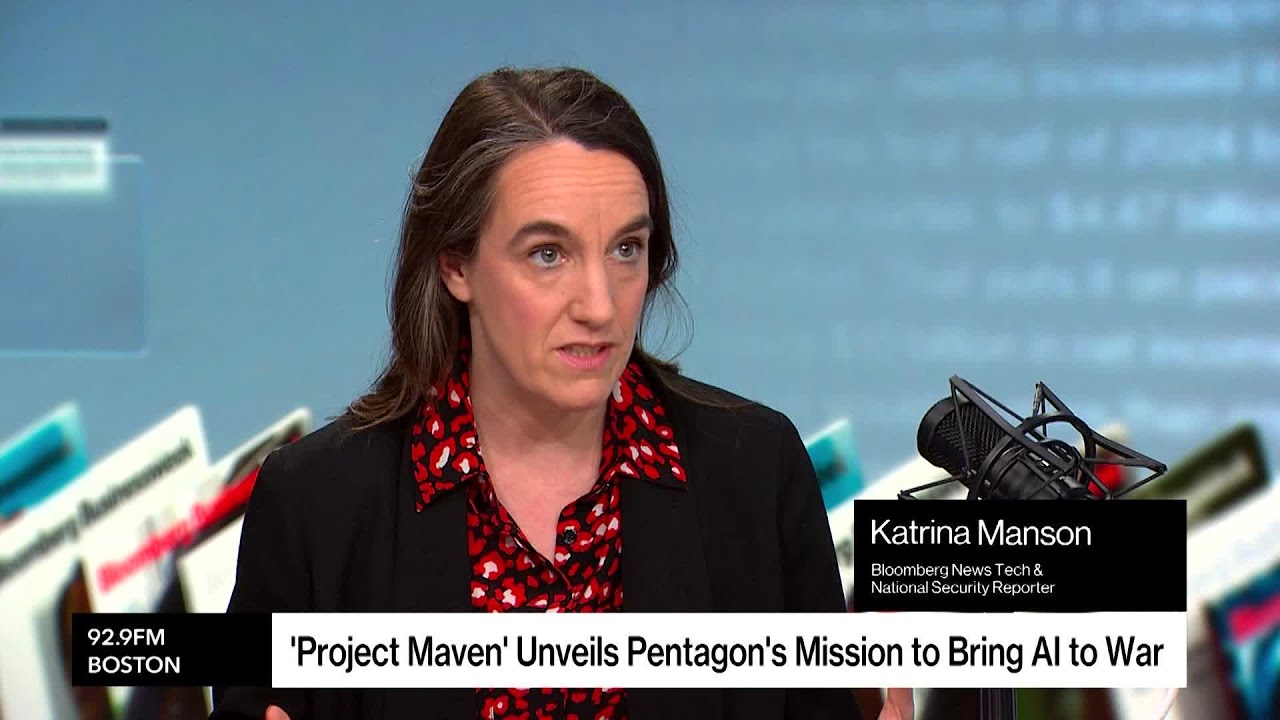
Bloomberg Businessweek Daily featured a discussion on the US military's ambitious integration of artificial intelligence into its operations, focusing on the origins and impact of 'Project Maven'. The segment highlighted how this initiative, launched in 2017, aimed to transform the way the Pentagon processes intelligence, particularly from vast amounts of drone footage.
The discussion featured Bloomberg News Tech & National Security Reporter Katrina Manson, who provided insights into the project's genesis and its implications for modern warfare. Project Maven's core objective was to utilize AI, specifically computer vision and machine learning, to automate the analysis of aerial surveillance data, a task that was previously labor-intensive and time-consuming.
The Genesis of Project Maven
Katrina Manson explained that Project Maven emerged from a critical need identified by military intelligence officers, including a senior figure who later led the project. This individual, a Marine Corps Colonel, recognized the immense volume of data being collected by drones and other surveillance assets, but the inability of human analysts to process it all effectively. The sheer scale of this data meant that crucial information could be missed or delayed, impacting decision-making on the battlefield.
The full discussion can be found on Bloomberg Podcast's YouTube channel.
The project's roots can be traced back to the early 2000s, with the increasing use of unmanned aerial vehicles (UAVs) in conflicts. While these drones provided unprecedented aerial surveillance capabilities, the subsequent analysis of the collected video feeds became a bottleneck. Manson noted that the military was struggling to keep pace with the data, likening the situation to trying to 'drink from a firehose.' This led to a recognition that AI-powered tools were necessary to sift through the information and identify potential threats or targets efficiently.
The Role of Palantir and Technological Challenges
The video highlighted the crucial role played by Palantir Technologies in the development of Project Maven. Manson recounted how the project's leader actively sought out cutting-edge technology, even reaching out to companies like Google for their AI expertise. However, the military's initial attempts to leverage existing AI tools faced significant hurdles. Manson stated, "The common complaint was that they weren't fit for purpose. They were like fancy toys." This sentiment underscores the gap between the capabilities of commercially available AI and the rigorous demands of military applications.
The challenge was not just in developing sophisticated algorithms but also in integrating them into a seamless system that could be used effectively by military personnel. Manson elaborated on the project's initial struggles, mentioning that the military was "constantly pushing back against the bureaucracy" to adopt new technologies. The project's leader, driven by his experiences in Afghanistan where he saw the limitations of existing intelligence-gathering methods, was determined to find solutions. He sought to bring AI capabilities not just into the intelligence analysis phase but directly to the operators on the ground, enabling them to make faster, more informed decisions.
"He wants to bring AI to bear on the battlefield," Manson explained, emphasizing the operational focus of Project Maven. This meant moving beyond simply analyzing data in a back office to providing real-time insights to those in the field. The project aimed to connect disparate data sources and make them accessible and understandable to warfighters, a stark contrast to the siloed nature of traditional intelligence dissemination.
Overcoming Resistance and Driving Innovation
The video touched upon the internal resistance Project Maven encountered. Manson described how some within the military establishment were hesitant to adopt AI, fearing it would bypass human judgment or that the tools were not yet reliable enough. This led to situations where the project leader had to "constantly convince people to not overspend, to not get caught up in the hype, but to focus on the practical applications."
The development of Project Maven was a testament to the persistence of its proponents. Manson recalled that the project's origins were deeply intertwined with the military's need to process over 100,000 hours of drone footage annually. The initial efforts focused on using computer vision to identify objects and patterns within this data. The success of these early stages, demonstrating the tangible benefits of AI in identifying threats and understanding operational environments, helped to build momentum and gain broader support within the Pentagon.
Manson highlighted a key turning point: the recognition that the existing tools were insufficient. This led to a more targeted approach, seeking out specialized AI capabilities. She mentioned that the project was inspired by the earlier development of Google Earth, which used vast amounts of data to create a comprehensive mapping system. Project Maven aimed for a similar feat but with a focus on real-time intelligence and actionable insights for military operations.
Broader Implications for AI in Defense
The discussion also delved into the broader implications of Project Maven for the defense sector. The initiative not only accelerated the adoption of AI within the US military but also spurred innovation in the private sector. Companies like Palantir, which specialized in data analytics and AI platforms, found new opportunities to apply their technologies to complex national security challenges. Manson noted that the partnership between government and industry was crucial, enabling the rapid development and deployment of these advanced capabilities.
The initial success of Project Maven in Afghanistan, where it helped identify enemy activity and patterns of behavior, demonstrated the potential of AI to enhance situational awareness and improve operational effectiveness. The project's ability to process and analyze data at a scale and speed that was previously impossible was a significant breakthrough. Manson emphasized that the goal was to equip soldiers with better information, allowing them to make more informed decisions and potentially save lives.
The video concluded by underscoring the ongoing evolution of AI in military applications. Project Maven, born out of a critical need to process overwhelming amounts of intelligence data, set a precedent for future AI integration efforts. Its success demonstrated that, despite initial skepticism and technological hurdles, the strategic application of AI could provide a significant advantage in modern conflict, transforming how intelligence is gathered, analyzed, and utilized on the battlefield.