
Building AI Services Companies: A Playbook

Charlie Warren of Y Combinator shares a playbook for building AI-native services companies, emphasizing domain fluency, operational rigor, and value-based pricing.

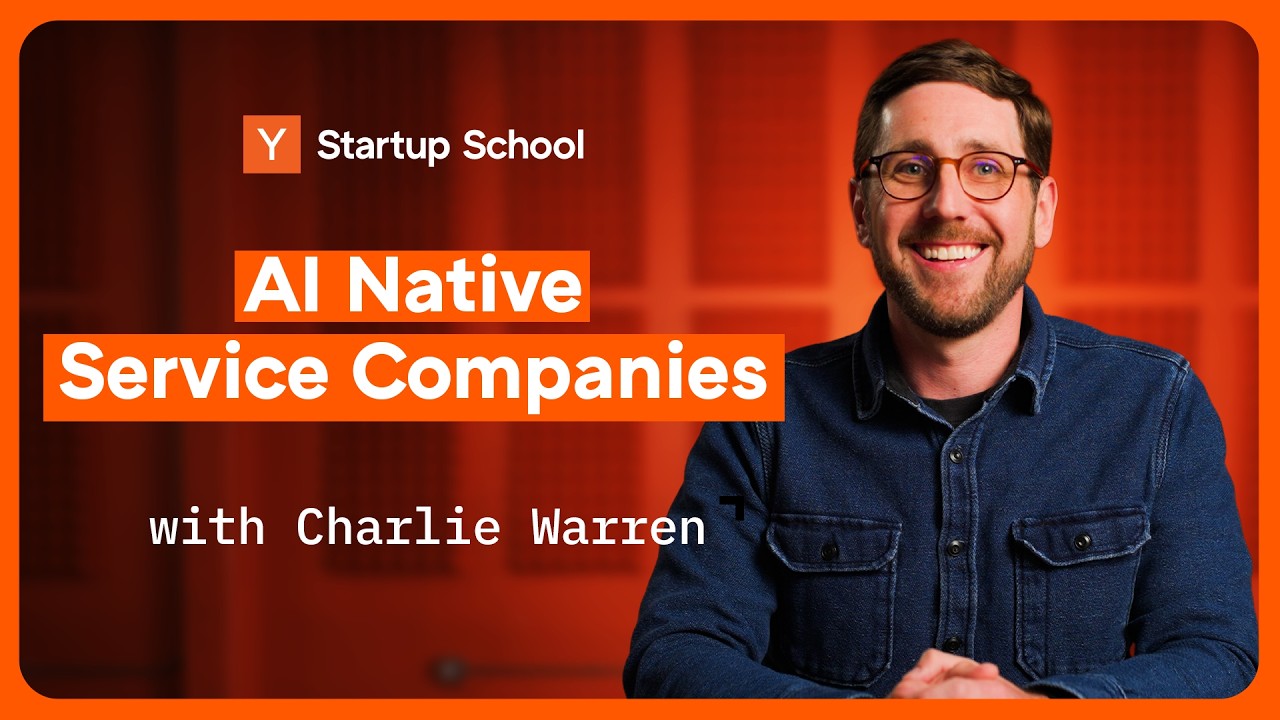
Charlie Warren, Visiting Partner at Y Combinator, speaking on building AI-native service companies.
YC
Visual TL;DR
AI-Native Services EmergenceDriver
new companies built around AI, redesigning services for AI delivery
From the article 5 mentionsIn the rapidly evolving world of artificial intelligence, a new breed of company is emerging: the AI-native services company.
AI Performs Bulk WorkContext
From the articleThese businesses are distinct from traditional software companies because AI performs the bulk of the work, delivering outcomes for clients in sectors like tax, audit, insurance, law, and healthcare.
Domain FluencyCore
deep understanding of specific industry problems and client needs
From the article 3 mentionsWarren identifies three primary attributes: domain fluency, low judgment at the task level, and operational rigor.
Operational RigorCore
meticulous execution and process management for AI-driven services
From the article 5 mentionsOperational rigor is essential for consistent, reliable delivery.
Value-Based PricingContext
pricing tied to client outcomes and delivered value, not hours
From the article 4 mentionsInstead, he advocates for value-based pricing, aligning the company's success with the customer's outcomes.
Human OversightCore
essential for quality control and complex decision-making in AI services
From the article 6 mentionsThese firms are not just adopting AI; they are built around it, fundamentally redesigning services to be delivered by AI with human oversight.
Vast Market OpportunityEffect
targeting trillions of dollars in sectors ripe for AI disruption
From the articleThis shift represents a significant opportunity, as these markets are vast, with trillions of dollars in size.
Next Decade's LeadersOutcome
From the articleWarren explains that the biggest companies of the next decade will likely be AI-native service companies.
Contents(5)

In the rapidly evolving world of artificial intelligence, a new breed of company is emerging: the AI-native services company. These firms are not just adopting AI; they are built around it, fundamentally redesigning services to be delivered by AI with human oversight. Charlie Warren, a Visiting Partner at Y Combinator, outlines a playbook for founders looking to build these next-generation businesses.

StartupHub data

A startup accelerator that provides seed funding, mentorship, and resources to early-stage companies.

Founded
2005
Location
San Francisco, United States

The AI Services Company Playbook

Warren explains that the biggest companies of the next decade will likely be AI-native service companies. These businesses are distinct from traditional software companies because AI performs the bulk of the work, delivering outcomes for clients in sectors like tax, audit, insurance, law, and healthcare. This shift represents a significant opportunity, as these markets are vast, with trillions of dollars in size.

The full discussion can be found on YC's YouTube channel.

How to Build an AI-Native Services Company - YC
How to Build an AI-Native Services Company, from YC

These AI-native service companies are characterized by several unique traits. Warren identifies three primary attributes: domain fluency, low judgment at the task level, and operational rigor. Domain fluency means deeply understanding the specific industry and its challenges, while low judgment at the task level implies breaking down complex work into smaller, automatable steps. Operational rigor is essential for consistent, reliable delivery.

Key Traits for AI-Native Services Startups

Warren emphasizes that while domain knowledge is crucial, a willingness to learn and adapt is equally important. Founders must understand what AI models can achieve today and design their services accordingly, anticipating future improvements. This means focusing on the core problem and how AI can solve it, rather than retrofitting AI into existing business models.

The structure of these companies is also different. Instead of selling software licenses, they sell outcomes. This requires a shift in perspective from product-centric to customer-centric, with a focus on delivering tangible results. For example, an AI-native law firm might offer faster, lower-cost contract review, leveraging AI to augment human expertise.

Financials and Operations in the AI Era

When it comes to financials, Warren stresses the importance of understanding the profit and loss statement. Key metrics like revenue, cost of goods sold (COGS), and operating expenses (OPEX) are critical. For AI services, COGS includes model costs, hosting, and the human element involved in the AI's operation. Founders must obsess over these costs from day one, aiming for predictable and scalable operations.

Warren advises against common pitfalls, such as relying on cost-plus pricing or pure undercutting. These strategies can lead to perceptions of low quality and can hinder long-term growth. Instead, he advocates for value-based pricing, aligning the company's success with the customer's outcomes. He also cautions against the temptation to buy an existing business to enter the AI service space, as building from scratch is often more effective for creating a truly AI-native company.

The Human Element in AI Services

The role of humans in these AI-driven services is to provide judgment and oversight where AI falls short. Warren highlights that humans-in-the-loop should scale non-linearly. If revenue scales linearly with the number of humans, the business is likely not leveraging AI effectively. The goal is for AI to augment human capabilities, allowing for faster, more efficient, and ultimately, more scalable service delivery.

Founders must be meticulous in their operational planning. This includes defining clear metrics, such as throughput and cycle times, and ensuring consistency. Variance, Warren notes, is the killer of trust and a significant driver of customer churn. By focusing on operational rigor and consistent output, AI service companies can build a strong foundation for growth.

Strategic Pricing and Market Selection

In terms of pricing, Warren suggests that while per-unit pricing is common and easier to explain, outcome-based pricing can be more powerful for AI services, directly linking value to revenue. He also advises founders to be selective about the markets they enter, focusing on those where AI can provide a significant, demonstrable advantage.

Ultimately, building a successful AI-native services company requires a deep understanding of both AI capabilities and business fundamentals. By focusing on operational excellence, strategic pricing, and the right talent, founders can navigate the unique challenges and capitalize on the immense opportunities in this transformative sector.

© 2026 StartupHub.ai. All rights reserved. You may not republish this article in full without a license. Search engines and AI research tools may crawl and summarize for reference. Bulk reproduction or model training requires a license. See our terms.
Daniel Singer

Written by

Daniel Singer

Editor, StartupHub.ai

Daniel Singer is the editor of StartupHub.ai, a technology expert and thought leader on AI and its applications across sectors, from fintech and healthcare to developer tooling and consumer software. He writes and tests the tools covered here thoroughly and regularly, and built StartupHub.ai to give founders, operators and buyers a clearer read on what they are actually being sold.

More from Daniel Singer
